Making It Rain, One Event at a Time

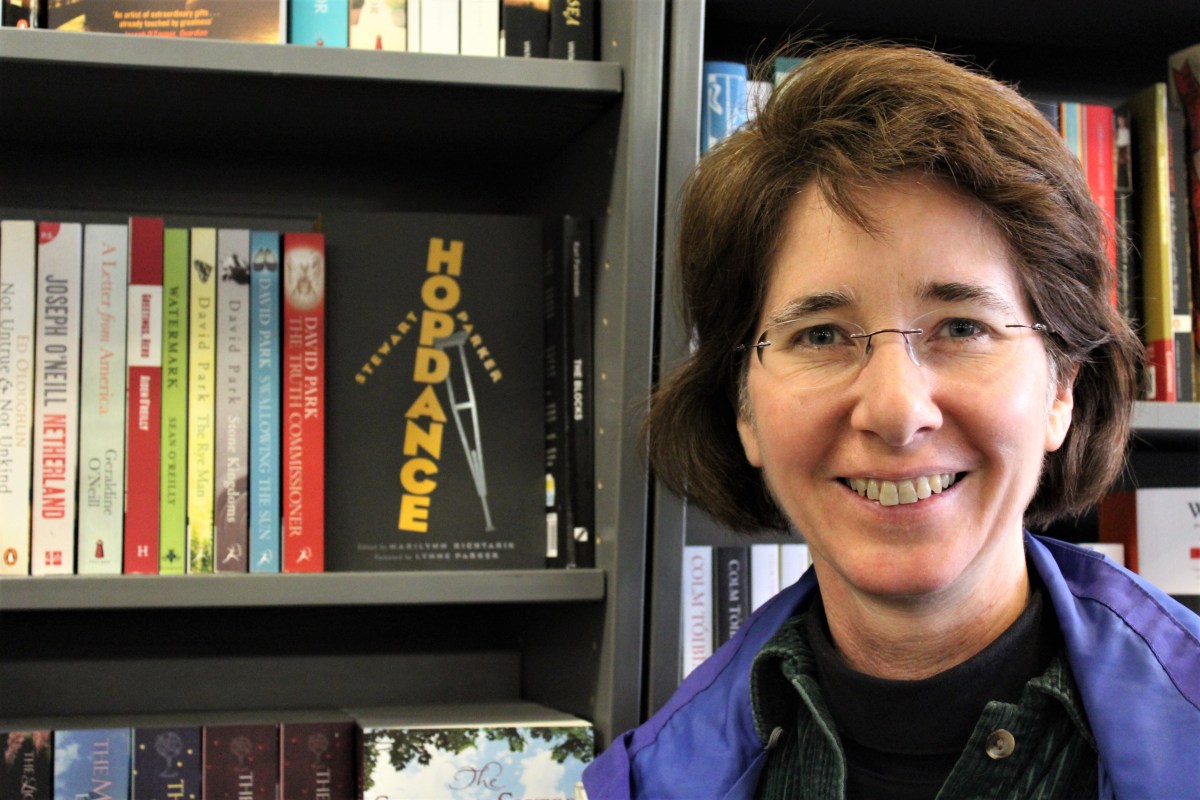
From my wife Marilynn Richtarik’s previous books, she’s learned that if any significant publicity is going to happen, she has to make it happen. It doesn’t hurt that she’s married to a journalist-turned-marketer who knows a little something about making the phone ring and the inbox fill.

So in the month or so since “Hopdance” was published, here’s what has happened.

Thursday, May 4 – Marilynn and a Fulbright Scholar poet shared the stage at the Crescent Arts Center as part of their postings at Queens University Belfast. Marilynn read from the book, describing the circumstances surrounding each scene. A recording of her presentation was later made available on the Culture Northern Ireland website to accompany an article about “Hopdance” she wrote specifically for the online publication.

Saturday, May 6 – Enthusiastic review of “Hopdance” by Sarah Gilmartin in The Irish Times.

Wednesday, May 10 – Marilynn could be heard on The Arts Show, presented by Marie-Louise Muir on BBC Radio Ulster. A recording of her portion of the program is here.

Friday, May 12 – The Irish Times publishes a commissioned article from Marilynn about the 20-plus years she spent researching Stewart Parker that resulted in her award-winning 2012 biography, Stewart Parker: A Life, as well as this edition of “Hopdance.”

Friday, May 12 – Dublin launch hosted by The Lilliput Press, featuring Stephen Rea.

Saturday, May 13 – Marilynn and Lynne Parker (Stewart’s niece who wrote the foreword for “Hopdance”) are heard on The Book Show on RTÉ Radio 1.

Tuesday, May 23 – Publication of the aforementioned article on the Culture NI website.

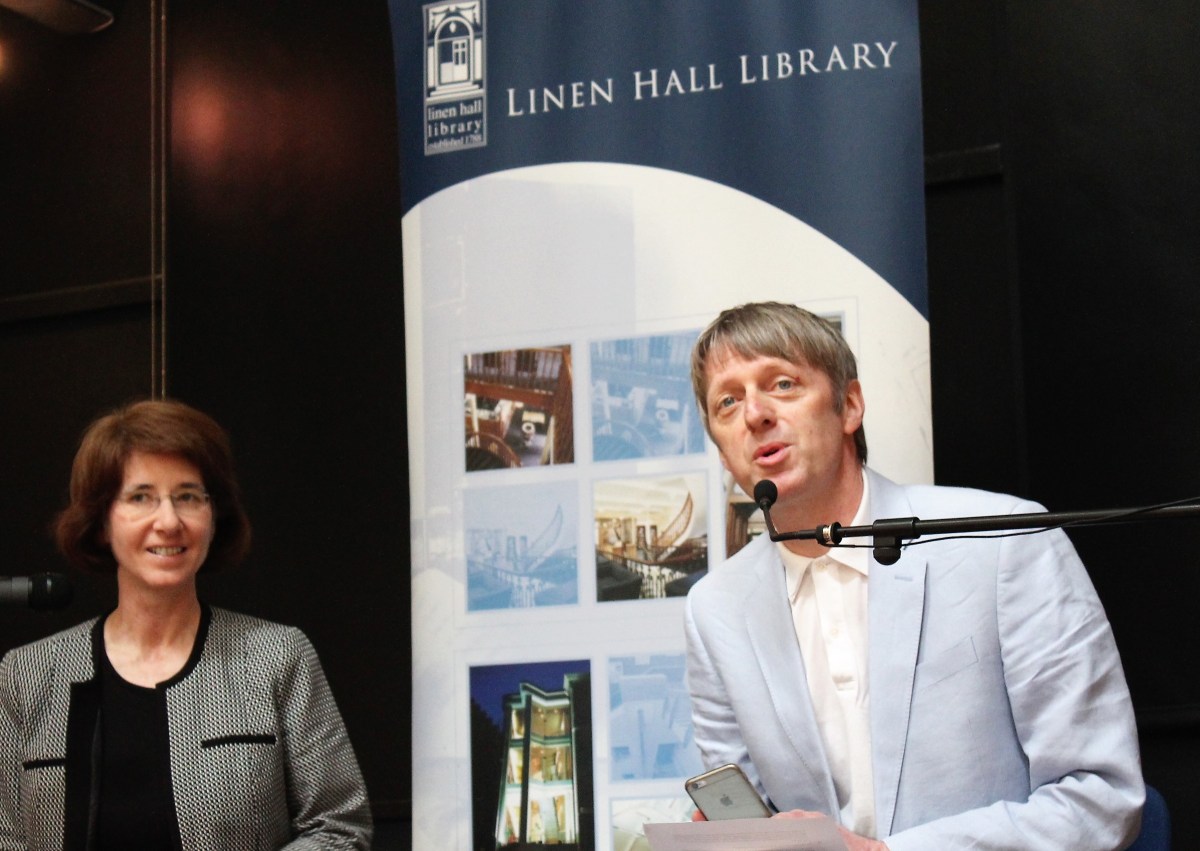
Tuesday, May 23 – Linen Hall Library event in Belfast. Author Glenn Patterson was the host, with Marilynn discussing the book and reading from it. Audience members included Stewart’s brother and sister-in-law, as well as Stewart’s first college girlfriend, who flew over from England for the event.

Thursday, May 25 – Insightful review of “Hopdance” on the Culture NI website written by Connal Parr, vice chancellor’s research fellow in the humanities at Northumbria University.

Sunday, May 28 – Third review of “Hopdance,” this time from Deidre Conroy in the Sunday Independent. Three reviews, all positive!

More to Come

  • Review anticipated in the Irish Independent on June 3
  • “Hopdance” will be featured in 15-minute increments Monday-Friday on The Book on One, a radio show on RTÉ Radio 1. The show is an abbreviated reading of a book, one book per week. We’ve been told it will be featured the week of June 12.
  • Marilynn will read and talk about the novel as part of the Belfast Book Festival, June 10.
  • Marilynn will read and sign books in Edinburgh, Scotland, on June 23.
  • She’s also trying to arrange a bookstore reading in Dublin in the next few weeks and is working on coverage of the book in Culture Hub, a magazine and website that covers Northern Ireland arts.

All in a day’s work for an English professor and a marketer—well, except for our real jobs.

All Roads Lead to Belfast City Hall

While Belfast City Hall may not be the physical heart of the city, it certainly embodies its spiritual heart. Although we’ve been in and around the building on each past visit to Belfast, we’d never taken a public tour until last weekend.

It was well worth the 45 minutes to learn about the history of the city, the building and the city’s governance structure, which features 60 councilors for a population of 330,000. There is also a new multi-room exhibit on Belfast that you can view.

Center of it all

The city’s core bus network consists of 12 lines that begin and end around Belfast City Hall, so pretty much wherever you go, you’ll glimpse the imposing, yet welcoming Baroque Revival building completed in 1906. Before 1888, Belfast was a town, but it was declared a city in that year by Queen Victoria.

Of course, the burgeoning city needed a new building, so the city fathers knocked down the White Linen Hall and built this new edifice for 360,000 pounds. The building features five domes, the tallest rising 173 feet. The largest dome is at the center of the building, with an opulent grand staircase leading dignitaries and visitors to the upper floor.

We got a glimpse at the deputy mayor’s office, the robing room where councilors formerly donned robes for meetings and the council meeting chambers. By the way, councilors still wear robes on special occasions, although members of the Sinn Fein party generally refrain.

During a council meeting, which takes place on the first working day of the month, the lord mayor sits on one short end of the room on a dais, with risers on both long sides with tables and comfortable chairs for the councilors, who are arranged according to political party. The press corps occupy tables in the middle, with spaces for dignitaries on the fourth wall. Members of the public sit one floor above the council chambers on the long interior side of the room. The council chambers and three large meeting rooms are paneled with Irish oak carved by Harland & Wolff artisans.

Our knowledgeable and friendly tour guide gave those who wanted an opportunity to try on a councilor robe and to sit in the lord mayor’s chair.

Lord mayors and memorials

The largest meeting room, the Great Hall, was destroyed in the Belfast Blitz in 4 May 1941, a German attack that killed 1,000 in Belfast. The hall was rebuilt in 1953 and features seven original stained glass windows that were moved to the country before the war began. During the tour, we saw workers either setting up rooms or tearing them down, evidence of how much use the city hall receives.

Each lord mayor, elected from among the councilors, now serves a single one-year term, and after it has his (or her) picture painted in a style and by an artist of his choosing. Those portraits are moved once a year to make way for that year’s mayor.

You’ll find a number of statues and memorials on the grounds, including the Titanic Memorial remembering those who lost their lives in the 1912 sinking. There’s also a memorial to Sir Edward Harland, who once headed Harland & Wolff and served as Belfast mayor in 1885-1886.

Unlike many civic buildings, Belfast City Hall is open nearly every day for tours, and the building and grounds are in use almost daily for public events. I’m sure those who frequent its halls lose sight of how impressive the building is. The exterior features Portland stone, while the interior is adorned with Italian marble.

And, if an impressive interior and expansive grounds aren’t enough, Belfast City Hall features an outdoor lighting system that can illuminate the building in a literal rainbow of colors.

Finding Quality in Every Effort

I was saddened to hear about the passing last month of professor and author Robert Pirsig, best known for the 1970s classic “Zen and the Art of Motorcycle Maintenance.”

I first read the book during the early ‘90s, during a time of professional turmoil, finding much comfort and direction from its pages. I still think often about Pirsig’s take on Quality, which assumes almost mythical proportion (including status as an uppercase word). Occasionally, I’ll take my battered paperback copy down from its shelf and thumb through its worn pages, refreshing my memory as to the book’s importance in my life.

Quality as a driving force

If you haven’t had the pleasure, the book is ostensibly a fictionalized autobiography about a father-son motorcycle journey from Minnesota to California. But it’s much more. Pirsig takes a deep dive into writing and the subject of Quality, which he believes is a fundamental force in the universe. The motorcycle, the road trip and the relationship between father and son are merely backdrops to the discussion of Quality.

The philosophical discussion of Quality isn’t what interests me. I relate more to the idea of having Quality in one’s life and in one’s efforts. One of my personal mantras is, “If it’s worth my time, it’s worth doing right.” Personally, that means finding the most efficient way to cut the grass, put away the dishes or arrive for a meeting on time.

Professionally, Quality means not just doing my best but doing what’s in the best interests of my clients, based on more than 30 years as a professional content producer. Admittedly, it can be frustrating when the client goes in a different direction, but I take solace in knowing that my first effort was an honest attempt to fulfill the assignment. Ultimately, I get paid for giving clients what they want—even if I don’t think it’s what they need.

There are no shortcuts to Quality as an ideal.

Guy book? You be the judge

“Zen and the Art of Motorcycle Maintenance” may be more of a guy book. My English professor wife couldn’t get into it, and she reads widely. It can be a difficult read, mainly because the protagonist isn’t always a nice person. He is fighting his own demons, including a past that includes a stint in a mental institution and a course of electroconvulsive therapy, which altered his personality. He is sometimes short with his son and can be a real pain.

But who among us is always calm, always rational, always in control?

If only for Pirsig’s take on Quality, “Zen and the Art of Motorcycle Maintenance” is worth a look. I know for sure that I’ll be returning to its pages soon.

Let There Be Light, Lots of Light

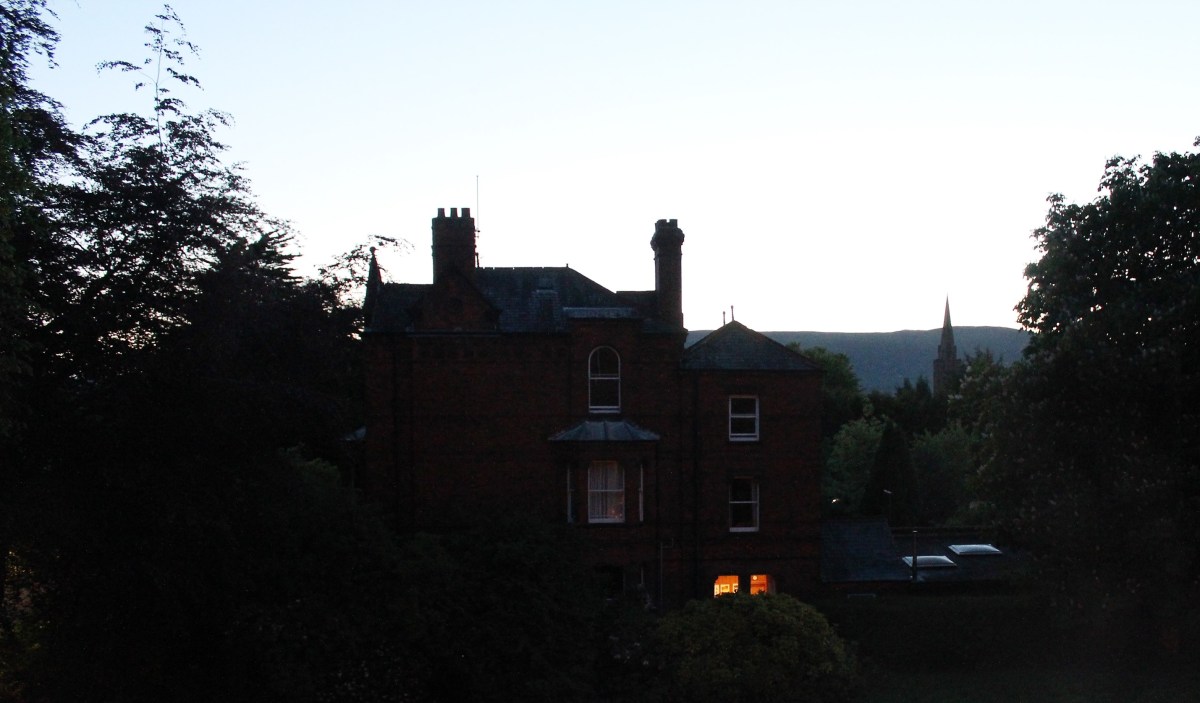
The picture was taken at 10 p.m. a few nights ago. It may not be light enough for a vigorous game of football (that occurred earlier in the field beside the flat) but certainly light enough to walk outside without bumping into anything.

And if you happen to be up at 4:30 a.m. or so, you’ll see a similar scene, the light coming up over the nearby hills to infiltrate the valleys below. In short, there’s too much darkness here during the winter months and way too much light during the summer ones.

As latitude lines go, Ireland is significantly north of everywhere in the US except Alaska. During previous two-week visits to Ireland during the summer, late-breaking sunsets meant we could enjoy more of each day. If I was having adjustment difficulties, it was easy to chalk them up to jet lag.

Throwing off one’s rhythm

But it’s much different living here. Our circadian rhythms are influenced by sunlight, both positively and negatively. According to the National Institute of Health, circadian rhythms “can influence sleep-wake cycles, hormone release, body temperature and other important bodily functions. They have been linked to various sleep disorders, such as insomnia. Abnormal circadian rhythms have also been associated with obesity, diabetes, depression, bipolar disorder and seasonal affective disorder.”

For most of my life, I’ve had one foot in the insomnia trench. The reason may never be known, but it doesn’t help that I’m a light sleeper who worked weird newspaper shifts (5 p.m.-1 a.m., or some such) for half his career. If you’ve never worked the night shift, you may not realize that people don’t go home and go to bed. After working the day shift, do you go home and go immediately to bed? Of course not. Same rules apply here.

You sit and have a drink. Watch a little TV. Read. I’ve been to great dinner parties that didn’t start until 2 a.m. (or later). I’ve seen the sun rise more times than I can count, simply because I couldn’t get to sleep.

Anything that works

I’ve tried a light box over the winter, burning my retinas out with UV light in a (mostly) vain attempt to reset my internal sleep clock. I’ve tried melatonin and tryptophan, the ingredient (wrongly) linked to sleepiness after you’ve eaten more turkey than you should have on Thanksgiving Day.

Nothing worked, until my doctor started exploring off-label uses of anti-depressants. One of them knocked me out cold. Another worked great, lulling me to sleep, then gently waking me eight to nine hours later with soft whispers—for 30 days. On the 31st day, the pill stopped working.

Finally, third time being the charm and all, we hit upon something that has worked for several years. I take an infinitesimally small dose (smallest pill made, cutting it into quarters with an X-acto knife). I sometimes wonder whether a sliver of a pill should work at all—until I forget to take it and wake up at some ungodly hour.

However, even that isn’t helping at present. Marilynn is trying melatonin, and we both have sleep masks. But still the dawn breaks ever earlier—for at least the next month until the summer solstice.

Cutting Line Just a Fantasy

Tourists getting way too close to you on all sides? Do you crave personal space? If you answered “yes,” then Elbow Knives® are for you! Elbow Knives strap to your arms and snap into place when you need them. Simply bring your arms in front of your chest and extend your elbows, and Elbow Knives open instantly to help you slash your way to the front of the queue or create a patented “Zone of Safety” around you. Think of switchblades for your elbows instead of your hands, and you know how Elbow Knives work.
With Elbow Knives, you can cut your way to the front of the line. Elbow Knives. Get yours today!

Elbow knives, a mad idea born of frustration with crowds and those who disrespect personal space. I think the idea has been brewing since we arrived in Northern Ireland in January. It certainly was informed by the crowds during our Italian vacation in February, particularly during the mad crush at the Vatican to glimpse the Sistine Chapel. I mentioned on Facebook at the time that I had to hip-check a couple of queue-hopping tourists, which, if anything, was an understatement.

The idea grew more solid on the jam-packed train from Olympic Stadium in Berlin last month after watching the Hertha Berlin match. And I believe the idea emerged fully formed in my mind at the Van Gogh Museum in Amsterdam, which packs in tourists like sardines in a can. That experience contrasted with a visit earlier the same day to the Rijks Museum, which attracts as many visitors as the Van Gogh Museum yet does a much better job of crowd control.

I started pulling Elbow Knives on Declan, raising my elbows up and fake stabbing him to create more space for myself. There’s even a theme song. Think of any product jingle that’s merely sung, with a little bass and a lot of bravado, and you know the theme song for Elbow Knives.

But wait, there’s more!

OK, I’ve thought about this enough that there’s a commercial for Elbow Knives, too. I haven’t worked through all the details, but I imagine someone with the flexibility of a ninja twirling, whirling and slashing their way through a crowd of people, bodies piling up in the user’s wake. There’s a particular move in my head I can’t name. The ninja bends over at a 90-degree angle—elbows out, of course—then jumps in the air and rotates 360 degrees, Elbow Knives glinting in the light.

It’s no secret that I hate crowds and will go to great lengths to avoid them. For me, Elbow Knives are the answer. I can see it now, hucksters selling Elbow Knives instead of selfie sticks and those blobs you plop on a surface and watch resume their former shape while emitting a high-pitched whine. But I already have my Elbow Knives, so I slice, dice and julienne my way through a bunch of sidewalk sellers.

Fortunately for my fellow travelers, we will be relatively stationary until early July, save for a couple of weekend trips. So Elbow Knives will remain just a fantasy, at least until then.

Samson, Goliath: the Also Ran Photos

I didn’t want to sully yesterday’s post of the perfect Harland & Wolff gantry photo with the earlier (and crappier) attempts. So here are those photos, the trees in the way, blurry out of a car window and many more. See captions for the description of their awfulness.


Finally, an Image for the Ages

For many people, Belfast will forever be linked—not with the Troubles—but with Titanic. I count myself as one of those. As a popular T-shirt in the High Street trinket shops proclaims, Titanic was “built by the Irish, sunk by the English.”

The Harland & Wolff shipyards, where Titanic, its sister ship Olympic and hundreds of other ships first hit the water down the historic slipways, are now mostly quiet. Shipbuilding no longer fuels Belfast’s economy, and H&W makes its money from engineering and refurbishment. But two huge yellow gantries, each bearing the H&W logo, dominate the Queenside landscape and bear witness to the city’s nautical ties.

An event to remember

As a youngster, I remember reading Walter Lord’s definitive account of Titanic’s last days, “A Night to Remember.” When the Booneshill School library was boarded up years later with books still inside, let’s say a few of those volumes wound up in my book collection, including a huge volume of “Roget’s Thesaurus” and the aforementioned Walter Lord book.

When I first traveled to Belfast in summer 2000 with my then-fiancée Marilynn, we took the train from Dublin to Belfast. Just before the train reached Central Station, the twin gantries came into view, letting me know without a doubt that I was in Belfast.

As we were touching down in Belfast City Airport on Jan. 2 to start this adventure, during the last minute of the short-haul flight from London I saw lots of water, followed by patchwork fields of at least 20 shades of green, and finally the twin gantries as airplane tires touched tarmac.

Since arriving here in January, I have been trying to take a definitive picture of the gantries to fit into the really tight horizontal photo specs of the blog template and for my own edification. But my quest was mostly quixotic, with blurry photos and near misses, trees in the way or a perfect picture of just one.

No Link to Titanic

To be clear, the gantries, named Samson and Goliath, have absolutely nothing to do with Titanic. They were built in 1969 (Goliath) and 1974 (Samson), but their height, their bold color and the H&W logos soon infused themselves into the city’s collective psyche, becoming symbols of Belfast. Their height (348 feet for Samson, 315 feet for Goliath) means they can be seen from nearly any place in the city.

We could glimpse them in the far distance from Belfast Castle, nestled at the base of Cave Hill. Samson and Goliath tantalize with their proximity while on the winding roads from the City Centre to the motorway toward the airport, but a building or overpass often gets in the way of a clear picture.

I came close with a shot I took from the waiting lounge at City Airport on our way to the Arsenal match in April. A couple of weeks ago, Declan took a picture that might have worked, except for the promo on the back of the bus window we were riding in.

That same weekend, we walked from City Centre to the Titanic Museum in an attempt to find the perfect angle. While you definitely can see them both, one of the gantries is too close to provide the right angle. And there are trees in the way, regardless.

Plotting and planning

I had already figured out the likeliest perfect spot—the layby near the Belfast Ikea, adjacent to City Airport. People park there to watch the planes take off and land, and I’d seen the gantries beyond the airport during out two previous trips to Ikea. But we didn’t have a car—until two weekends ago when we hired a car to visit area gardens.

Mid-Sunday morning, before Ikea opened, we drove out there specifically to take the picture at top. We parked in a surface lot at Ikea but couldn’t see the gantries for the trees. Fortunately, Marilynn ran to the layby, then disappeared through the trees. She reappeared seconds later, waving us over.

The trees definitely blocked the view, but hundreds of feet had smoothed a path through the trees to the airport fence. And there they were, finally, Samson and Goliath in all their glory, aligned nearly perfectly with the view I’d carried in my head all those months. The actual picture-taking was straightforward. Click, click, done. But we’d brought the telephoto lens, so I was able to get even better photos than I would have.

It seems anticlimactic to have actually captured the photo I’d been seeking for so long. So what quixotic quest will I need to come up with for the rest of the journey?

A Touch of Celebrity on Our 16th Anniversary

My wife, Marilynn Richtarik, and I will always remember what we were doing for our 16th wedding anniversary—launching her book in Dublin and talking football with Northern Irish actor Stephen Rea.

People younger than we are may not be familiar with Rea, who earned an Oscar nomination in 1992 for his role in “The Crying Game.” He’s a prolific and highly regarded actor on both stage and screen who agreed to read from the Stewart Parker novel that Marilynn edited, “Hopdance,” because he and Parker had been good friends and moved in the same theatrical circles. More about that later.

Scenes from ‘Hopdance’

In a strong yet understated performance, Rea nailed the reading of four scenes from “Hopdance,” a vignette-driven, semi-autobiographical work about the amputation of his left leg at age 19 that Parker first completed in the early 1970s but never published during his lifetime.

The final vignette, a crowd favorite, described the protagonist, Tosh, listening in as several other amputees chat in the waiting room at the limb-fitter’s shop. One man, a welder, tells of how his artificial leg gave way on the job and was patched by a riveter, who the welder said “done a right fine job” of repairing the leg, much to the consternation of the limb-fitter.

The four dozen or so gathered at the Workman’s Club for the launch were mesmerized during the reading. Marilynn is a fine reader, but the final passage Rea read requires the right accents and a man’s touch to create magic out of a tale of several blokes sitting around in their underpants waiting for their artificial legs to be fitted.

Talking Arsenal football

Marilynn knew from her past dealings with Rea that he supports the English Premier League team Arsenal, the team Declan and I also support. For the occasion, Declan wore one of his many Arsenal jerseys, which immediately caught Rea’s eye. When we asked for a picture with the family, he readily agreed “as long as the Arsenal supporter is in it.” And, as you can see, we all were there.

We told Rea about watching Arsenal play rival Manchester City to a tie at the Emirates in April, and he said he had tickets to the FA Cup final between Arsenal and Chelsea later this month. We also talked about embattled manager Arsene Wenger, who Declan and I both wish would quit after 20 years (including 13 years without a league title). However, Rea believes he should be allowed to stay beyond his current contract.

Anyway, who’s to argue with a celebrity?

A little history, please

Nearly 40 years ago, Rea and the late Northern Irish playwright Brian Friel founded the Field Day Theatre Company that aimed to bring plays and literary works to both sides of the sectarian divide during the Troubles. Field Day was the subject of Marilynn’s first book, and she interviewed Rea for it.

Stewart Parker, who died of stomach cancer at the age of 47 in 1988, wrote his final play, “Pentecost,” for Field Day, which it produced in fall 1987 with Rea in a starring role. Marilynn didn’t become familiar with Parker’s work until 1989 but spent the next 20 years researching his life and work for her 2012 book, “Stewart Parker: A Life.”

Stephen Rea and Northern Irish actor Frances Tomelty, who appeared in several TV films that Parker wrote the scripts for, hosted a public event that was part of a conference at Queen’s University Belfast that commemorated the 20th anniversary of Parker’s death.

When Marilynn’s publisher, The Lilliput Press, was working with Rea to find a date, he picked May 12, our anniversary. Again, who’s to argue with a celebrity who’s giving freely of his time? So that’s how Stephen Rea came to help us celebrate our 16th wedding anniversary.

Another Garden While the Sun Shines

In Northern Ireland, not only does one make hay while the sun shines, one also gets the hell out of the flat. Last weekend was the nicest one we’d had in more than four months on the island, so we visited Rowallane Gardens on Saturday and made plans to visit Mount Stewart on Sunday.

Mount Stewart, near Portaferry, is more than an hour’s drive away, partly along a coastal road, the water glittering like diamonds in the mid-morning sunshine. It is considered one of the top gardens in the world, according to those who keep various lists. Overall, I still like Rowallane Gardens better; however, Mount Stewart is considerably bigger (nearly 1,000 acres) and features such amenities as a lake, extensive walking paths and an 18th century historic house.

Home to Irish royalty

We started with a house tour, the home and furnishings reflective of their early 20th century occupants, the 7th Marquess and Marchioness of Londonderry, Charles and Edith. While Charles was off doing what rich white men did in those days, Edith transformed the house and gardens. She apparently was a tour de force, imposing her design style on the property. She brought in exotic plants, using the blooms for potpourri and storing seeds during the winter in a large apothecary cabinet.

While the house definitely featured lots of bling, we were impressed by its livability. While I couldn’t imagine myself in an office large enough to accommodate two desks (Edith, actually), the house was chock-full of playful touches that were less palace and more home.

Edith’s and Charles’s youngest daughter, Mairi, was nearly 20 years younger than the other children, and she lived at Mount Stewart until her death in 2009 at the age of 88. Mairi’s daughter still lives in the house, which was turned over to the National Trust in 1977, following the bequest of the gardens in 1957.

The house was closed for three years while undergoing an 8-million-pound restoration, which brought back the original sandstone floors in the expansive entrance parlour.

Stay for the gardens

But the impressive gardens are the main draw, for tourists as well as the locals who picnic, play football, walk their dogs and generally enjoy the day in the full sun or in the shade of numerous trees. The heady fragrance of blossoms greeted us in the formal garden in front of the house, and splashes of colour could be glimpsed at every turn of the head.

Playful statuary and topiary create whimsical combinations, as do the gardens themselves. Declan particularly liked the Hand of Ulster flower arrangement the color and shape of a red hand. Topiaries of a ship and statuary of a dinosaur were also favorites.

A one-mile walk around the lake provided new views of the house and grounds. On the back side of the lake, the colorful blooms and bushes were reflected on the water, creating shimmering mirror images. Under Edith’s direction, the lake was expanded, and she installed several new gardens, including the shamrock garden, Italian garden and a special garden for Lady Mairi.

We likely would have stayed longer, but Marilynn wanted to look up a friend in Portaferry and we needed to return the rental car. Mount Stewart, like Rowallane Gardens the day before, definitely did not disappoint.