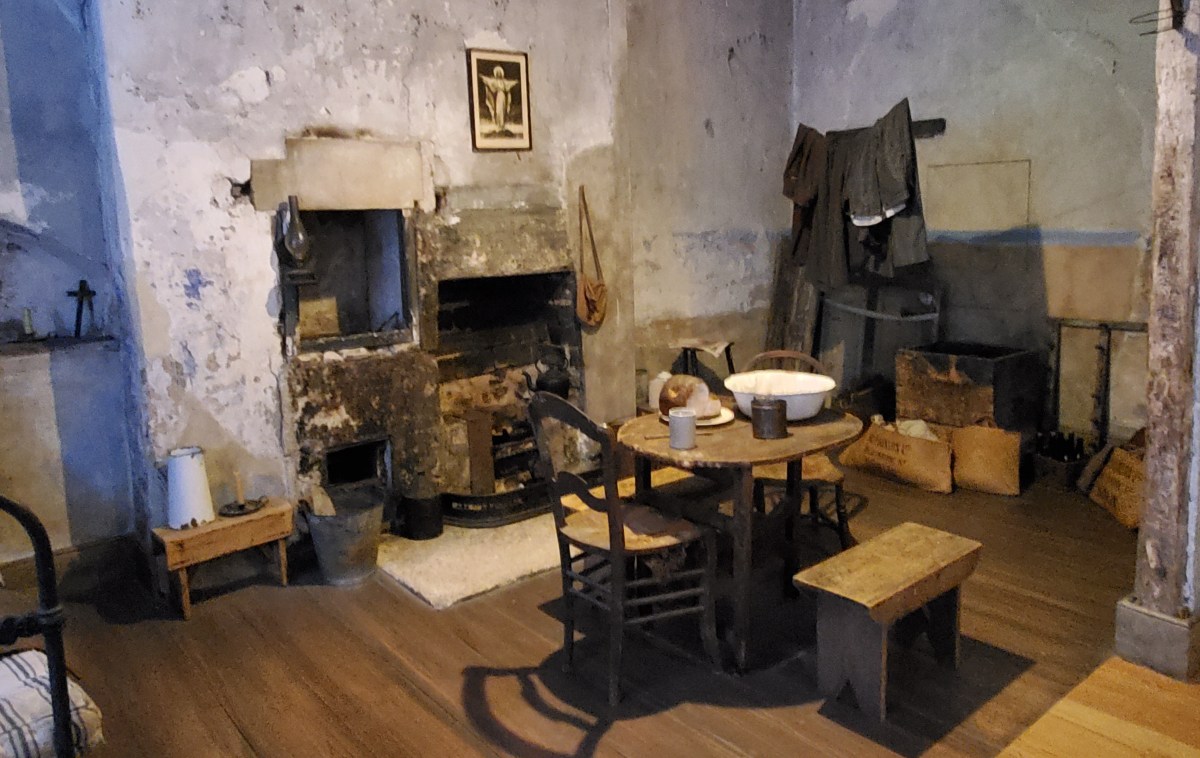
For time-strapped tourists desperate to suck the goodness out of a foreign destination, visiting a tenement museum may seem out in left field. But 14 Henrietta Street (top) in Dublin and The Tenement House in Glasgow are both well worth the time we spent visiting each. The latter museum even has a connection to Stewart Parker, the Belfast playwright and subject of Marilynn’s award-winning biography. More on that in a bit.
14 Henrietta Street, Dublin
Marilynn and I first visited the Dublin tenement last year while she was taking a break from doing archival research in the National Library, and we were impressed by the history, the preservation and the quality of the docent-led tour. In a desire to expose her study abroad students to more aspects of Dublin life, she added the Sean O’Casey play, The Plough and the Stars, to the curriculum. The play chronicles the 1916 Easter Rising and tenement life at that time.
The 10,000-square-foot Georgian tenement got its start in the early 18th century as a single-family house. Spread across five stories, 14 Henrietta Street spent about a century housing a succession of viscounts and bishops before the Act of Union was passed in 1801. That law shifted political power from Dublin to London, which caused the lords and ladies to decamp to England.
The house then spent several decades serving the needs of the professional class, mainly lawyers. But the Great Famine caused Dublin’s population to swell, and developers purchased large houses to cut up into tenements. 14 Henrietta Street turned from a single home into 19 tenement flats of one, three and four rooms.
100 tenants, one water tap, one toilet
At the time, 14 Henrietta was considered a Class A tenement, the top grade designed to attract “respectable” people. Up to 100 of these respectable people lived in the tenement at any one time, sharing one toilet and one water tap outside. Walls in the interior didn’t go all the way to the ceiling, so that light from the exterior rooms could filter through.
Rents were based on the size of the flat and its location within the building. Basement dwellers paid the least, but they had to put up with constant damp. It’s no wonder that primo flats on the main floors with window access commanded the most rent.
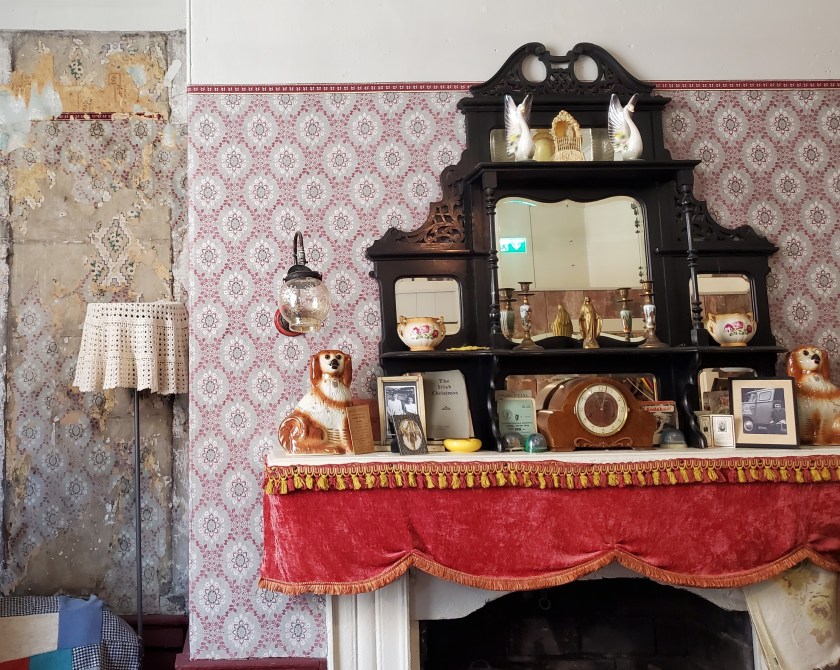
The hour-long tour includes all facets of life in the building, from its Georgian origins, through various flat types during its tenement days, ending in a quaint flat where a woman lived for decades until the last tenements were cleared in the 1970s.
Buildings along the street were nearly falling down when the Dublin City Council purchased the building to stabilize it and later renovate it into a museum.
For people like me who haven’t spent considerable time in large cities, tenements can be hard to fathom. In Dublin, they housed a large percentage of city residents long after one would think was appropriate in modern society. During our initial tour, our guide said that he and much of his extended family had grown up in Dublin tenements.
He also related this story: Shortly after the museum opened, an elderly man entered the foyer/reception area and was chatting with staff. He told them he grew up in that very room during its tenement days and noticed a nail sticking out of the wall. “I have the picture that hung there, and I’ll bring it to you,” he said. The picture remains in the foyer, a small nod to the history of 14 Henrietta Street.
The Tenement House, Glasgow
“Tenement” has a very different connotation in Glasgow than it did in Dublin, London, New York and other places where the word was synonymous with “slum.” Tenements typically were three or four stories, with two or more units per floor.
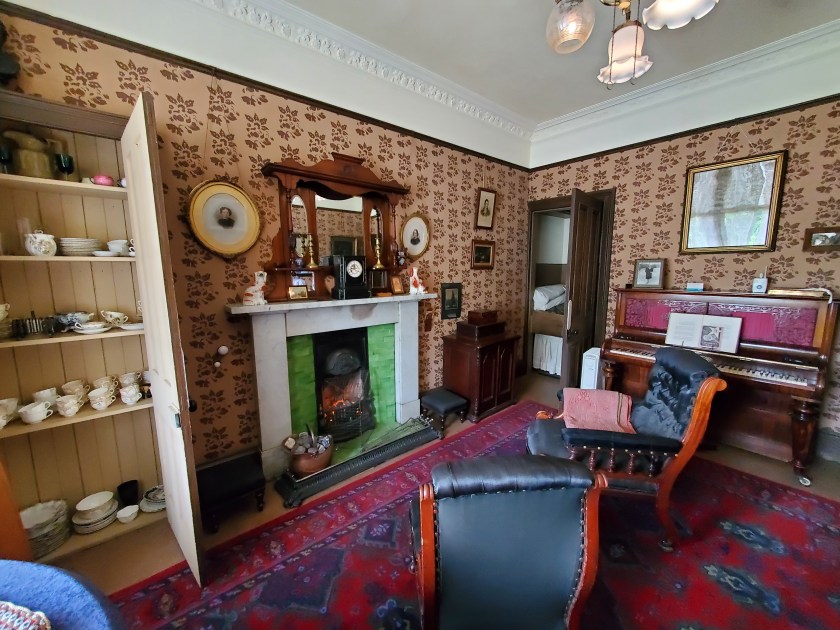
Miss Agnes Toward and her mother moved into the tenement (above) at 145 Buccleuch Street in 1911. Following her mother’s death in 1939, Toward continued to live in the flat until 1965, when she was taken into hospital for her final 10 years.
However, she continued to pay rent and died with her flat totally untouched for years. While the landlord wanted to empty the flat for the next tenant, Toward’s will left a set of chairs to her church elder. When the elder came to collect the chairs, he brought his niece, the actor Anna Davidson, with him. Davidson, recognizing the historical significance of the flat, persuaded the owners to sell the house and contents to her.
Davidson lived in the house for seven years, eventually selling the flat to the National Trust for Scotland so it could be preserved as a museum.
Connection to Stewart Parker
The tenement looks much the same as it did in Toward’s time, with period furniture, wall coverings, pictures and personal effects. Some items needed to be removed to accommodate tourists, but these items have been retained for research.
Toward’s mother was a seamstress and took in boarders, so you can see the nook in the kitchen where Toward and her mother often slept, as well as closet nooks for boarders and family. Toward was a shorthand typist, spending 45 years with a shipping firm until she retired in 1959.
The museum is a true time capsule of Scottish life in the first half of the 20th century. Viewing reproductions of rooms and furniture can be appropriate in context, but nothing can compare with imagining how someone lived by looking at the actual artifacts the person used.
And now for the Stewart Parker connection. For those who haven’t read many of these blogs, my accomplished English professor wife wrote the definitive biography of Parker, the Belfast playwright who died tragically in 1988 at the age of 47. I can attest to the quality of his plays, having seen productions of three and read the rest.
Anna Davidson appeared in the 1983 production of Parker’s play “Pratt’s Fall.” During rehearsals, she and Parker talked about her ownership of the tenement and what she planned to do with it. Parker’s final play, Pentecost, takes place in a council house where four friends talk about life, love and loss against the backdrop of the 1974 Ulster Workers’ Strike—and the ghost of the home’s former female occupant, who had lived there for decades and whose stuff remained in the house.
No ghosts (that we were told about anyway) in The Tenement House, but the museum director was surprised to learn that the house had helped inspire a play.


I didn’t know about tenement houses. Thanks.
LikeLike