
Powerful. Thought-provoking. Truthful.
At a time when for many people the objective truth is subject to personal opinion, our visit to three Legacy Sites in Montgomery, Alabama, was like a breath of fresh air.
Conceived by Bryan Stevenson, founder of the Equal Justice Initiative, The Legacy Sites take an unflinching look at the effects of American slavery through the ages, from the kidnapping of millions from African countries and elsewhere, through decades of mistreatment and degradation, a brief reprieve from bondage following the Civil War, lynching, Jim Crow laws and desegregation to mass incarceration and harsh prison sentences for minorities.
These are not happy slaves learning a trade, as current thinking from some corners (wink, wink) would have you believe. This is an in-your-face examination of how whites have mistreated Blacks and other minorities through the ages and how that continues to this day. To this white guy, it prompted a stark realization that the status quo in today’s America is insufficient to make up for hundreds of years of abuse.
Quick Points to Ponder
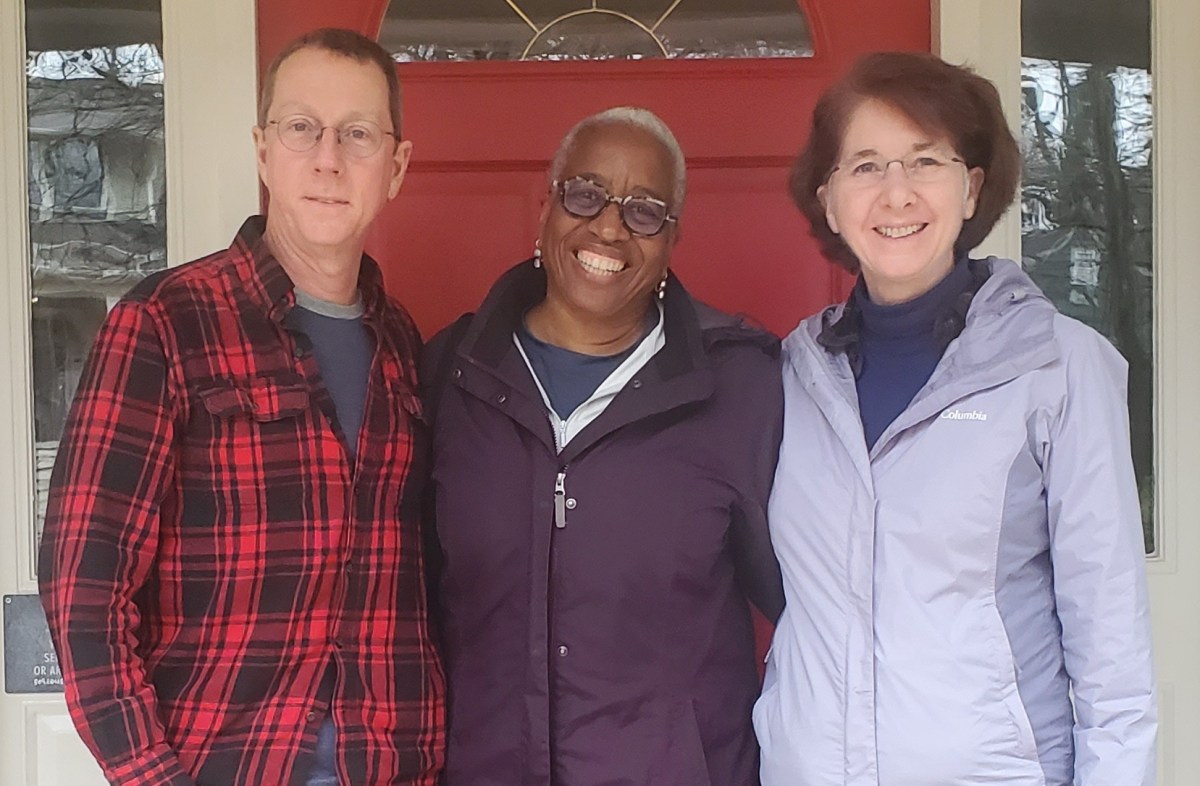
What a way to spend a weekend, huh? It was a meaningful experience for me, Marilynn, and our friend Modupe, a museum curator and daughter of a Nigerian man and a Black woman.
Before getting into a description of The Legacy Sites, I must mention how they are set up for personal education and reflection.
- (mostly) No pictures allowed. No one needs a selfie next to a sculpture of a slave in agony, scattered skulls across a mock ocean floor or a lighted shelf wall containing jars of dirt taken from where someone was lynched. The policy is for everyone’s benefit.
- The price is right. Our total outlay for the three of us to visit the three sites? $5 a person for a multi-day visit. The Legacy Museum has an affordable on-site café, two associated dining options across the street, and a restaurant in the Elevation Convening Center and Hotel (also part of The Legacy Sites experience). These are outlets of popular restaurants, rather than institutional food vendors serving the same slop you get at a ballpark. I couldn’t get the idea of the Free at Last! cafe run by Aramark out of my head, a horrible idea that EJI thankfully didn’t succumb to.
- Wonderful displays and exhibits. We were impressed by every exhibit, the depth and breadth of information, the point of view and the interpretation. As Marilynn noted, there was not a comma out of place anywhere.
- Ease of access. It was off season and we had a car, but folks can park at the EJI boat launch along the Alabama River and take a boat to the Freedom Monument Sculpture Park, then a shuttle between the other sites and back.
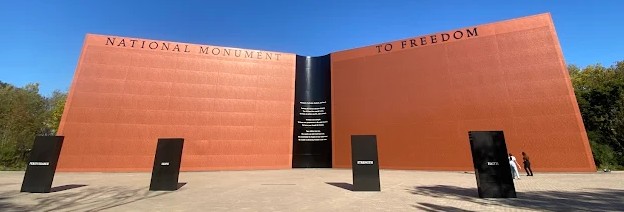
Freedom Monument Sculpture Park
We started at the Freedom Monument Sculpture Park, a 17-acre outdoor sculpture park along the banks of the Alabama River. The afternoon was perfect, with nary a cloud in the sky. The path is mostly tree-lined, with plenty of space for reflection between installations.
The boat is the recommended mode of transport to the park, a reminder of how enslaved people were brought into Montgomery. Even after the importation of slaves was abolished in the United States, the internal slave trade remained robust, with 200 enslaved people arriving in the city each day in the 1850s to bolster the ranks needed to work cotton or to be sold elsewhere.
The location is particularly appropriate, on the river and next to the railroad tracks, electric transmission lines and heavy construction next door. It reminded me of areas where Blacks and other minorities were forced, during Jim Crow, into areas no one else thought habitable. It also was a reminder that slaves were trafficked using the most up-to-date technology of the time, steam boats and trains.
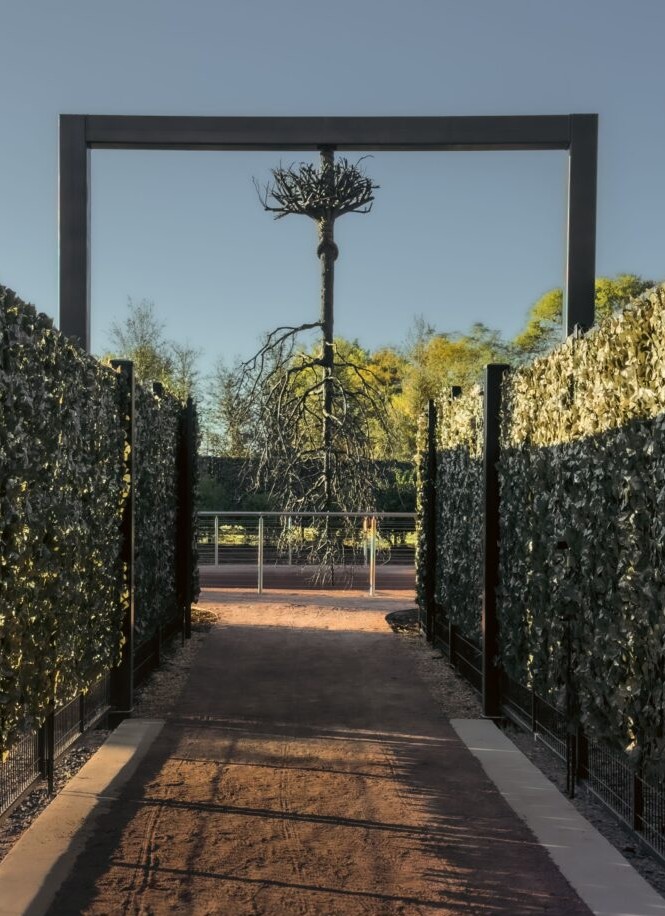
One of the many highlights is the new sculpture Hanging Tree, a 25-foot bronze tree suspended upside down over a shallow pit, designed by Charles Gaines. Every few minutes a motor kicks in, and the tree sways gently in the “breeze,” a haunting reminder of the horrors of lynching.
In addition to contemporary sculpture, the site includes two 170-year-old buildings where enslaved people lived, both during slavery and in the decades later when they magically became sharecropper cottages. Look closely, and you’ll see newspapers from the 1950s that were pasted on the walls for warmth.
The central feature is the towering National Monument to Freedom, which honors four million formerly enslaved Black people who won freedom after the Civil War. More than 100,000 names from the 1870 census are engraved on both sides of the monument, showing the names formerly enslaved people took. Often they took the name of their former captors.
At displays in the Visitors’ Center, you can look up surnames and see where people with a specific last name originated from. Although “Bolch” is an unusual name, there were five formerly enslaved people who took that surname, all from Catawba County, North Carolina. The county seat is Hickory, where my family can trace its roots. We emigrated from Germany in the 1750s and the timeline fits, so it’s a reasonable assumption that my forefathers kept slaves.
The Legacy Museum
The original 11,000-square-foot Legacy Museum opened in 2018 and quickly reached capacity 80% of the time before the pandemic. EJI used the pandemic disruption to reimagine the museum in a new location, reopening in 2021 in a 47,000-square-foot space in a former Lehman, Durr and Co. cotton warehouse along the Alabama River where enslaved people worked and were housed. If the “Lehman” in the warehouse name sounds familiar, what became the giant (and now bankrupt) financial services firm started as a dry good store and later a raw cotton dealer in Montgomery.
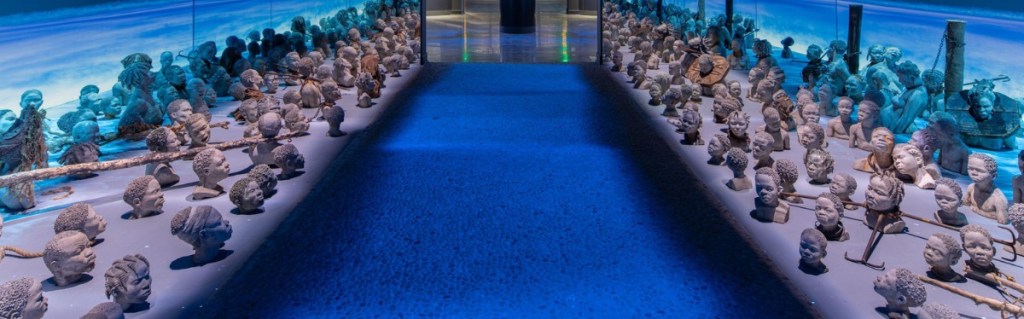
The museum is built to handle crowds. Visitors walk through a long hall designed to resemble a sea floor, with skulls along the sides to depict those whose bodies were tossed overboard during the perilous Atlantic crossing, probably victims of disease or malnourishment. A wide second hall presents the same information in each wall, with a central display. Then the museum opens out, allowing visitors to wander left or right at their leisure.
It’s difficult to discuss “highlights” at what’s basically a slavery museum, but the display of court cases either promoting desegregation and Black rights (few) and those restricting rights (lots) is especially telling. So is the well-lit, double-sided floor-to-ceiling display of large jars containing samples of dirt from spots where people have been lynched. EJI has documented more than 4,400 lynchings in the U.S. between Reconstruction and World War II. In the background, strains of Billie Holiday’s “Strange Fruit” can be heard. If you’ve never experienced this haunting sound about lynching, stop reading this and click on the link now.
Other highlights for me were the large display of signs barring Blacks, Indians, Puerto Ricans and other minorities from public accommodation; a poll test Black Americans were expected to pass that included correctly guessing the number of jelly beans in a glass jar; an interactive exhibit of prisoner stories; and the final gallery of contemporary art.
We spent the better part of a day at the museum, stopping for a sumptuous lunch at Pannie-George’s Kitchen, a meat-and-three restaurant on site. Visitors can leave and reenter, which makes the museum feel more accessible.
The National Memorial for Peace and Justice
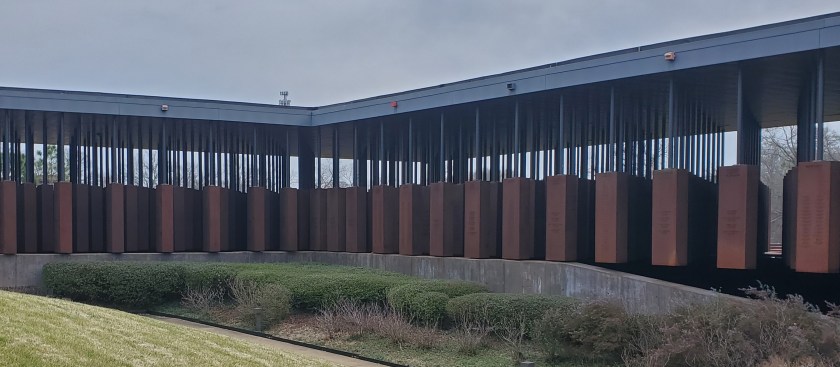
TheNational Memorial for Peace and Justice, the country’s first comprehensive memorial to the more than 4,400 Blacks killed in racial terror lynchings between 1877 and 1950, was our final stop. The six-acre memorial visually represents the scale of death, with 800 corrosion-resistant steel panels that eerily resemble coffins hanging within the open air monument — one panel for each county where a lynching took place.
The memorial sits on a hilltop, and visitors approach the building on grade to view the panels straight on. Then, the path winds down to the bottom of the memorial, forcing visitors to look up at panel after panel. Interspersed on the walls are plaques that tell why a particular person was lynched. Perhaps it was for passing a note to a white woman or simply for being in the wrong place at the wrong time.
Off to one side are replicas of historic markers that towns have placed to remember lynchings in their communities.
While completing the circle pathway that surrounds the memorial, visitors pass a second set of markers, this time on the ground side by side. EJI hopes that counties that experienced lynchings will claim “their” marker and create their own memorial. No signage indicates how many (if any) panels have been claimed, but, judging from the sheer number we passed, I’m guessing that few counties have had the courage to do that.
New (and Free) Legacy Site Opens
EJI was putting the finishing touches on the new Montgomery Square when we visited. This site is devoted to the foundational role Montgomery played in the Civil Rights movement from 1955-1965. The mostly outdoor site is next to the Elevation Convening Center and Hotel and at the top of Montgomery Street, where thousands marched to conclude the Selma to Montgomery March in 1965.
Living Large Like F. Scott
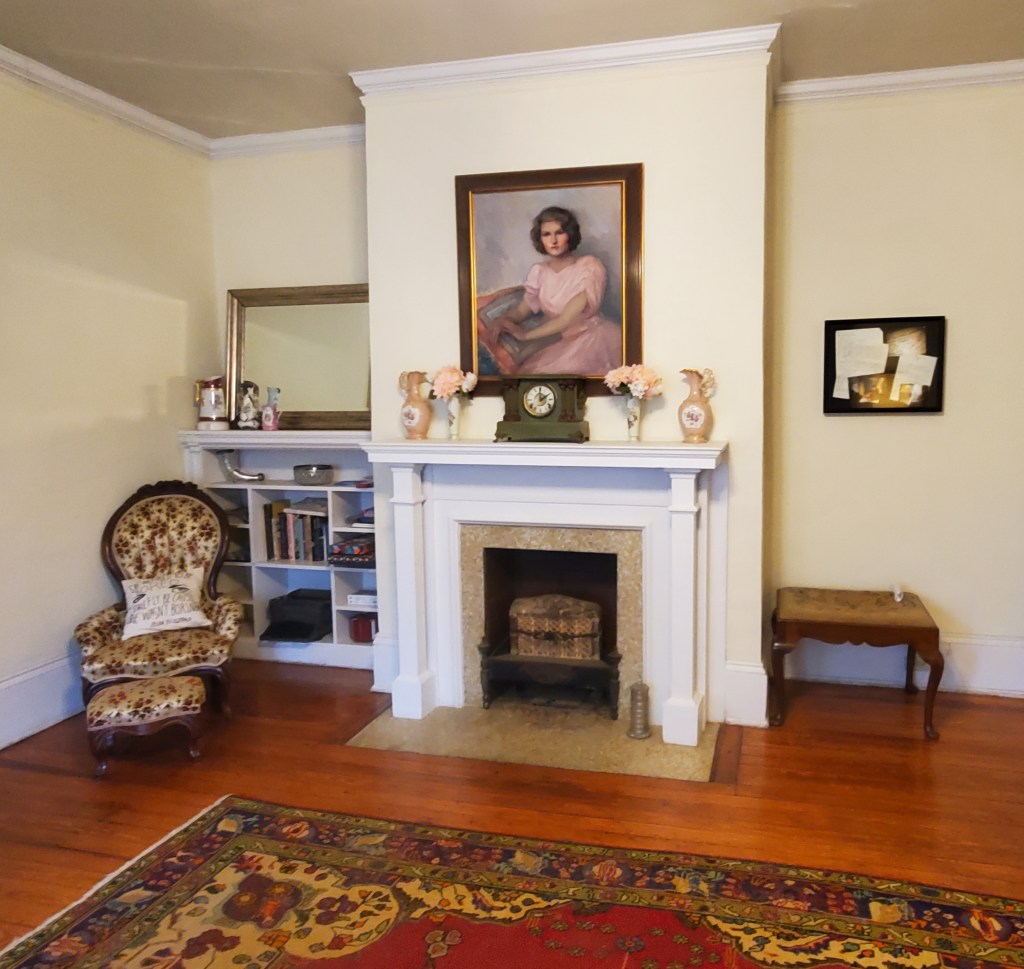
Marilynn found a unique Airbnb for our visit: a suite in the house where F. Scott and Zelda Fitzgerald lived in Montgomery in 1931. They had met in Montgomery when Scott was in the service, and Zelda wanted to be near her ailing parents. Fitzgerald worked on ”Tender is the Night” during his time in the city, while Zelda started writing “Save Me the Waltz.”
The Scott and Zelda Fitzgerald Museum is the only museum dedicated to the couple, who never actually owned a house. After they moved out, the house was divided into four units. Now, the Fitz, as the museum is colloquially called, comprises the ground floor, with the Scott Suite and the Zelda Suite upstairs.


Powerful place! Good writing, Matt. You managed to keep a solemn tone AND tell it like it is/was.
LikeLiked by 1 person