

Although I appreciate a well-planned trip, I’m particularly fond of those unexpected encounters that turn truly remarkable. And that’s what happened in Baden-Baden.
In between the relaxing spa visits, we had a fair amount of time to kill. Marilynn wanted to visit City Museum, located at the end of the Lichtentaler Allee Park, an expansive greenway that skirts the River Oos. While we were wending our way there, we passed Museum Frieder Burda, which was advertising a temporary exhibit by Richard Pousette-Dart.

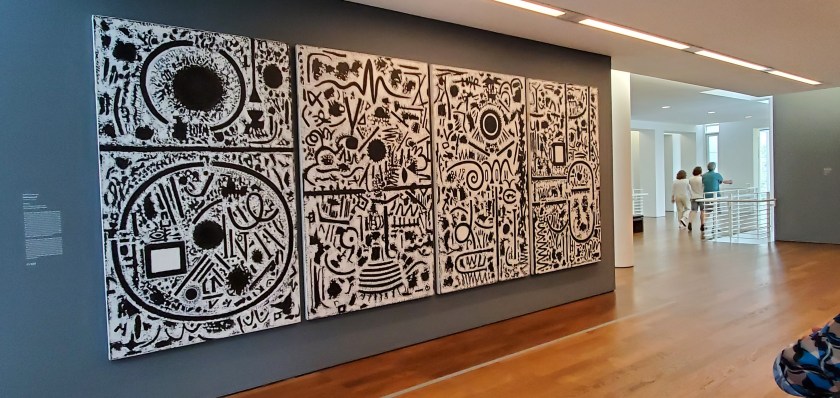
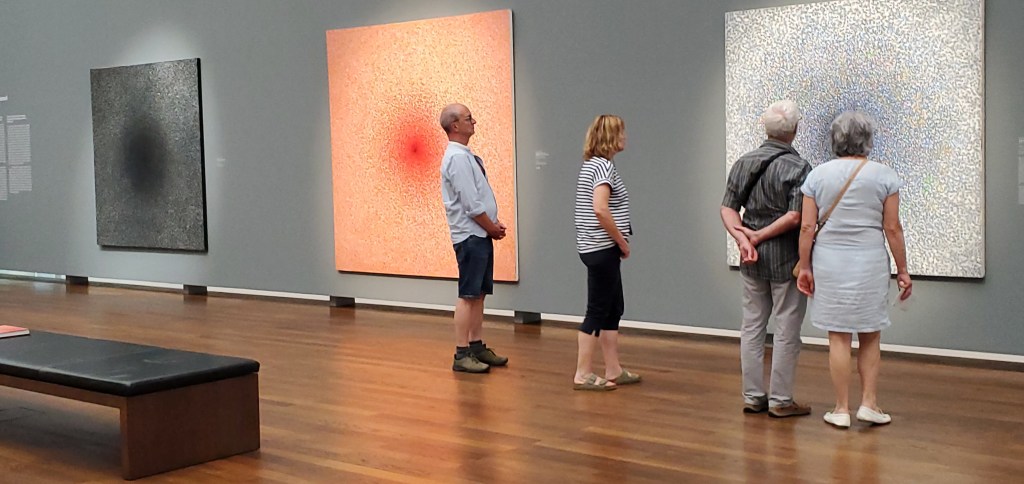

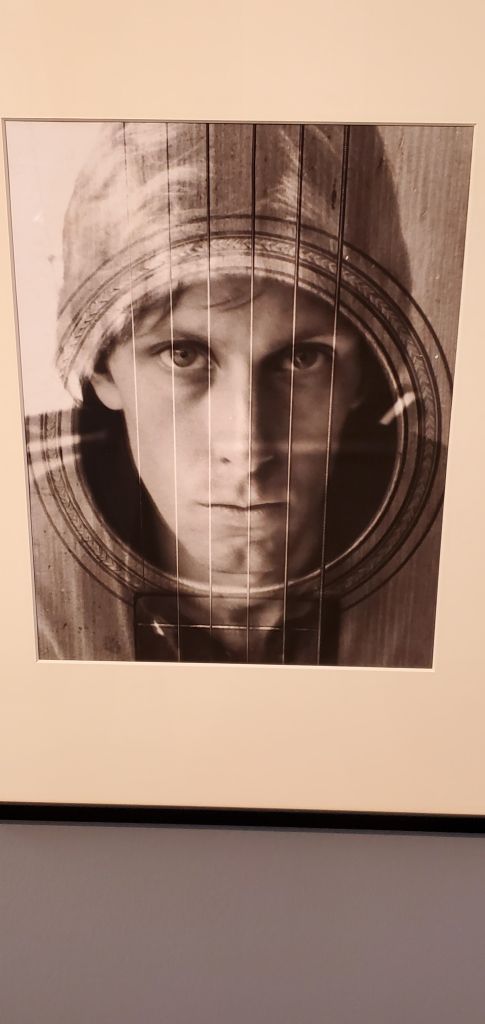
I knew virtually nothing about the artist, except that his son, Jon, founded a rock band in the ‘70s, the aptly named Pousette-Dart Band. One of my siblings had their 1977 album “Amnesia,” and I still remember the lyrics to the title track and my other favorite “County Line.”
We finished up at City Museum, and I suggested we visit Frieder Burda to see the Pousette-Dart exhibition. I don’t like to waste money and tickets were 15 Euro each, but we took a chance. All I can say is, “Wow!”

The entire museum was given over to more than 140 pieces of his art, which is mainly abstract and impressionist. However, he was also an accomplished photographer, sculptor and metal worker. Pousette-Dart is mentioned in the same breath as Jackson Pollock and Mark Rothko, fellow founders of the New York School that brought free abstraction to the forefront in the 1940s.
While you can see a few pictures here, his paintings have a depth and vibrancy that photographs cannot convey. I audibly gasped after turning a corner and glimpsing a gallery of black-and-white abstract art.
If you get a chance to see any of Richard Pousette-Dart’s art in person, go, just go. You will thank me.
About the museum: Frieder Burda was a German publisher and art collector who lived in Baden-Baden. The museum was designed by Richard Meier, who won a Pritzker Architecture Prize in 1984, the year after the Meier-designed High Museum in Atlanta opened. I knew immediately the designer was the same, because both museums feature circular, off-white ramps between floors.
Alsatian Cuisine and Cathedrals in Strasbourg
After Baden-Baden, we popped over to Strasbourg, France, for two days. I’m not sure whether it was the fourth week of our trip or the fact that it was nearing the end, but we didn’t do much in the city besides partake of the cuisine. Marilynn enjoyed her city tour, but I ducked out after about 10 minutes, preferring a nap to history.
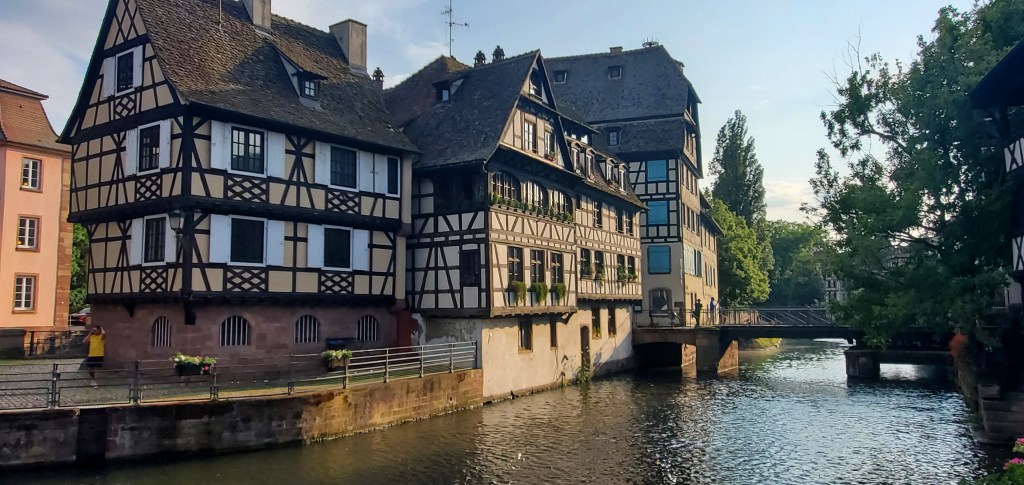
But from my minimal history lesson, I did learn that Strasbourg Cathedral was the tallest building in the world for more than two centuries until a taller German church opened in 1874. The Great Pyramids long held the title, but the removal of the limestone casings at the top for other building projects over the millennia and inevitable erosion shortened the pyramids by 26 feet.
The cathedral is truly impressive both inside and out, although our free visit to the interior was cut short by a mid-day shutdown we didn’t anticipate.


Marilynn tells me that the region moved freely between French and German influence throughout the centuries, reflecting design features from both cultures, including half-timbered houses that would be totally at home in Bavaria.
But there was food, glorious food to consume. We particularly enjoy French pastry, so Marilynn hunted up breakfast at a local patisserie each morning, returning with a heaping bagful of flaky goodness that cost less than $10. Our hotel wanted 20 bucks a head for what I’m sure was an inferior meal.
Because of my onion allergy, I couldn’t partake fully in the Alsatian dining experience, although I did grow to enjoy a cold glass of Alsace pinot noir, the only red grape allowed to be grown in the region best-known for white wine varieties. At La Fignette, Marilynn had the beef bourgignon (made with local pinot noir), while I had a hamburger. We both enjoyed lunch at Le Troquet des Kneckes, part of a small chain of 10 bars, restaurants and a hotel(!) in Strasbourg. And I contented myself with a meat-and-cheese platter at a restaurant we found along the waterway.
Visit Mainz for Chagall Stained Glass
Georgia State University has reciprocal agreements or partnerships with 16 European universities, including Johannes Gutenberg University of Mainz in Germany. Two of Marilynn’s colleagues were based at the university in the spring, so we added an overnight stay in Mainz, about a 30-minute train ride to Frankfurt, where we would fly back to Dublin before returning home.
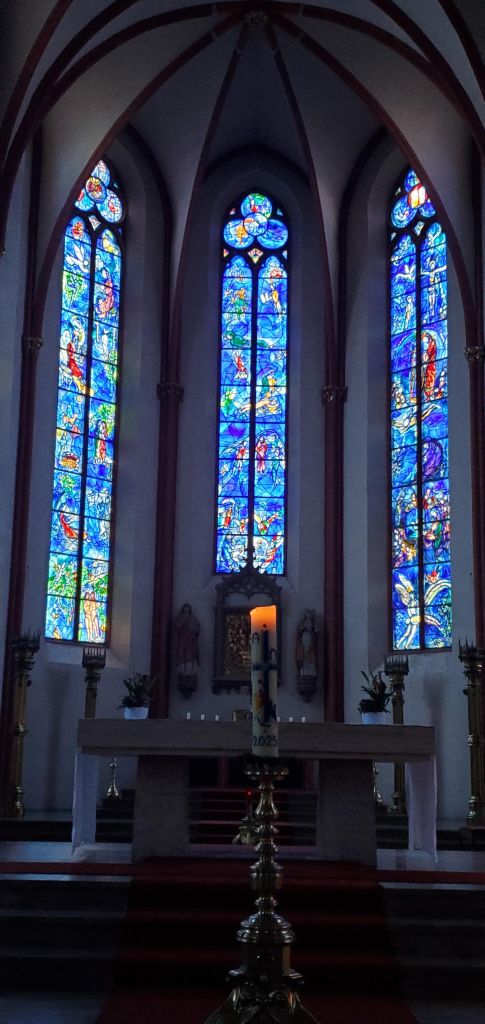
Unfortunately, her colleagues were out of town when we visited. But we stayed one night anyway, mainly to trek to St. Stephen’s Church to glimpse the exquisite stained glass windows created by Marc Chagall, best known as a modernist painter. Those windows were, in a hyphenated word, breath-taking, as soft, blue light filtered into the sanctuary while afternoon gave way to early evening.
It was quite a hike to get there from our hotel, but definitely worth the effort. Another successful European odyssey complete, we were more than ready to get back to Atlanta.
















 To Europe ... and Back