Good Friends Make for Great Sightseeing

Marilynn keeps up with everyone. We had at least two of her childhood friends from Kansas at our wedding, along with one of her Harvard roommates, other friends from college and a handful from grad school.

In Madrid on a trip a few years ago, we stayed with a woman Marilynn met once, a friend of a friend. Marilynn kept up with this woman as she married, changed jobs, had kids and watched them grow up. Marilynn sends the occasional letter or email, and we’re the rare family that still sends out Christmas cards, 120 last year—fewer than in years past because we left for Belfast a week after the holiday.

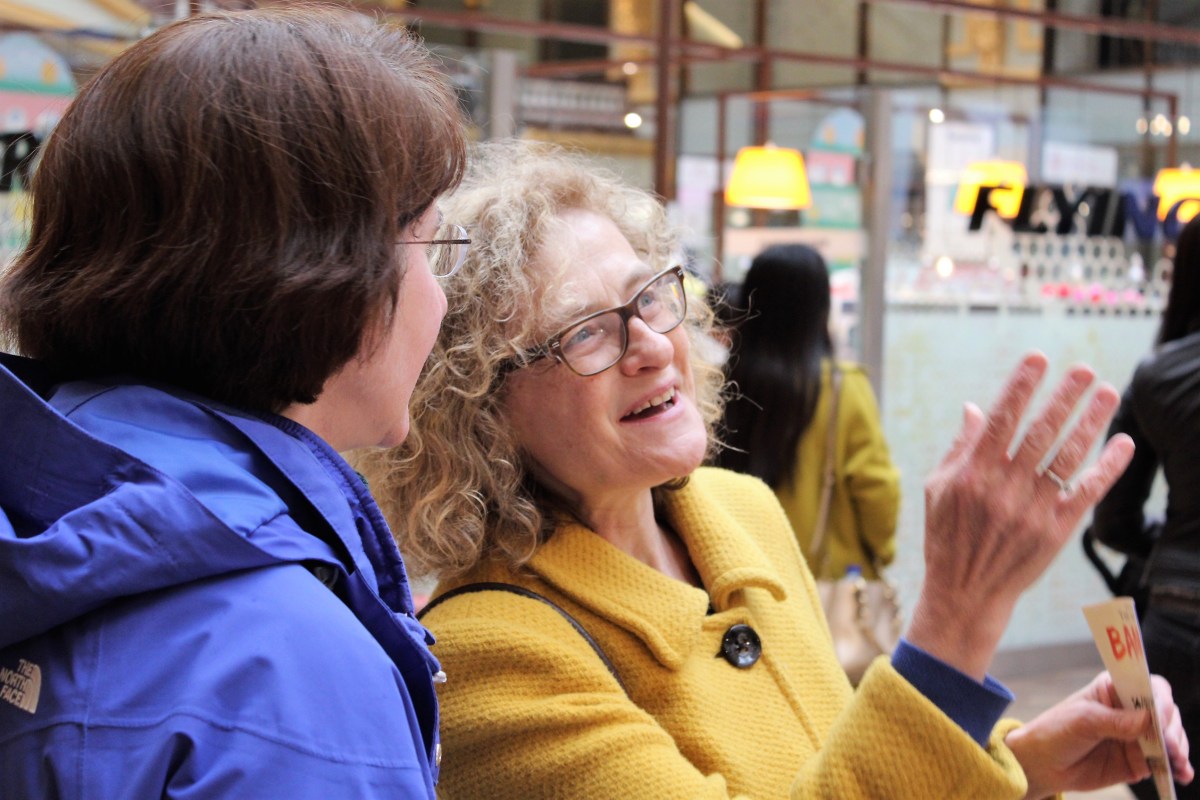
All of that to say we spent a wonderful weekend in Antwerp with Marilynn’s friend Béné, who opened her home and gave freely of her time to show us the city of her birth. Marilynn and Béné lived on the same staircase for a single year while both were attending Jesus College, Oxford nearly 30 years ago.

We didn’t visit any particular museum or cathedral but walked around the city as Béné showed us the sights and talked about Antwerp’s rich history. She’s a schoolteacher, but Béné could easily be the best tour guide an Antwerp visitor could ask for.

Fun facts about Antwerp

  • Declan enjoyed looking for the Mary and Child statues that many corner houses have for good luck. Béné says that homeowners also liked them because they came with a free light.
  • The golden age of Antwerp was in the 1560s, when Antwerp and Paris were the largest cities in Europe, with more than 100,000 people each.
  • Antwerp is the second-largest port in Europe (behind Rotterdam), thanks to a deep water port that Napoleon deepened and straightened. Unfortunately, the project forced the destruction of a fabled monastery.
  • The city’s other large industry is the diamond trade. Traditionally, Hasidic Jews dominated this, although Béné says Indians have taken on greater importance in recent years.
  • The story of Nello and Patrasche resonates in Japan and Korea much more than it does in Belgium, where the story originated. “A Dog of Flanders” is an 1872 tragedy written by Marie Louise de la Ramée under the pen name “Ouida” about a peasant boy and his dog. The book is required reading in Japan, where it’s become part of the country’s collective psyche, as evidenced by the reaction of Japanese tourists who stumble across the monument in front of Antwerp Cathedral. The new statue, unveiled in December, shows Nello and Patrasche snuggling together under cobblestones that seamlessly flow over the white marble fixtures. Several films have been made from the book, and not all of them relate the original story’s not-so-fairy-tale ending.
  • A statue depicts the popular legend of how Antwerp got its name. According to folklore, a giant collected a toll from passing boatmen, severing a hand off those who refused and throwing it in the river. A hero named Silvius Brabo cut off the giant’s hand and (what else?) threw it in the river. “To throw” in Dutch is werpen so throwing a hand is Antwerpen.
  • Dutch master painter Peter Paul Rubens lived and worked in Antwerp at Rubenshuis, which is now a museum. His work also can be seen in two local churches.
  • A begijnhof houses a community of single women who live communally like nuns (but aren’t) and serve those in need. These communities are dying out, with the housing passing into private ownership. Béné showed us the courtyard of a former begijnhof that is not on public display.
  • The St. Anna Tunnel connects the parts of Antwerp divided by the river Scheldt. A set of cool wooden escalators takes visitors more than 100 feet down, or visitors can take an elevator that holds 40. The pedestrian and bike tunnel is more than one-third of a mile long.

Sacrilegious Easter brunch

While wandering around town on Easter morning, amid the cacophony of church bells announcing Christ’s empty grave, we had a delightful brunch at probably the most irreverent restaurant you’ll find.

At Het Elfde Gebod (the Eleventh Commandment), you’ll find the place chock-full of saints, sinners, cherubs and other statuary on the walls and sitting on nearly every flat surface. Kitsch aside, the food was superb. I had a plate-filling omelet, and Marilynn had The Last Supper, reminiscent of a Ploughman’s lunch with tasty bread, brie, ham and olives. By the way, the 11th commandment is “to eat well, drink a lot of tasty beer and have lots of fun,” according to the restaurant.

Our thanks again to Béné and her family for the warm welcome and the chance to visit, relax and wash clothes.

Can’t Escape Amsterdam’s Seedy Side

While in a convenience store, I had to explain to Declan what cannabis was. We weren’t anywhere near the Red Light district—just in the mood for a mid-morning snack. But there was cannabis chocolate, cannabis tea, other edibles and cannabis energy drinks (isn’t that an oxymoron?) mixed in with regular junk food.

So we carefully (carefully!) picked up some Heinz ketchup flavoured Lays chips (tasty) and some Japanese party mix. We skirted the Red Light district on our first full day, catching a whiff of spliff every now and again, seeing an ad for the Hash Marihuana & Hemp Museum on the tram and glimpsing a few “coffee” houses with neon pot leaves on their signs.

Sex, drugs and churches

But on a church tour Friday morning, the seamy side of Amsterdam could not be avoided. The churches we wanted to visit were on the edges of the Red Light district. While walking to the first church, I turned around at one point and saw a couple of scantily clad ladies on display in adjacent doorways. They were more Clermont Lounge than the Cheetah, if you’re familiar with the reputation of the ladies in the Atlanta strip club scene. Let’s just say I was thankful they were somewhat covered up, although I was wishing for full Muslim garb, if you get my drift. I quietly motioned to Marilynn to go have a look.

We first visited Museum Our Lord in the Attic, a secret church built in 1663 when Catholics lost the right to worship in the city. I was imagining a cramped space where 20 people huddled together under the eaves. It was nothing of the sort. A hundred could easily have fit in the space, which spanned at least two houses and featured pews, side lofts above the main worship area, a pipe organ, priest quarters, a baptismal font and a confessional. It was definitely worth a look.

Then we walked down the street to the Oude Kerk (Old Church), which had packages of hemp tea for sale in the entrance hall. Wacky tea aside, the church was a former Catholic church that was stripped of most of its religious artifacts when Catholicism was banned. It is used mainly for public events now. One misericord (discrete chair where clergy/choir would sit) worth a look shows a Dutchman pooping coins. It refers to a Dutch saying that translates roughly into, “You can’t poop money.”

Better left to the imagination

As the morning wore on, the sights and smells of the “other” Amsterdam grew. I regret not being able to take more pictures, for fear of drawing undue attention. I would have loved to say to Marilynn, “Hey, stop! I want to get a picture of that 10-inch bright red, anatomically correct, fully erect, circumsized dildo salt shaker with the symbol of Amsterdam (XXX) on it.” But I didn’t. I would have loved to get a picture of those “ladies” in the window, but not only did I not want to draw attention, I didn’t want to break my camera.

And once you knew what to look for, it did seem like reefer madness had swept that part of the city. A group of tourists was undoubtedly on a pot tour, judging by the look of the participants and the amount of colitas, rising up through the air. Hand-rolled “cigarettes” were everywhere, as were the accompanying smells.

We spent the rest of our final day in Amsterdam at the Artis Royal Zoo, where I hope no one was high. It’s one of the oldest zoos in Europe and features an aquarium, a planetarium and extensive artwork—none of which we saw because of time constraints. But what we did see was impressive.

The lemurs were shown in a wild setting fully accessible to visitors. They ran in front of us along the top of a fence, one of them slightly brushing Declan’s jacket as it passed. At one point, they all ran into the trees and started shrieking in unison to the point we thought something was wrong. We also saw two hornbills participating in what one could call a sing-off, one singing a few notes, then the other responding in kind. We could have spent an entire day there and not seen all there was to see.

And that sums up Amsterdam: we saw a lot but felt there was much more to hold our attention. The city, drug culture aside, gets an asterisk next to it, meaning we want to visit again.


A ‘crap’-tastic visit to Amsterdam

I wanted to call the stuff that looked like pigeon crap hanging from the undersides of many of Amsterdam’s bridges “shit-lactites.” But Declan had an even better word: “stalact-shites.” Declan is quickly becoming a better wordsmith than his dad.

In retrospect, they’re probably salt deposits or the byproduct of the rusting process, but I’m not going to stand in the way of a good lede.

A boat tour proved a fitting end to a fine first day in Amsterdam—so much better than the getting to Amsterdam from Berlin part. The train from Berlin almost made the border, when the conductor announced the train could go no further and was returning to Berlin. We were dumped out in the middle of nowhere, at a train station that was closed for renovation. It was cold and would be at least an hour until busses could be arranged to take us beyond the track difficulty, which apparently was someone getting hit on the tracks.

As we all stood in the cold and watched the train depart, Declan wondered aloud why we couldn’t just have waited on the warm train with the working toilets. Good point, son. But that delay meant we didn’t get into Amsterdam until after 5 p.m., so there was little left to do but find dinner and scrounge supplies for tomorrow’s breakfast. We only had 48 hours in Amsterdam, and we wanted to make the most of them.

A fitting building for masterworks

Our first stop was the Rijks Museum, the Dutch national museum of art and history. The museum is best-known for its Rembrandt paintings, in particular The Night Watch. The Dutch painting style is much more to my taste than earlier periods during which it was all large ladies, fuzzy details and painting after painting of Mary and baby Jesus. Rembrandt’s use of light to highlight certain details shows up best when you can see it in person. The museum also has an impressive collection of Vermeer, three Van Goghs and a ton of other items that easily could fill a day’s time.

Equally impressive, especially when contrasted with our experience later in the Van Gogh Museum, was the scale of the building, constructed in the late 19th century and extensively renovated a few years ago. Despite the high season crowds (it’s tulip season in the Netherlands), everyone was spread out and you could stand in front of even the most popular masterpieces after a moment or so.

And then a building that didn’t work

After lunch, we visited the Van Gogh Museum, where our experience was quite different. The place was packed—and felt it. But I’m fond of Impressionist art, and this is the world’s largest collection of his work—200 paintings, 400 drawings and 700 letters, supplemented with works by such contemporaries as Gaugin and Rodin.

Like Rembrandt, Van Gogh needs to be seen in person to fully grasp the bold use of color, the layers of paint and the brushstrokes. His work while in an asylum was particularly good, I thought. What I didn’t think was particularly good were the maddening crowds, armed either with cell phones or multimedia guides walking around oblivious to everyone else. You don’t need to stand in front of a painting while you’re looking at a screen. We gave a quick pass to anything that wasn’t painted by Van Gogh so we could maximize our time and escape the crowds. Still worth it, but a more leisurely viewing experience would have improved the visit greatly.

We ended our day with that 90-minute boat tour, exploring several canals and learning more about the city’s rich history. I was happy to hear that printers once had their own canal where they plied their trade. Once it was pointed out, you couldn’t help but notice that the buildings are canted ever so slightly forward. The buildings are vertical, making it difficult to bring in large furniture, so most houses had hooks or pulleys installed over the eave. The forward cant was to stop furniture hitting the house on the way up.

Until more recently than you’d imagine, houses in Amsterdam didn’t have house numbers. Instead, they were identified by the gable tiles that often alluded to the origin or profession of the owner. And if what we saw under most bridges was consistent, you could also identify the canal you’re in from the stalact-shites.

Berlin Museums a World Apart

I’m a huge fan of museums. Art, science, animals (dead or alive), archaeology, geology, history, a man and his crap—you name it, and I’ll visit it. But I’ve discovered that there are few truly great museums. The British Museum qualifies, as do the Field Museum in Chicago and the Museum of Natural History in New York.

There are plenty of others I haven’t yet visited, but I can now scratch the Pergamonmuseum from that list. The Pergamon is part of Berlin’s Museum Island, a World Heritage Site since 1999. Even though the namesake Pergamon Altar and the north hall are currently closed for renovation, the remainder of the museum is quite impressive indeed.

The museum was built during a time when men dreamed big and then stole bodaciously. Elgin liberating the figures ringing the Parthenon, now on display at the British Museum, was bodacious. But taking the Ishtar Gate of Babylon, coupled with the processional way? One needs a new vocabulary to cope with taking on that scale.

The first Pergamon had to be demolished because the foundations weren’t up to the task of supporting the massive stone and brick facades that are the Pergamon’s stock in trade. In addition to the Pergamon Altar and Ishtar Gate, the Market Gate of Miletus dates from AD 100 and features two stories of columns and artwork. There’s even a room from Aleppo, which, given the fierce fighting in Syria recently, makes its acquisition seem prescient instead of possibly illegal. We also wanted to see the Alhambra Dome, taken from the palace we saw during our 2015 trip to Spain. Thinking back to the Alhambra, I don’t think that dome was missed.

Because of the renovation, entrance to the museum is limited. We hadn’t booked in advance, so we waited in line for about 30 minutes until a sufficient number of people left the building. But visiting the Pergamon was well worth the wait, and the scale of it means that even capacity crowds don’t feel that way.

Experiences of Egypt and beyond

Das Neues Museum (New Museum) is adjacent to the Pergamon. Built in the mid-19th century and  badly damaged during the Second World War, it was extensively refurbished during the 1990s. The New Museum features artifacts from the Egyptian Museum and Papyrus Collection, the Museum of Prehistory and Early History and the Collection of Classical Antiquities.

After waiting in line and taking in the Pergamon, I admit that we probably gave New Museum short shrift. But we did hit the highlights, including the extensive Egyptian artifacts that Declan likes. While the artifacts were impressive, I thought the lighting in the Egyptian section did the artifacts no justice. It was rather harsh and threw glare across the glass encasing many objects.

The curators did a much better job displaying two of its must-see pieces: the Golden Hat and the bust of Nefertiti. The Golden Hat, the use of which remains unknown, was in a darkly lit room with soft lighting making the hat shine. The bust of Nefertiti was in a room by itself, her glassy-eyed gaze still penetrating after so many centuries.

On a future trip, I’d make sure to see the Altes (old) Museum, with its collection of ancient Greek utensils and Etruscan art, and the Alte Nationalgalerie (Old National Gallery), with its collection of impressionist paintings, both of which are closed on Monday.

But those will need to wait for another visit.

Gunner Doing Better than Namesake Team

Don’t mind that cute kid … look at that gorgeous cat! Nine weeks into this adventure, and it appears that our cat Gunner has settled in nicely with our carer, Nancy.

That’s her granddaughter, who Nancy says is quite taken with Gunner. And that’s one of Gunner’s favorite positions, on top of the couch where she can survey the scene without appearing too interested.

Nancy says Gunner is very active at about 4 in the morning and following afternoon nap, which is when she was playful at home. She might have been playful at 4 a.m., too, but we keep our bedroom door shut. Nancy also says Gunner is getting along well with her old cat, Malachi.

We miss many things about Decatur, but we miss Gunner most. I left my black shaving kit on our bed the other day and thought it was the cat when I passed our room later.

It’s apparent that our beloved cat is doing much better than our not-so-beloved-these-days Premier League team Arsenal. Blown out of the Champions’ League, pretty much out of the Premier League race this year, but still in the FA Cup, which is football’s equivalent  of a Miss Congeniality prize.

Meeting a US Ambassador (Kinda) Certainly a First

Being married to a Fulbright Scholar has perks beyond living for six months in Belfast. We were part of a group at a reception Monday night for the US ambassador to what’s officially known as the United Kingdom of Great Britain and Northern Ireland. Pretty cool, huh?

Officially, Lewis Lukens is the chargé d’affaires-ai, a hoity-toity term that Wikipedia says means interim until Trump’s nominee is approved. But hey, he has the same privileges and immunities as the ambassador, so that’s good enough for me.

Hanger-on-spouse or trailing husband?

Of course, other than a brief handshake and a quick “nice to meet you” I spent all of my time talking to other people and figuring out what their connections were. But I did meet two other Fulbright Scholars, learning more about them, and spent time with the husband of the Fulbright Scholar who lives across the courtyard from us. At these events, he calls himself the trailing husband, while I prefer hanger-on spouse.

The Fulbright Scholars were guests of the host, Consul General Dan Lawton and his wife, Paula. Declan was specifically invited because the Lawtons have teen-aged children, so the kids could hang out while the adults mingled. Declan got his own tour of the mansion (yes, counsul generals live in mansions) and munched pizza upstairs.

Paula is also a Stewart Parker fan, and we’d already met her and Dan when they attended the staged reading of Parker’s play “Pentecost” last month at the Linen Hall Library. She has been recommending Marilynn’s book to people, which has greatly endeared her to us.

Where’s the Guinness?

OK, it was much like any other reception I’d ever been to, but with a few twists thrown in. For example, there was no Guinness but there was Budweiser. We’ve been to events at the Irish counsel in Atlanta, and there’s always Guinness. And with apologies to Marilynn’s cousin who works for InBev, yes, Budweiser is getting popular over here, although I cannot imagine why.

After initial pours behind the bar, the gregarious bartender made the rounds offering refills. I finally had to cut myself off. And the wait staff was among the most pleasant I’d ever met.

The ambassador’s staff photographer from London also was on hand. He had actually been in Atlanta for a religious studies conference and commented that it was weird seeing a downtown skyscraper that looked derelict, with boarded-up windows. Marilynn and I independently thought about the Westin-Peachtree, which had several boarded-up windows for a couple of years after the 2008 Atlanta tornado.

About the photo: I’m not the kinda guy to take selfies with the chargé d’affaires (although others were), so while chatting up the photog I asked about getting a reception photo for the post. They’ll be on Flickr, he said, but I’m still waiting, so I stole this one from when Lukens visited the RAF Museum.

Walking Between the Raindrops

If you were a tourist in Belfast today and doing anything outside, you’d have hated the weather. Fortunately, we aren’t tourists, so it was a wonderful day. If you stayed inside every day it rained in Belfast, you’d become a hermit in short order.

We entertained guests at the flat last night and slept in later than normal for a Sunday. I’m fighting a cold and welcomed the extra slumber. But when we got up, the rain was slanting sideways across the bay window in front. A crappy day, to be sure, and not one that screamed, “Let’s spend the day outside!”

For the love of crisps

But the flat is small, and one can only lie around for so long. So between downpours, we walked down the Lisburn Road to Poundland to buy weird crisps. This will be fodder for a future column, but Brits love odd-flavored crisps. Prawn. Lamb. Worcestershire sauce. Ham and pickle. Steak.

On past trips, we’ve become quite taken with the Meal Deal, which normally consists of a sandwich, crisps/dessert and a drink for a low set price (generally 3-4 pounds). Great for eating lunch on the go. I always try to buy the oddest crisps I can find that don’t contain onions (I’m allergic). But I have been unmoved by the selection at Tesco (local grocery store chain). Then we wandered into Poundland a few weeks back, and there, in all their glory, were the odd crisps I hadn’t yet encountered, many of which I likely won’t love. But I will try them all.

We bought a half-dozen bags (at a pound apiece, of course), went hairdresser window shopping for Marilynn and bought a few sundries at Tesco, before returning home.

Poop and polar bears

The rain started coming down almost the second we reached the flat. But it soon let up again, so Declan and I spent some time at the Ulster Museum, which is free and near the flat. The Ulster Museum is a joy to visit, and the exhibits feature a little something for everyone. You’ll find contemporary art and sculpture, Egyptian mummies, artifacts from Ireland’s rich history, ammonites, dinosaur bones, dinosaur poop and Peter the Polar Bear, who lived life at the Belfast Zoo and now lives on in death in a prominent place at the museum. You’ll also find an Irish elk (pictured), more accurately described as an Irish giant deer.

We stayed for about an hour, leaving right before the museum’s 5 p.m. closing—and yet another rain storm.

Meal Deals aren’t just for lunch, either. For dinner, we had a Marks and Spencer 10 pound dinner deal—whole roast chicken, rosemary potatoes, apple tart and a surprisingly good bottle of wine. And there is half a chicken left over.

All in all, not a bad way to spend a rainy Sunday in Belfast.

For the Love of a Feline

It’s not all raindrops and roundabouts here in Belfast, because we left a cherished family member back in Decatur—our beloved cat, Gunner.

Even Marilynn, who wasn’t much of a cat person before she met me, quite likes our mainly black, mainly Burmese (according to the vet) cat. It’s funny, but despite growing up with cats and living around them all my life, she is the first cat I’ve ever picked.

And Gunner definitely is Daddy’s little girl, racing me up the stairs (or down) from my office or seeking attention while I’m in the office. Most afternoons, after her nap, she will either stretch out and knead the back of my chair or sit beside my chair and touch my elbow with her paw until I respond.

It’s to my advantage with Gunner that I’m home all day, since my office and house are the same place.

New house, new cat

Our old cat, Bogger, died a few years back, and we already were considering moving from Atlanta to Decatur and didn’t want to get a new cat immediately, much to Declan’s consternation. And when we did move, we rented the house for several months while old house was on the market.

But the weekend after our house closed, Declan and I went to Petco to see the adoption cats, to just look, you know.  We often visited the PetSmart near our old home on the weekends, so I thought all pet stores did this. Apparently not, so, not wanting to disappoint the lad, I suggested visiting the DeKalb shelter. I knew that cats had been free during November and were just $10 in December, including shots, fixing, microchip and certificate for follow-up vet visit.

Don’t tell Gunner this, but we actually picked another cat that turned out to be adopted before picking Gunner. It was destiny, though, that we found Gunner, who was called Jenny at the time. Declan and I are fans of Arsenal in the English Premier League, and we knew any animal we adopted would be called Gunner.

She took to us immediately. When Gunner was smaller, she’d stand on the supports under the chair and walk among the chairs that way. She would also sit in in the well of the front-loading washer and watch the clothes spin or climb the floor fan in our bedroom, wrapping her paws around the motor and hanging on.

Gunner loves to play laser mouse, sometimes jumping half way up the wall in the TV room. She also likes looking out the window (especially with the window open), chattering at the birds gathered at the feeder or flitting around the yard. And she knows how to get what she wants, with a look or a well-placed paw. She’s like the dog we’ve never had.

When needs must

But as any animal owner knows, adulthood can be somewhat different than a pet’s childhood. Gunner has mellowed somewhat, and we really didn’t want to move her while we were in the UK, but one of our renters is allergic to cats.

After a few false starts, Gunner has found a temporary home with one of Marilynn’s grad students, who has an older cat that apparently doesn’t care there’s another cat living there.

Here’s part of Nancy’s mid-January report: “But to be honest, she hasn’t made herself completely ‘at home’ at this point; she stays upstairs, in my room the majority of the time, but has been slowly venturing forth (especially when she’s in ‘Jungle She-Cat’ mode!). That said, it’s not like she’s ‘unhappy.’”

Nancy reported several days later that Gunner and her cat Malachi were sharing the bed with her, albeit on opposite sides, so progress continues to be made.

So while we’re having a blast here in Belfast, we have mixed emotions about leaving Gunner behind.

A Room with a View (and Culinary Delights)

This ain’t your Irish grandma’s fry-up. During our recent trip to Cork and thereabouts, we were very surprised by the quality of the accommodations and the food. Even at the B&B we were least impressed with, we had options beyond the traditional Irish breakfast, which usually includes fried eggs, sausage, bacon (the Irish kind), black and white pudding, stewed tomato and/or mushrooms and soda bread. If there’s a hint of baked beans on the plate, run like hell, because that’s not part of the Irish breakfast.

Fine dining in Cork

In Cork, we stayed at Garnish House, a guesthouse right next to University College Cork, where Marilynn gave her talk. The food was, in a word, sublime. After the four-plus hour drive to Cork (wrong side of the road/roundabouts/time crunch because of when Marilynn’s talk was scheduled), we were ecstatic to be offered afternoon tea, with scones, biscuits and other delights. What a refreshing way to be greeted.

During tea, we also had a chance to peruse the breakfast menu. Traditional fry-up? Or how about one of about six fish choices? Omelets? Porridge? Fruit? Pancakes? Several of the above? I had a half fry-up one day and an omelet the next. Marilynn had an omelet, then poached fish. She also had a bowl of porridge spiked with Bailey’s Irish Cream. Declan had pancakes both days.

While in Cork, Declan and I went for pizza one night while Marilynn was being schmoozed by the university folk, but the next night we all walked in the pissing rain to Feed Your Senses, a tiny tapas restaurant on the main drag that only has a half-dozen tables. It was the best tapas we’d had since a trip to Spain in 2015. A plate of Iberian ham, cheese and bread, an order of olives, one of patatas bravas (fried potato cubes, topped with spicy sauce) and a bottle of wine filled us to great satisfaction. Fortunately, the rain had (mainly) stopped on the way home, so my somewhat drying trousers didn’t get any wetter.

Dingle was great, while Doolin was so-so

And in Dingle, we were treated to not only an ocean view room at the Dingle Harbour Lodge, but also some fine vittles the next morning. The photo at top was the view from our room. We hadn’t booked in advance, so snagging a primo room (for under 100 Euros, nonetheless) would have been an impossible dream during high season. Again, breakfast did not disappoint. Declan and I had delicious waffles made from the lodge’s own recipe and Marilynn had a bagel with smoked salmon.

Unfortunately, it wasn’t all high living and fine dining during our Ireland journey. The final stop, in Doolin, was supposed to cap a fine trip. The standard for fine B&B lodging and dining, for us, was set in Doolin in 2002, when we took Walker to the Cliffs of Moher. We still recall the American-style pancakes with delight, amid all the fry-ups we had that journey. The fry-up, while an all-time favorite of mine, loses its appeal as your waistline gains circumference. But that B&B was closed for the winter.

Although this B&B had Doolin in its name, it was nowhere near town. There would be no going to hear local music in the pub, then walking home pleasingly buzzed, as we did the last time. First we had to find it, since there was no address associated with the booking. Up through the main part of the village, down the next … nothing.

So we go into pub and ask the barman, who knows where it is and gives directions. I won’t bore you with the details, but they involve signs that got turned around in the wind; nearly driving onto the beach as pavement gave way to gravel gave way to a muddy mess; turning the car around more times than I care to remember; asking directions at another B&B (bless that woman); and a near meltdown by someone in the car—all in the dark—before we arrived.

OK, so it was me who was close to a meltdown. I tell the proprietor about the signs, and he says something to the effect of, “Aye, it’s been windy lately and that happens.”

What I wanted to say was, “You feckin’ idiot!! If that’s a problem, don’t you think you should have checked that before your guests arrived!” But we were staying in his house, so I kept my mouth shut.

I’ll save those comments for the booking website I used to make the reservation.