7 Ways to Help You Make it Rain

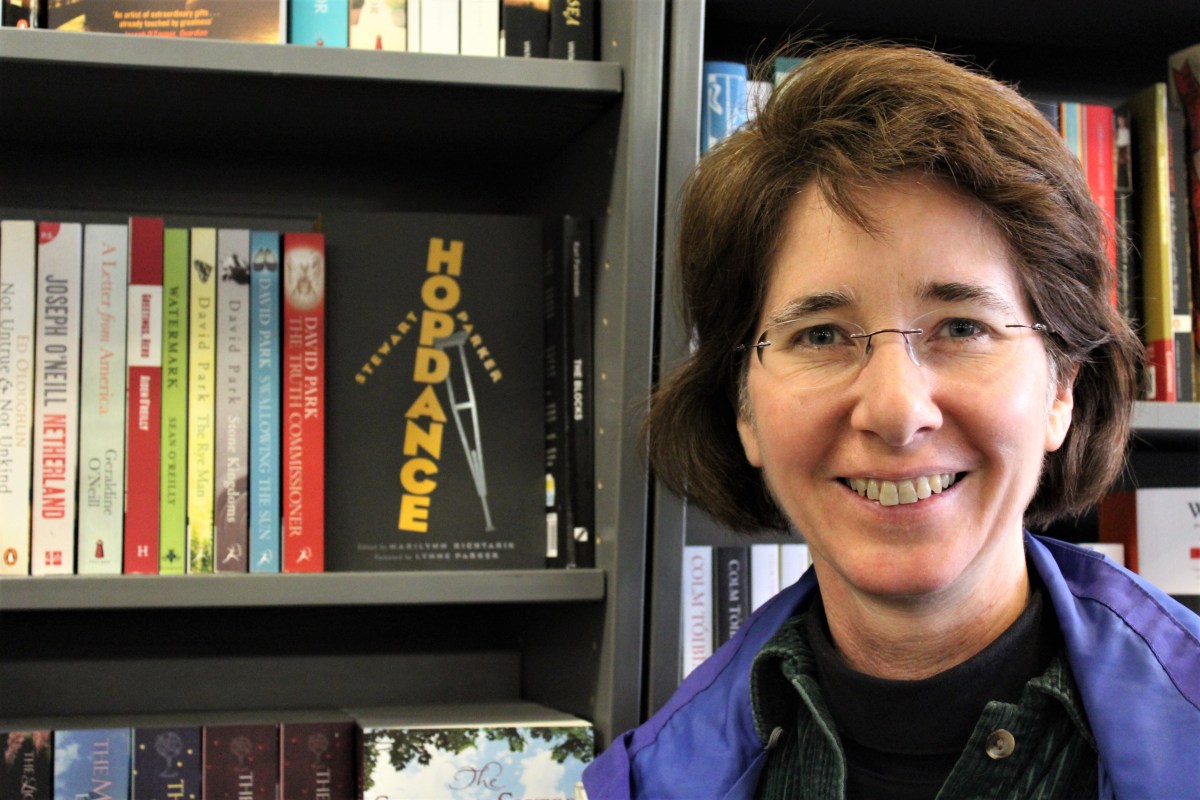
As a marketer, helping my wife Marilynn Richtarik with publicity for her edition of “Hopdance” has been a hands-on learning experience. Here’s what I’ve learned from those experiences—and how they can help you, too.

1. Start with quality

You can craft a successful campaign around a crappy product, but you better have lots of money. I’m fortunate that my wife has a strong track record of research and is a noted authority on the late Northern Irish playwright whose stylized autobiography she prepared for publication. And Stewart Parker was a craftsman whose words pop from the page. A reputable product from a reputable source.

2. Work your network

Marilynn has built up an impressive list of friends and acquaintances that she’s cultivated over a lifetime, not because of what they can do for her but because she likes to keep in touch. We’ve stayed with a woman and her family in Madrid who Marilynn had met once 25 years previously. Almost everywhere we go, she knows somebody. But the network isn’t just one way—Marilynn will do whatever she can to help her friends and colleagues. We send upwards of 120 snail mail holiday cards each year with family picture and letter.

3. Don’t wait to be asked

“Hopdance” is published by The Lilliput Press, an independent press that took a chance on a one-off project from a deceased playwright. Their resources are limited and concentrated on Ireland, not the UK, so much of the initiative on publicity is left to authors. Marilynn has contributed articles to The Irish Times and the Culture Northern Ireland website, been interviewed on a well-regarded arts radio program, and arranged three “Hopdance” readings in Belfast and at least one in another UK city. More events, interviews and contributed articles are in the works but not yet finalized.

She developed contact lists for Dublin and Belfast to publicize these events with press releases and also created a list of possible readers/reviewers for the press. She knew the presenter of the arts program and the editor of the website, but the Irish Times piece and the ones in the works are with people she hadn’t met and contacted out of the blue.

4. No square pegs for round holes

By focusing precisely on the sweet spots, Marilynn has been able to maximize her efforts. Not every publication, website or bookstore will be interested in the book, so we’re not wasting time trying in those areas.

5. Think outside the box

But it pays to think about the larger possibilities. The appearance at the Belfast Book Festival is a direct result of my research. We’ve contacted several other book festivals I found out about, although those are longer-term projects. Marilynn parlayed her last book project, the 2012 biography Stewart Parker: A Life, into three years of Thanksgiving break university visits. She’s already making plans to take “Hopdance” on the road this fall.

6. Reuse, revise, leverage

Reusing content is all the rage in marketing circles, such as turning the seven points in this blog post into a graphic. Think about how you can leverage what you have in new and different ways. For example, Marilynn persuaded a local arts and culture website to post a recording of her first public talk about the book. Now when approaching bookstores and book festivals about potential events, she can point them to the website to hear her performance.

7. Ask for help

Not everyone has in-house marketing resources. You marketing efforts must be concise and well-targeted to succeed, so if you don’t have those skills within your company (or within your household), consider bringing in an expert.

You likely know your product and your market better than a marketing writer, but a professional writer knows how to speak to your target audience(s) in ways that you don’t.

Marilynn is an incredibly talented academic writer whose work also appeals to a wider audience. But she knows squat about marketing writing. Even she needed a little help to publicize the readings, find new audiences and discover new potential sales avenues.

Visiting Large at Big Houses

After our adventures at Crom on Sunday, we retired to our rooms at Derryvree House & Cottage, mainly so Declan could kick a football around with the owners’ boys. The B&B is a working sheep farm, and we could hear the sheep bleating from our open window—quite a change from the road noise outside our flat.

Wendy was a great hostess, welcoming us on Sunday morning with tea and treats—even though we were just dropping our bags. She recommended the Bush Bar & Bistro for dinner, which was superb. After a good night’s sleep, we all enjoyed a traditional Irish breakfast, with Irish bacon and sausages, eggs, stewed tomato, mushrooms, soda bread and toast, along with cereal, fruit and yogurt.

But Monday’s main attraction was two big houses, both part of the National Trust. The Big House novel is a genre of Irish literature, where the action unfolds in a generally rundown building that falls apart (or burns) by the book’s end.

Upstairs and downstairs

On the tour of Castle Coole, home to the earls of Belmore, we were ushered in the big front doors as honored guests at an evening fete. The 100-room Georgian mansion was built in the late 1700s with symmetry in mind, false doors and fake columns used as needed to maintain the overall balance.

The mansion seems to pop out of the top of the field where it sits, which was the intent of the design. There are no doors at the back of the house where people could wander outside and spoil the view. However, strategic floor-length windows did open out to wide steps, so authorized wandering actually was possible.

After seeing how our betters lived, we were ushered downstairs to the servants’ level. The National Trust had to pour a lot of concrete to level the steps, which had been worn down by constant use. The docent turned out the lights, simulating the semi-darkness where servants worked, low candles doing little to dispel the gloom. She said a worker interviewed in the 1950s said servants would walk down the main corridor with a hand lightly touching the wall as a wayfinding device.

We saw the kitchen, wine corking room and housekeeper’s room. The butler’s rooms will be open soon, a reason to come back.

FlorenceCourt (2)
Florence Court suffered heavy fire damage in the 1950s.

Burning down the (big) house

After a leisurely lunch, we visited Florence Court, which actually did burn in the 1950s, damaging two-thirds of the mansion. Fortunately, many of the baroque plaster ceilings survived, including the elaborate ceiling in the dining room that was saved when workman drilled several holes into it to drain water from the upper story after the fire.

The fire broke out in the wee hours of March 22, 1955, caused by faulty electrical wiring in the floorboards near Lady Enniskillen’s bedroom. She was no spring chicken, but she raised the staff, then ran a half-mile in her night clothes to summon the fire brigade from the nearest telephone. Our docent said the lord had only just reluctantly allowed electricity in the house but drew the line at a telephone.

Although Florence Court looks bigger from the outside, we were surprised to learn that Castle Coole actually has more rooms. But Florence Court does have a large, tri-sectioned walled garden that was a perfect way to cap the day.

A special thanks to the National Trust staff at Crom, Castle Coole and Florence Court for warm welcomes, tasty treats and overall good craic. We are especially grateful to the staffer who drove us in a golf cart from the car park to the mansion at Florence Court so we could catch the next tour and later cycled around the grounds to find Eileen and deliver the book she had bought because the visitor center was about to close.

Driving the Boat. That’s the Way You Do It.

I finally got to drive the boat. It only took 52 years, two disinterested women and a boy too young to steer, but hey, I’ll take it.

Brits also got the day off Monday, courtesy of a second bank holiday in May. Our friend Eileen offered to drive us to Enniskillen in County Fermanagh to visit several National Trust properties and overnight at a B&B.

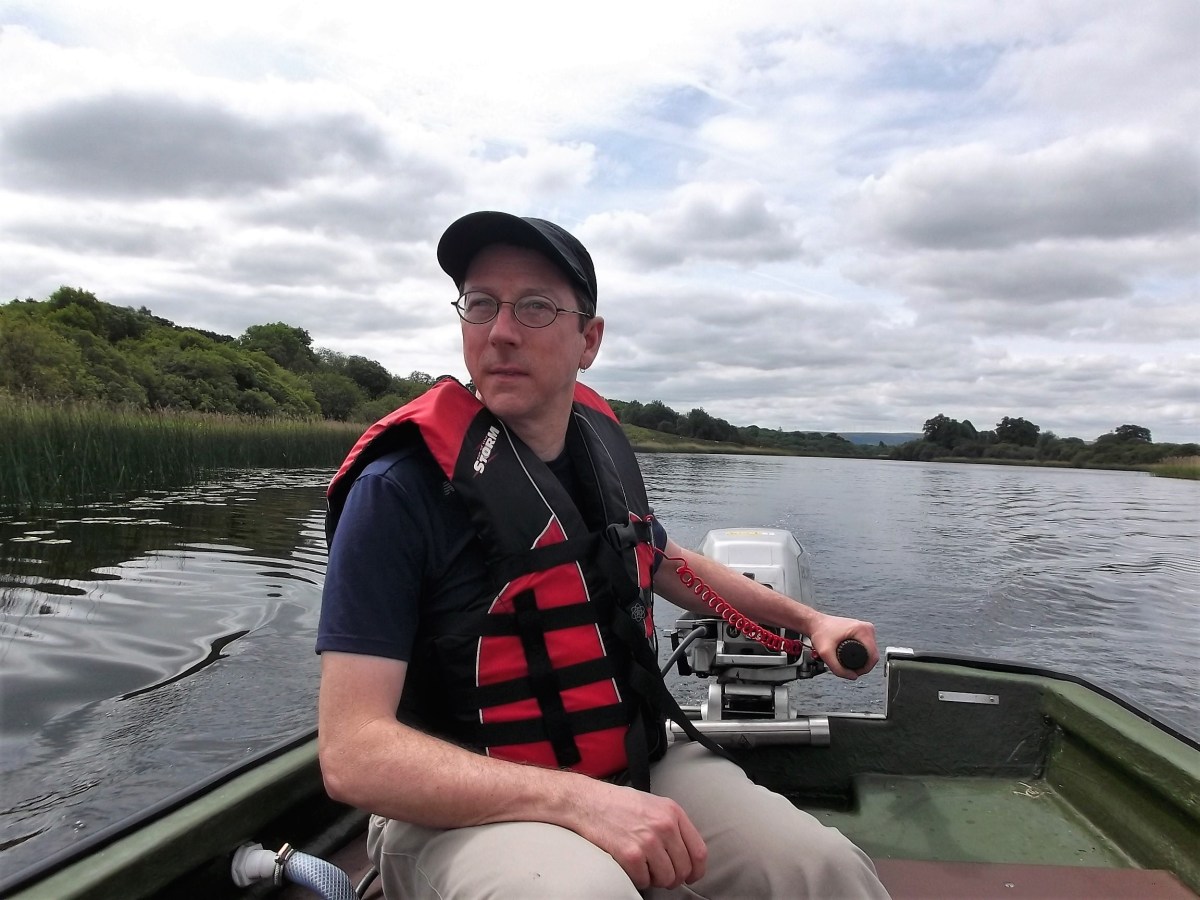
That’s how we wound up Sunday afternoon on Upper Lough Erne at the Crom estate, me at the helm of a small aluminum boat with a standard outboard motor. I know, small potatoes, but these small pleasures were denied me growing up.

Chores, I’ve done a few

As the youngest of five, I always got the ass-end of the chore stick. Washing the dishes? No, I had to dry them, the dish cloth becoming sodden with each plate or bowl, forcing me to wipe more and more to get them sufficiently dry.

Drive the tractor on the farm? Of course not! I was the boy pulling the weeds in what seemed to be a 10-acre garden that was perpetually in sunlight.

Actually, we didn’t do much (OK, any) boating after we moved to Tennessee when I was 9, but I do remember Dad or my oldest brother puttering us around Lake Juliana in Florida during family vacations in an aluminum boat with an Evinrude outboard at the rear. Or fishing with our grandfather (Pooch) and his reminders that one peed off the side of the boat. Anything more substantial required a trip back on land, which was greatly discouraged.

So driving the boat was a big deal. And a whole lot of fun. The lough is wide, with floating reeds and lilypads everywhere. We saw swans, swan nests, ducks, a heron flying low and a couple of cormorants. The estate features a home still in family hands and off limits for tours, but you could see the remains of the former home and learn more about the history of the estate in the visitors’ center, located in a former stable.

The estate has several holiday cottages, a campsite and a handful of “glamping pods,” basically small, semi-circular concrete tunnels below the visitors’ center with no windows save for the front door and sidelights. We found out from a worker that the glamping pods were former pig sties.

Sunburn? What sunburn?

Our afternoon of boating flew by, with us zipping to and fro in the Matt-led boat. At the risk of boasting, I felt like a natural boater, even when my companions tried to convince me a rush of reeds was a continuation of the lough and I had to carefully back our way out of a tight spot.

But what I wasn’t prepared for was the sun. The morning had been gray, and showers were forecast. So none of us thought about sunscreen—until the brilliant sun shone through the clouds not 15 minutes after we started a two-and-a-half hour boat trip. I did my best to block the sun and did a fairly good job—except for my rudder hand, which had turned bright red by the end of our journey.

A little sunburn, however, was a small price to pay for my first boat trip in the captain’s seat.

Making It Rain, One Event at a Time

From my wife Marilynn Richtarik’s previous books, she’s learned that if any significant publicity is going to happen, she has to make it happen. It doesn’t hurt that she’s married to a journalist-turned-marketer who knows a little something about making the phone ring and the inbox fill.

So in the month or so since “Hopdance” was published, here’s what has happened.

Thursday, May 4 – Marilynn and a Fulbright Scholar poet shared the stage at the Crescent Arts Center as part of their postings at Queens University Belfast. Marilynn read from the book, describing the circumstances surrounding each scene. A recording of her presentation was later made available on the Culture Northern Ireland website to accompany an article about “Hopdance” she wrote specifically for the online publication.

Saturday, May 6 – Enthusiastic review of “Hopdance” by Sarah Gilmartin in The Irish Times.

Wednesday, May 10 – Marilynn could be heard on The Arts Show, presented by Marie-Louise Muir on BBC Radio Ulster. A recording of her portion of the program is here.

Friday, May 12 – The Irish Times publishes a commissioned article from Marilynn about the 20-plus years she spent researching Stewart Parker that resulted in her award-winning 2012 biography, Stewart Parker: A Life, as well as this edition of “Hopdance.”

Friday, May 12 – Dublin launch hosted by The Lilliput Press, featuring Stephen Rea.

Saturday, May 13 – Marilynn and Lynne Parker (Stewart’s niece who wrote the foreword for “Hopdance”) are heard on The Book Show on RTÉ Radio 1.

Tuesday, May 23 – Publication of the aforementioned article on the Culture NI website.

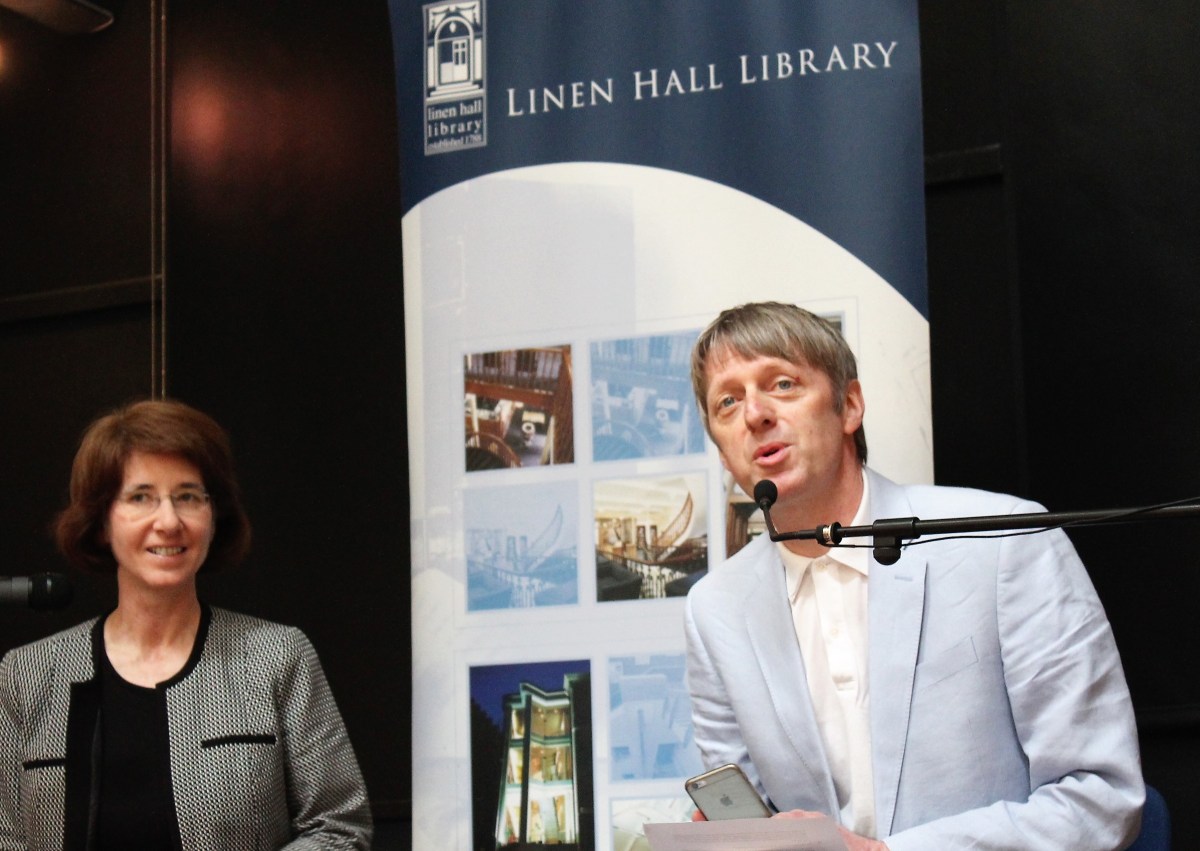
Tuesday, May 23 – Linen Hall Library event in Belfast. Author Glenn Patterson was the host, with Marilynn discussing the book and reading from it. Audience members included Stewart’s brother and sister-in-law, as well as Stewart’s first college girlfriend, who flew over from England for the event.

Thursday, May 25 – Insightful review of “Hopdance” on the Culture NI website written by Connal Parr, vice chancellor’s research fellow in the humanities at Northumbria University.

Sunday, May 28 – Third review of “Hopdance,” this time from Deidre Conroy in the Sunday Independent. Three reviews, all positive!

More to Come

  • Review anticipated in the Irish Independent on June 3
  • “Hopdance” will be featured in 15-minute increments Monday-Friday on The Book on One, a radio show on RTÉ Radio 1. The show is an abbreviated reading of a book, one book per week. We’ve been told it will be featured the week of June 12.
  • Marilynn will read and talk about the novel as part of the Belfast Book Festival, June 10.
  • Marilynn will read and sign books in Edinburgh, Scotland, on June 23.
  • She’s also trying to arrange a bookstore reading in Dublin in the next few weeks and is working on coverage of the book in Culture Hub, a magazine and website that covers Northern Ireland arts.

All in a day’s work for an English professor and a marketer—well, except for our real jobs.

All Roads Lead to Belfast City Hall

While Belfast City Hall may not be the physical heart of the city, it certainly embodies its spiritual heart. Although we’ve been in and around the building on each past visit to Belfast, we’d never taken a public tour until last weekend.

It was well worth the 45 minutes to learn about the history of the city, the building and the city’s governance structure, which features 60 councilors for a population of 330,000. There is also a new multi-room exhibit on Belfast that you can view.

Center of it all

The city’s core bus network consists of 12 lines that begin and end around Belfast City Hall, so pretty much wherever you go, you’ll glimpse the imposing, yet welcoming Baroque Revival building completed in 1906. Before 1888, Belfast was a town, but it was declared a city in that year by Queen Victoria.

Of course, the burgeoning city needed a new building, so the city fathers knocked down the White Linen Hall and built this new edifice for 360,000 pounds. The building features five domes, the tallest rising 173 feet. The largest dome is at the center of the building, with an opulent grand staircase leading dignitaries and visitors to the upper floor.

We got a glimpse at the deputy mayor’s office, the robing room where councilors formerly donned robes for meetings and the council meeting chambers. By the way, councilors still wear robes on special occasions, although members of the Sinn Fein party generally refrain.

During a council meeting, which takes place on the first working day of the month, the lord mayor sits on one short end of the room on a dais, with risers on both long sides with tables and comfortable chairs for the councilors, who are arranged according to political party. The press corps occupy tables in the middle, with spaces for dignitaries on the fourth wall. Members of the public sit one floor above the council chambers on the long interior side of the room. The council chambers and three large meeting rooms are paneled with Irish oak carved by Harland & Wolff artisans.

Our knowledgeable and friendly tour guide gave those who wanted an opportunity to try on a councilor robe and to sit in the lord mayor’s chair.

Lord mayors and memorials

The largest meeting room, the Great Hall, was destroyed in the Belfast Blitz in 4 May 1941, a German attack that killed 1,000 in Belfast. The hall was rebuilt in 1953 and features seven original stained glass windows that were moved to the country before the war began. During the tour, we saw workers either setting up rooms or tearing them down, evidence of how much use the city hall receives.

Each lord mayor, elected from among the councilors, now serves a single one-year term, and after it has his (or her) picture painted in a style and by an artist of his choosing. Those portraits are moved once a year to make way for that year’s mayor.

You’ll find a number of statues and memorials on the grounds, including the Titanic Memorial remembering those who lost their lives in the 1912 sinking. There’s also a memorial to Sir Edward Harland, who once headed Harland & Wolff and served as Belfast mayor in 1885-1886.

Unlike many civic buildings, Belfast City Hall is open nearly every day for tours, and the building and grounds are in use almost daily for public events. I’m sure those who frequent its halls lose sight of how impressive the building is. The exterior features Portland stone, while the interior is adorned with Italian marble.

And, if an impressive interior and expansive grounds aren’t enough, Belfast City Hall features an outdoor lighting system that can illuminate the building in a literal rainbow of colors.

Finding Quality in Every Effort

I was saddened to hear about the passing last month of professor and author Robert Pirsig, best known for the 1970s classic “Zen and the Art of Motorcycle Maintenance.”

I first read the book during the early ‘90s, during a time of professional turmoil, finding much comfort and direction from its pages. I still think often about Pirsig’s take on Quality, which assumes almost mythical proportion (including status as an uppercase word). Occasionally, I’ll take my battered paperback copy down from its shelf and thumb through its worn pages, refreshing my memory as to the book’s importance in my life.

Quality as a driving force

If you haven’t had the pleasure, the book is ostensibly a fictionalized autobiography about a father-son motorcycle journey from Minnesota to California. But it’s much more. Pirsig takes a deep dive into writing and the subject of Quality, which he believes is a fundamental force in the universe. The motorcycle, the road trip and the relationship between father and son are merely backdrops to the discussion of Quality.

The philosophical discussion of Quality isn’t what interests me. I relate more to the idea of having Quality in one’s life and in one’s efforts. One of my personal mantras is, “If it’s worth my time, it’s worth doing right.” Personally, that means finding the most efficient way to cut the grass, put away the dishes or arrive for a meeting on time.

Professionally, Quality means not just doing my best but doing what’s in the best interests of my clients, based on more than 30 years as a professional content producer. Admittedly, it can be frustrating when the client goes in a different direction, but I take solace in knowing that my first effort was an honest attempt to fulfill the assignment. Ultimately, I get paid for giving clients what they want—even if I don’t think it’s what they need.

There are no shortcuts to Quality as an ideal.

Guy book? You be the judge

“Zen and the Art of Motorcycle Maintenance” may be more of a guy book. My English professor wife couldn’t get into it, and she reads widely. It can be a difficult read, mainly because the protagonist isn’t always a nice person. He is fighting his own demons, including a past that includes a stint in a mental institution and a course of electroconvulsive therapy, which altered his personality. He is sometimes short with his son and can be a real pain.

But who among us is always calm, always rational, always in control?

If only for Pirsig’s take on Quality, “Zen and the Art of Motorcycle Maintenance” is worth a look. I know for sure that I’ll be returning to its pages soon.

Let There Be Light, Lots of Light

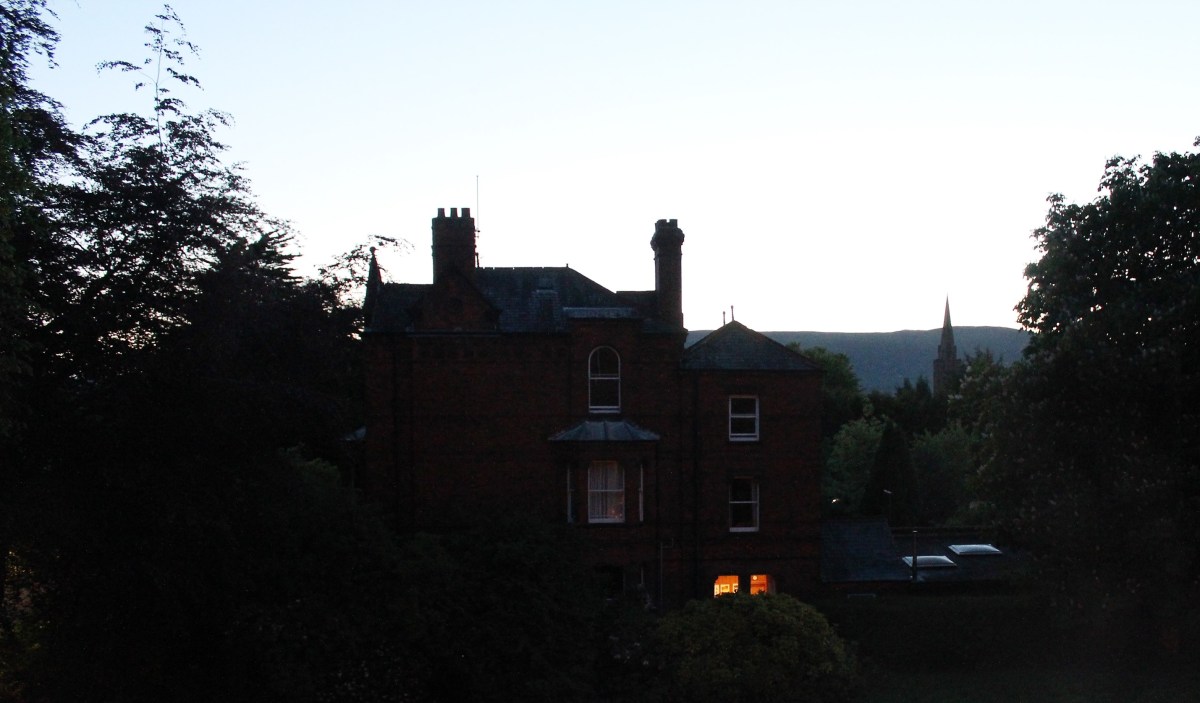
The picture was taken at 10 p.m. a few nights ago. It may not be light enough for a vigorous game of football (that occurred earlier in the field beside the flat) but certainly light enough to walk outside without bumping into anything.

And if you happen to be up at 4:30 a.m. or so, you’ll see a similar scene, the light coming up over the nearby hills to infiltrate the valleys below. In short, there’s too much darkness here during the winter months and way too much light during the summer ones.

As latitude lines go, Ireland is significantly north of everywhere in the US except Alaska. During previous two-week visits to Ireland during the summer, late-breaking sunsets meant we could enjoy more of each day. If I was having adjustment difficulties, it was easy to chalk them up to jet lag.

Throwing off one’s rhythm

But it’s much different living here. Our circadian rhythms are influenced by sunlight, both positively and negatively. According to the National Institute of Health, circadian rhythms “can influence sleep-wake cycles, hormone release, body temperature and other important bodily functions. They have been linked to various sleep disorders, such as insomnia. Abnormal circadian rhythms have also been associated with obesity, diabetes, depression, bipolar disorder and seasonal affective disorder.”

For most of my life, I’ve had one foot in the insomnia trench. The reason may never be known, but it doesn’t help that I’m a light sleeper who worked weird newspaper shifts (5 p.m.-1 a.m., or some such) for half his career. If you’ve never worked the night shift, you may not realize that people don’t go home and go to bed. After working the day shift, do you go home and go immediately to bed? Of course not. Same rules apply here.

You sit and have a drink. Watch a little TV. Read. I’ve been to great dinner parties that didn’t start until 2 a.m. (or later). I’ve seen the sun rise more times than I can count, simply because I couldn’t get to sleep.

Anything that works

I’ve tried a light box over the winter, burning my retinas out with UV light in a (mostly) vain attempt to reset my internal sleep clock. I’ve tried melatonin and tryptophan, the ingredient (wrongly) linked to sleepiness after you’ve eaten more turkey than you should have on Thanksgiving Day.

Nothing worked, until my doctor started exploring off-label uses of anti-depressants. One of them knocked me out cold. Another worked great, lulling me to sleep, then gently waking me eight to nine hours later with soft whispers—for 30 days. On the 31st day, the pill stopped working.

Finally, third time being the charm and all, we hit upon something that has worked for several years. I take an infinitesimally small dose (smallest pill made, cutting it into quarters with an X-acto knife). I sometimes wonder whether a sliver of a pill should work at all—until I forget to take it and wake up at some ungodly hour.

However, even that isn’t helping at present. Marilynn is trying melatonin, and we both have sleep masks. But still the dawn breaks ever earlier—for at least the next month until the summer solstice.

Cutting Line Just a Fantasy

Tourists getting way too close to you on all sides? Do you crave personal space? If you answered “yes,” then Elbow Knives® are for you! Elbow Knives strap to your arms and snap into place when you need them. Simply bring your arms in front of your chest and extend your elbows, and Elbow Knives open instantly to help you slash your way to the front of the queue or create a patented “Zone of Safety” around you. Think of switchblades for your elbows instead of your hands, and you know how Elbow Knives work.
With Elbow Knives, you can cut your way to the front of the line. Elbow Knives. Get yours today!

Elbow knives, a mad idea born of frustration with crowds and those who disrespect personal space. I think the idea has been brewing since we arrived in Northern Ireland in January. It certainly was informed by the crowds during our Italian vacation in February, particularly during the mad crush at the Vatican to glimpse the Sistine Chapel. I mentioned on Facebook at the time that I had to hip-check a couple of queue-hopping tourists, which, if anything, was an understatement.

The idea grew more solid on the jam-packed train from Olympic Stadium in Berlin last month after watching the Hertha Berlin match. And I believe the idea emerged fully formed in my mind at the Van Gogh Museum in Amsterdam, which packs in tourists like sardines in a can. That experience contrasted with a visit earlier the same day to the Rijks Museum, which attracts as many visitors as the Van Gogh Museum yet does a much better job of crowd control.

I started pulling Elbow Knives on Declan, raising my elbows up and fake stabbing him to create more space for myself. There’s even a theme song. Think of any product jingle that’s merely sung, with a little bass and a lot of bravado, and you know the theme song for Elbow Knives.

But wait, there’s more!

OK, I’ve thought about this enough that there’s a commercial for Elbow Knives, too. I haven’t worked through all the details, but I imagine someone with the flexibility of a ninja twirling, whirling and slashing their way through a crowd of people, bodies piling up in the user’s wake. There’s a particular move in my head I can’t name. The ninja bends over at a 90-degree angle—elbows out, of course—then jumps in the air and rotates 360 degrees, Elbow Knives glinting in the light.

It’s no secret that I hate crowds and will go to great lengths to avoid them. For me, Elbow Knives are the answer. I can see it now, hucksters selling Elbow Knives instead of selfie sticks and those blobs you plop on a surface and watch resume their former shape while emitting a high-pitched whine. But I already have my Elbow Knives, so I slice, dice and julienne my way through a bunch of sidewalk sellers.

Fortunately for my fellow travelers, we will be relatively stationary until early July, save for a couple of weekend trips. So Elbow Knives will remain just a fantasy, at least until then.

Samson, Goliath: the Also Ran Photos

I didn’t want to sully yesterday’s post of the perfect Harland & Wolff gantry photo with the earlier (and crappier) attempts. So here are those photos, the trees in the way, blurry out of a car window and many more. See captions for the description of their awfulness.