We like to say that all vacation destinations have three things in common: something to climb, something to ride, and a drunkie cab. I am happy to report not a single drunkie cab spotting in nearly three weeks on the road, but we have ridden funiculars in Baden-Baden and Heidelberg.
Declan taught me the word “funicular” in 2017 when we were living in Belfast and traveling extensively in Europe. In the U.S., we’re more likely to call them an incline, such as the Incline Railway in Lookout Mountain, Tenn.
After dinner in Baden-Baden, we took a bus to the funicular on Merkur Mountain, which is supposed to offer stunning views of the city. While looking over the funicular schedule, a helpful (albeit a tad creepy) man who was on the bus with us said the bus would stop running to this location in a few minutes and that we’d have to either walk home or call a taxi. Undeterred, we bought our tickets and climbed aboard.
At first, it looks like a quick jaunt to a station just up the hill. Then the funicular makes a right-hand turn, and the real climb begins almost straight up. This is the longest and most spectacular funicular we’ve been on. And yes, the views were stunning, and we spent 30 minutes or so walking around the mountaintop, relaxing on chaise lounges and enjoying the scenery with the handful of people who also had made the trip.
On the return journey, we had a decision to make: walk or take a taxi. The same man who spoke to us earlier was still there (more creepy!) and explained that the walk would be a few kilometers but he knew a scenic shortcut (creepiest!). He started walking and we purposefully fell several steps behind, stopping to grab apples out of Marilynn’s bag.
But he was waiting for us in a clearing, where he showed us the Paradies, a wide path of concrete, stone, steps, and waterfalls that cuts through residential areas into the Baden-Baden business district. We all were reminded of the Bom Jesus do Monte (Good Jesus of the Mount) church in Portugal, although on a lesser scale. It wasn’t as well maintained as the path in Braga, but it still was neat to find this hidden gem that indeed cut 15 or so minutes off our walk back.
Functional Funicular in Heidelberg
Two days later found us on another funicular, this time to Heidelberg Palace. This one proved more utilitarian, transporting as many tourists as possible to the palace. We could have ridden a second, historic funicular to the top of the mountain, but we decided to concentrate our efforts on the palace.
Heidelberg Palace enjoyed its heyday between the 13th and 16th centuries as one of the grandest palaces of the Renaissance. It sustained heavy damage during the Thirty Years’ War and lightning damage in 1764 before its destruction in the Nine Years’ War.
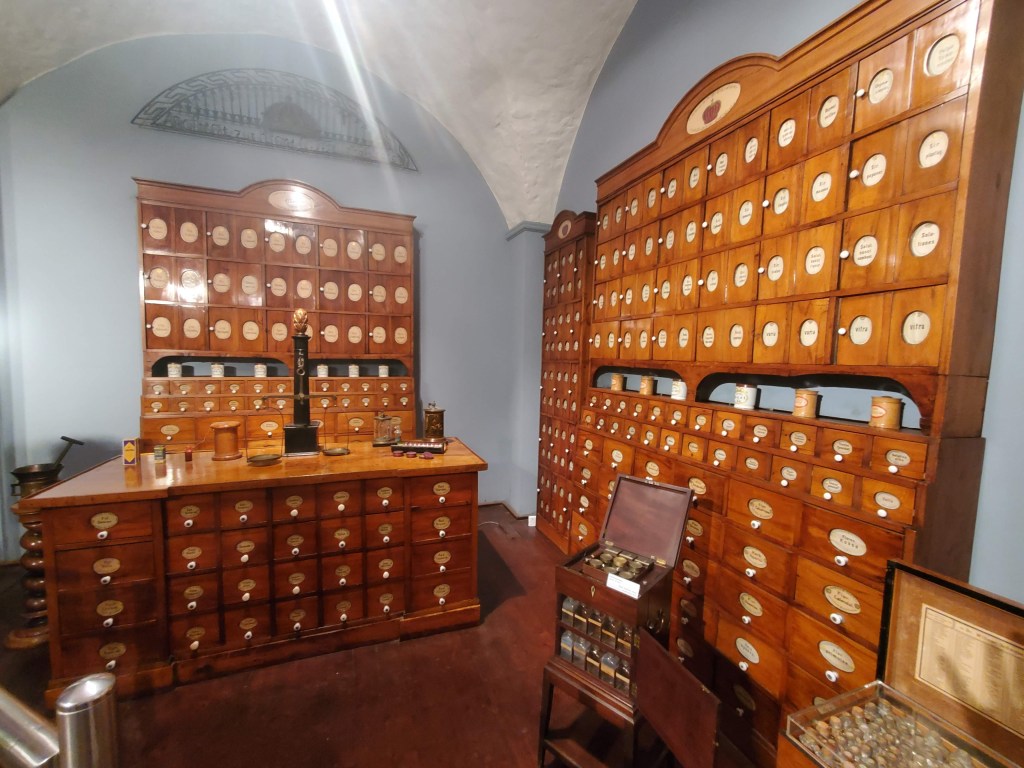
Some parts of the palace have been returned to their former glory, but most of the site remains a ruin. In addition to the grounds and a palace tour, you should also visit the German Apothecary Museum, with several displays of shops with pastilles and potions, quack remedies and lotions in glass jars along the walls and in wooden pullout drawers in front of each expansive display.
Heidelberg also has a history of producing enormous wine vats, including what’s called the Heidelberg Tun, which can store nearly 58,000 gallons of wine—the equivalent of 292,000 bottles of wine. When entering the cellar, you will first notice what is likely the largest vat you’ve ever seen. But walk a little farther and you’ll see the truly impressive Tun.
And all this fun started with a funicular.