Up Close to Oxford’s Bridge of Sighs and Other Bits from Abroad

Random observations from two weeks in England…

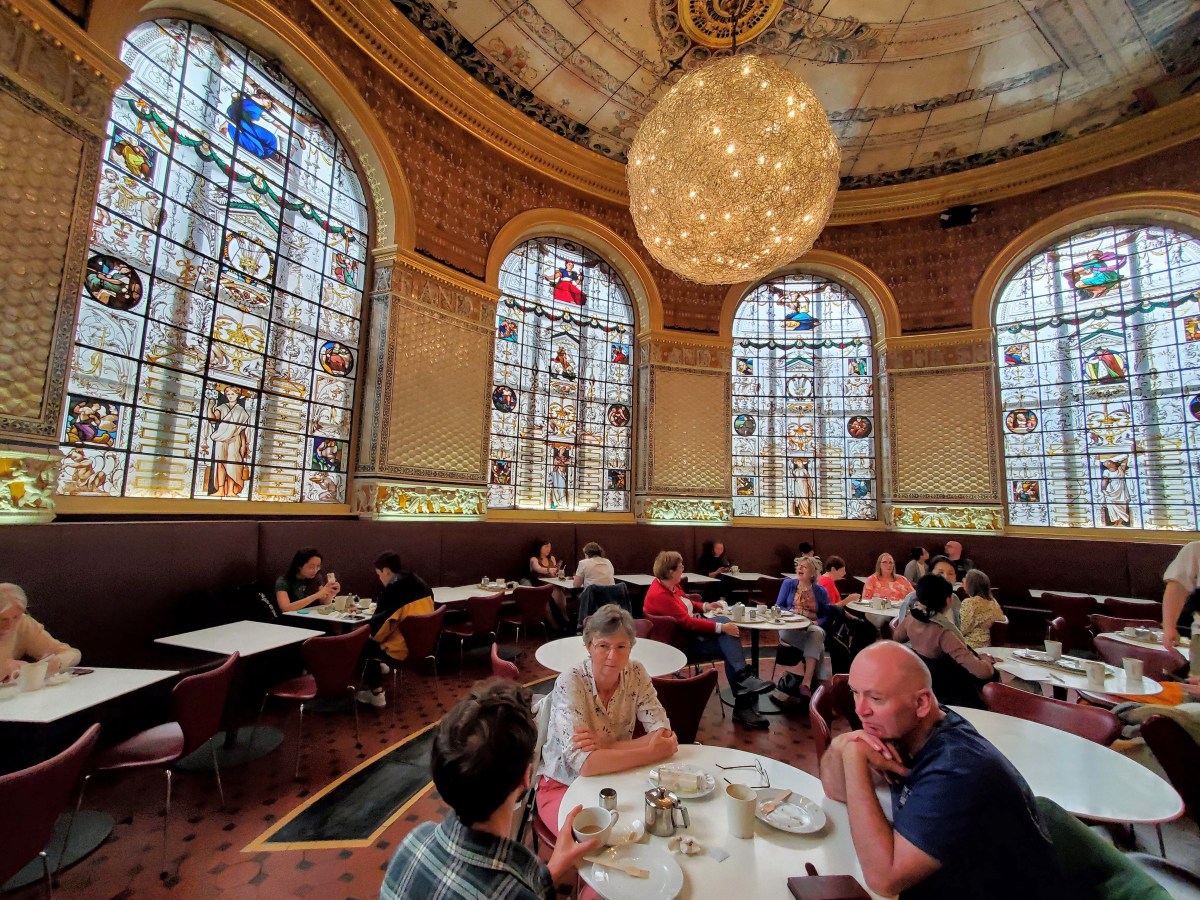
We spent an educational afternoon at the Victoria and Albert Museum in London, taking in the exhibits. One highlight was tea and dessert amid the opulent surroundings of the world’s first museum café, built in 1852. Europe has America beat hands down in terms of offering plenty of places for folks to gather, with varied food and drink offerings at reasonable prices.

***

Bridge of Sighs

We were fortunate to spend two nights in guest quarters at Hertford College in Oxford, where Marilynn gave a talk. We stayed about 15 feet from the Bridge of Sighs, a famous decorative bridge that connects two parts of the college and is modelled on a similar (and older) structure in Venice. That was the good news. The bad news is that from about 8:30 a.m., tour groups gathered under our bedroom windows for a history lesson. Then from about 10 p.m., loud students spilled from the alley leading to the Turf Tavern, a semi-famous pub that offers “an Education in Intoxication.”

***

My apologies to the young woman on the train from Birmingham to Oxford who was either copying passages from the New Testament or writing her impressions of scripture while I was reading horror master Clive Barker’s novel “The Scarlet Gospels” about Pinhead, the demon from the “Hellraiser” movies. Heaven and hell, indeed!

***

Many European hotels still don’t have air conditioning, including the hotel in Birmingham the Friday we attended the Elbow concert. I couldn’t figure out how to defeat the device that only allowed opened the window about two inches until we got back at past 11. Consequently, we kept the windows wide open that night. By 6 a.m., however, we felt like we were sleeping rough by the motorway, the traffic noise was so bad.

***

When traveling, we always find something to climb, something to ride, and a drunkie cab. Fortunately, we saw no drunkie cab in Oxford, but Marilynn and I did climb Carfax Tower, which dates to the 13th century and offers nice views of the city. I was most impressed it wasn’t named for the company that sells wreck reports on used cars. According to displays in the tower, “carfax” is derived from the Latin word “quadrifurcus,” meaning four. The tower is still near the intersection of four central roads in Oxford.

***

We traveled many miles during our two weeks in England, much of it to catch up with colleagues and old friends. Our sincere thanks to everyone who hosted us, met us for a meal, or let us stay the weekend in the Cotswolds (thinking of you, Michael and Aleksandra!).

Aubergine What? Adventures of a Novice Foodie

Marilynn and I are definitely not foodies, so I was surprised when she wanted to dine at a particular Israeli restaurant in London. I had no idea what Israeli cooking entailed and no expectations whatsoever when we arrived at Bala Baya, located south of the Thames and a 10-minute walk from the Tate Modern and the Southwark Underground station.

But what a meal we had!

Bala Baya is tucked under a railway arch, and we walked past the alley entrance once before backtracking. After the hostess checked our reservation, we were directed upstairs to an expansive dining area that overlooks a spacious alcove where al fresco diners gathered.

I have an unusual allergy: onions and their cousins cause so much intestinal distress (no, you don’t want the specifics) that I have to declare them as an allergy. The staff was extremely helpful, conferring with the chef and producing a menu tailored to my needs. Unfortunately, all of the meats were marinated in vegetable stock that contained onions, so we had to limit ourselves to vegetable plates. But that was perfectly OK by us.

The highlight of the meal was a dish called aubergine mess that consisted of blackened aubergine (that’s eggplant, to us), oregano, tahini, pomegranate molasses, and lychee. It’s a dish best served cold, with explosive flavor combinations I’ve never experienced before. We devoured the dish, then soaked up the juices on the platter and our plates with soft, warm pita.

We also enjoyed the shawarma-rubbed Jerusalem artichoke, with labneh, harissa and rose, and chervil. Don’t ask me what any of these ingredients are besides the Jerusalem artichoke (which was HUGE, and nothing like what we had previously known as artichokes), but the combination was delicious. We also had fire-roasted cabbage and a selection of olives. Marilynn capped off her meal with a lemon and rose Israeli soda, while I had my first-ever glass of Israeli red wine.

Working together, three female waiters provided impeccable service, constantly running up and down the stairs, keeping us informed of any waits, and apologizing profusely when a dish deemed safe when we ordered it was later declared out of bounds for me. The service was every bit as good as the food.

We visited London twice this May. Two days of touristy pursuits in London early on was followed more than a week later by another night near the end of the trip when we met friends. We made sure to catch an early train from Oxfordshire to London so we could eat at Bala Baya a second time. We had aubergine mess (of course) and a round of hummus, delicious memories we will have to content ourselves with because we don’t get to London that often.

A ‘Fine Mess’ of a Time at Elbow Concert

Rock concert or Laurel and Hardy convention? Across a two-week adventure, I only had one request of Marilynn: to see one of my favorite bands, Elbow, which released its 10th studio album in March and was touring the UK while we were in country.

If you haven’t heard of Elbow, I highly recommend a listen (or two, or three). The Manchester-based band has been together since the members were teenagers, and I became aware of them by listening to the totally free and eclectic Internet radio station Radio Paradise (more on that later). Elbow is, in a word, magnificent, something you will understand figuratively and literally after clicking the link in this sentence.

We traveled by train from Oxford to Birmingham, walked from the station to our hotel near the venue, entered the lobby—and saw a bunch of people in fezzes and brightly colored tropical apparel. We had unwittingly intruded on the England convention of Sons of the Desert, an appreciation society for the comedy duo of Stan Laurel and Oliver Hardy, who made 107 film appearances from the late 1920s to the mid-1950s.

Although Laurel has the English connection from his birth in the Lake District, apparently it was the American Hardy who approved creating the society. He didn’t want it called a fan club, according to my new friend Bob, who was nursing a pint in the hotel lounge when I peppered him and his mates with questions about these odd-looking people.

“Sons of the Desert” is their 1933 film where they join a lodge (hence those fezzes), and each chapter of the society, named after one of their films, is called a “tent.” Hardy was born in Harlem, Georgia, where the Laurel and Hardy Museum of Georgia is located. Harlem, about 20 miles west of Augusta, also hosts an annual Oliver Hardy Festival. The next festival is on Oct. 5.

Elbow Not to Be Missed

Meanwhile, back in Birmingham, we relaxed at the aquatics facility attached to the hotel and had a quick dinner before heading to the venue, a short walk away along a footpath next to the motorway.

While the opening act wasn’t to our taste, Elbow delivered a hit-packed, audience-friendly two-hour set that left everyone fully sated and breathless after singing the refrain from their biggest hit, “One Day Like This.” Despite the limited tour, Elbow created a full rock ‘n’ roll experience for the 8,500 or so people in attendance.

Elbow is the third performer we have traveled to listen to as a direct result of listing to Radio Paradise, a listener-supported internet radio station. We also are great fans of Vienna Teng (we saw her in D.C. before she played at Eddie’s Attic in Decatur), and Mindy Smith (ditto Eddie’s Attic but also saw her at City Winery in Nashville). I’m still waiting for Dengue Fever or Zola Blood to play in Atlanta, though.

Radio Paradise is programmed by a former FM radio station disc jockey from a time when DJs played whatever the hell they wanted. He has great taste in music across a wide variety of genres, so you’ll hear Kings of Leon, then Billie Holiday, First Aid Kit, Mozart, and world music you likely won’t hear anywhere else. It all works beautifully, but if something isn’t to your liking, you hit a button and something else plays. The station has a mainstream rock mix, mellow mix, world mix, and a favorites mix if you register and rate at least 100 songs. It’s great, it’s free, and you should check it out.

As the RP T-shirt says: Eclectic as F**k.

A study in Contrasts: Imperial War Museum and Pitt Rivers

The Pitt Rivers Museum in Oxford has long been a family favorite, interesting as much for the building and display cases as it is for the artifacts contained within. Although the shrunken heads have been taken off display and some of the language on the exhibits has been updated to reflect current thinking, the museum retains its Victorian charm.

It contrasts nicely with the Imperial War Museum in London that Marilynn and I visited for the first time last week. Established just after the first world war, the museum grew in scope and size over the next century to cover British military engagements from WWI to the present and expanding to five sites. We visited the main museum, about a 15-minute walk from Waterloo Station.

Personal Tales Amid the Horrors of War

The War Museum intertwines the implements of war with the universal struggle for survival among combatants and civilians down to the individual level. Although I’ve seen plenty of fighter planes, guns, and grenades at other museums, I had never seen the family air raid shelters the government gave residents during WWII, including indoor ones for people who didn’t have land and an enclosed cage resembling a small iron lung used to protect pets from a gas attack.

Most interesting, to me at least, were the personal tales connected to items on display, such as a pack of “morale-boosting” cigarettes a woman sent to troops during the second great war (she sent 10,000) or the coat a U.S. Navy officer wore when storming Omaha Beach on D-Day.

The museum also does a great job explaining how the settlement of WWI and its aftermath inevitably led to WWII two decades later. The museum is free to visit, which is a great activity rain or shine.

Pitt Rivers a Throwback Museum Sure to Delight

I love what I call Man-and-His-Crap museums, rich dudes (and you know this type of collecting is dude-specific) who collect stuff that interests them and then put that stuff on display. The Barnes Foundation in Philadelphia (impressionist art) and the Mercer Museum in Doylestown, Pennsylvania (pre-Industrial Revolution tools) were my first glimpses into this subgenre of museums.

Technically, the Pitt Rivers in Oxford doesn’t fit my definition, because British Army officer, ethnologist, and archaeologist Augustus Pitt Rivers merely gave 22,000 items to the university in 1884, with the proviso that a permanent lecturer in anthropology be named. But, as in the Mercer Museum, items are arranged around a common theme, rather than the age of the artifacts.

Want to see sewing supplies from around the world? This is your place. How about opium-smoking equipment? Ditto. Visitors can investigate tools, foot-binding techniques, weaponry, locks, writing utensils, tattoos, surgical implements, and much (much!) more amid the museum’s 500,000 objects.

The Pitt Rivers is accessed through the Oxford University Museum of Natural History, which exudes modernity despite being constructed in the 1850s. The open floor plan and large central exhibit space contrast with the dim, tight quarters of the Pitt Rivers. When we visited the natural history museum a decade ago, it was undergoing refurbishment, with the walk of animals pushed to one side of the central hallway. In addition to the large display of articulated animal bones, young and old alike will enjoy the many cases of dinosaur fossils. Adults should take special notice of the evolution displays, as well as the columns around the building made of differing types of stone from around the region.

4,100 Miles to Try Saka Sauce

It’s no secret Declan and I are fans of the English Premier League team Arsenal. The team’s leading scorer (and all around great lad) Bukayo Saka loves Nando’s, and the restaurant collaborated with the prolific winger to create his own brand of Nando’s sauce, which is fiery with heavy paprika undertones. Declan isn’t on this trip to England and the sauce is only available during football season, so I had to enjoy some for him. Sacrifices a dad has to make for his son, huh?

Journey to London Fraught with Delays

Half-day trip turns into all-day adventure.

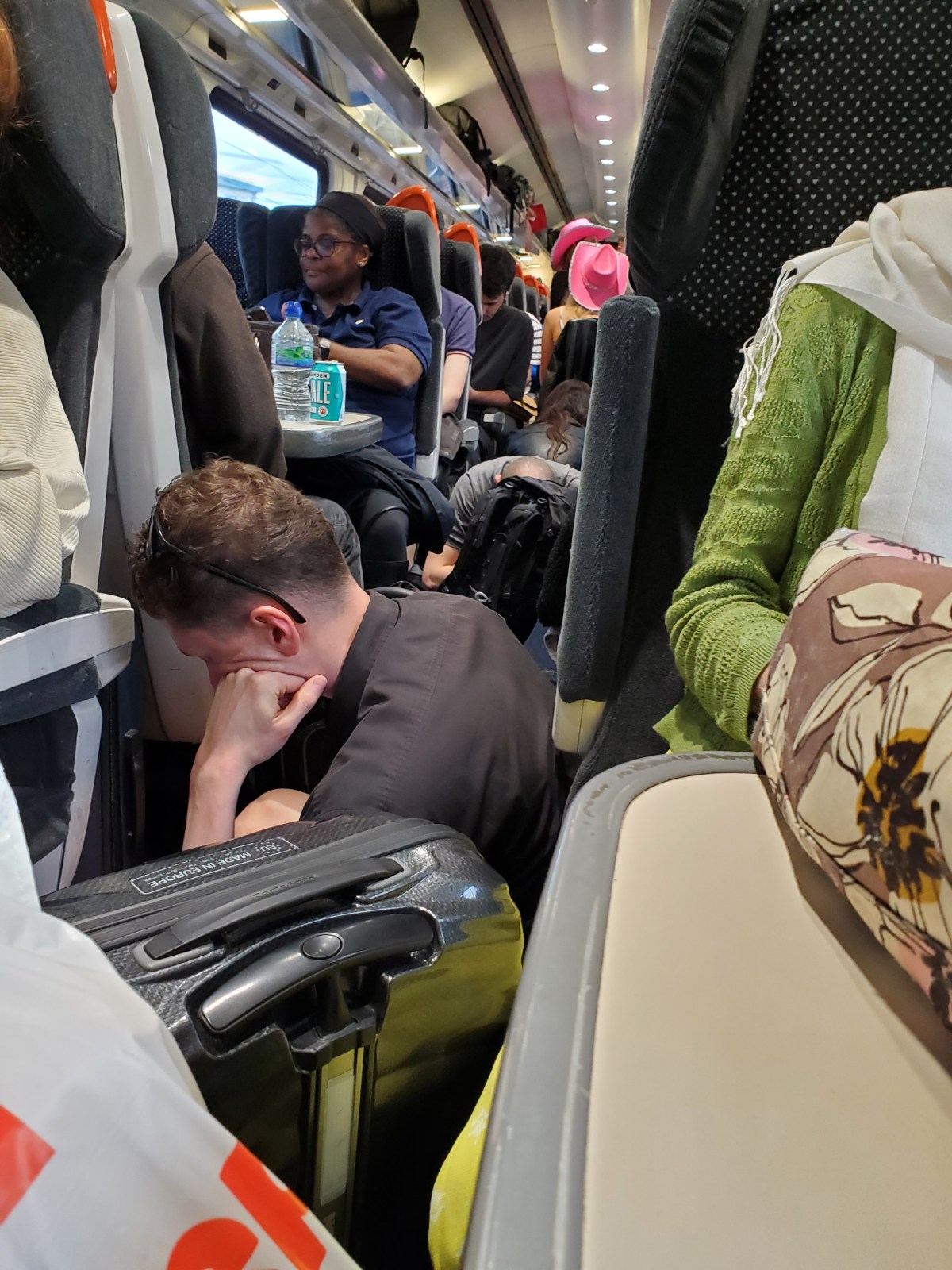
A clusterfuck enclosed in a shit sandwich and baked in a sardine tin. That aptly describes what should have been a routine train journey from Penrith in the Lake District of England, where we visited friends, to London, our next destination.

Yes, another end-of-semester and another European adventure, this time two weeks in England for Marilynn and me. She’s giving talks in Oxford and Manchester and meeting up with literature colleagues and friends. I’m along for the ride, but after this day I may want to just stay put.

Little did we know when planning our itinerary that the national railway would want to work on nearly 500 train projects over a long weekend, what’s called a bank holiday here. It’s the equivalent of closing I-75 during spring break.

A direct train from Penrith to London became four separate legs, starting with a bus to our first stop. The 60-seater bus to Oxenholme traversed the M6 motorway before exiting on a goat-trail-sized roadway that corkscrewed its way through sheep fields into a sleepy town on an early Sunday morning. Although I wasn’t driving, it was clear this route wasn’t meant for a large bus. I dubbed the road Beelzebub’s Bunghole, which our driver handled with aplomb.

An Oxymoron, Or Just a Moron?

We successfully made the first transfer to a train bound for Manchester, where the trip we’d planned (and made reservations for) fell apart quickly. At least we’d packed a lunch, but the next train was cancelled due to “overcrowding.” Isn’t it an oxymoron (or just a moron) to run fewer trains because there is an excess of demand?

Marilynn handles the travel planning, checking the national rail journey planner on her phone while muttering under her breath about scheduled trains that suddenly get cancelled or the app showing trains the day before the date she’s specified.

After an hour’s wait, the train that had been sitting on the tracks the entire time suddenly became the next train on our journey, and we exited at Sheffield. With apologies to the fine people of Sheffield, I’ll always remember the city from a previous journey when Marilynn, Declan, and I were eating an early morning breakfast at a Wetherspoon’s pub, where four blokes were having pints — apparently before a day’s work. Gotta love pre-work drinkies!

Following another wait, we managed seats on a direct train to London, even snagging unreserved seats in a carriage where 90% of the seats were reserved for some part of the journey. We shared a carriage with far too many others, including a hen party of women in bright pink cowboy hats and some bloke directly behind us who apparently had been in a stage production of “Shawshank Redemption” because he wouldn’t shut the fuck up about it.

Although this train journey was crowded, it didn’t compare to the trip we took last summer from Belfast to Derry, full of fans from the North who were travelling to Croke Park to root for their favorite hurling teams. People were jammed into the carriage with little room to move. Again, we all managed seats, and Declan and I shared Moretti beers with a couple of hurling fans who had come prepared.

Nearly 10 hours after we started (and five hours later than planned), we finally reached our hotel, tired but ready for our next European adventure.

You’d think at this point that our travel troubles would be over. But we also didn’t know that various train operators were planning an industrial action (British for labor strike) for various days next week. Given our travel luck so far, there will be more to this tale soon.

Familiar Dublin Sights Like Old Friends

Certain sites and attractions in any city deserve a second look, and Dublin is no exception.

Staying in Dublin for two weeks means plenty of time to explore the new and the familiar — although these were new to Declan.

Come for the Crypt, Stay for the Bling

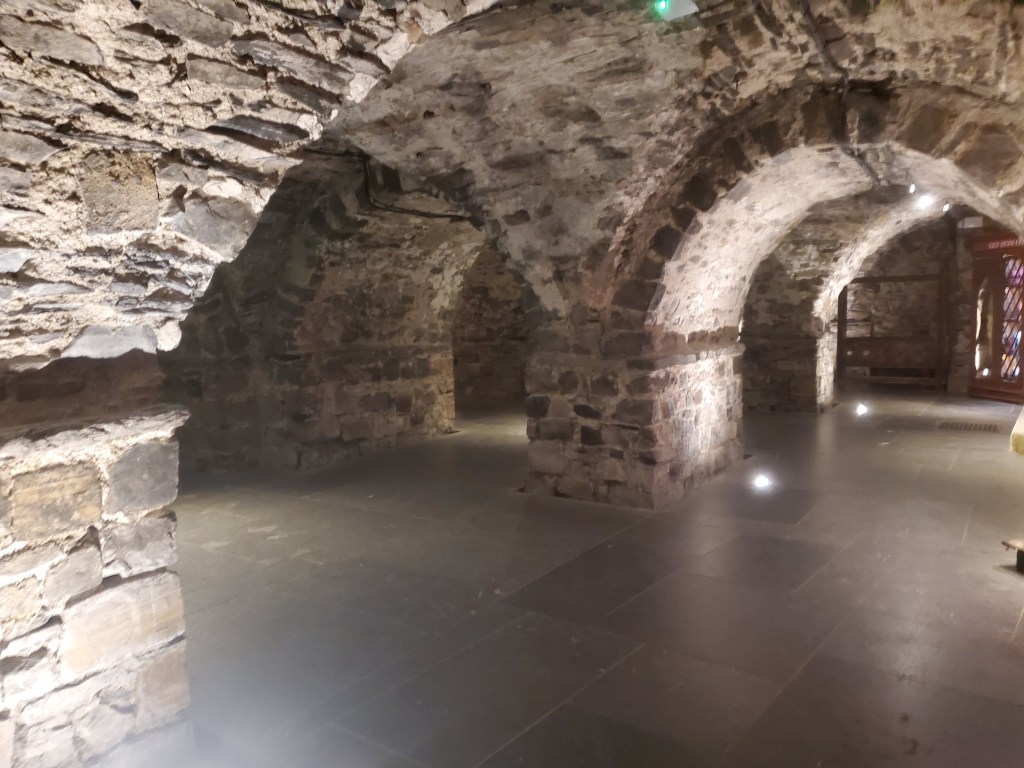
Our first stop is Christ Church Cathedral, an Anglican church that can trace its origins back nearly 1,000 years to the Vikings. In addition to the impressive vaulted ceilings and stained-glass windows, you’ll find cool medieval floor tiles. But the main feature is the crypt, reportedly the longest in Britain or Ireland. Dim lighting sets the mood as you walk beneath the curved arches and admire the artifacts and church bling from over the years.

You’ll find a rare copy of the Magna Carta, basically the Bill of Rights for Britain; the final resting place of Strongbow, a Norman-Welsh warlord from the 12th century; and the heart of St. Laurence O’Toole, the archbishop of Dublin during the Norman invasion. You also can see a mummified cat and rat, found in the bowels of the organ during a 19th century refurb. They apparently are mentioned in the James Joyce novel “Finnegan’s Wake,” but you’d have to put a gun to my head to get me to read it.

Christ Church plays a central role in the Bolch/Richtarik story, because Marilynn and I visited Christ Church on my very first day in Ireland, in 2000. I’d never traveled internationally and was unaccustomed both to trying to sleep during the overnight flight and to instantly adopting the time of the country one is visiting. A horrific breakfast and still being out at nearly 10 p.m. after a sleepless night didn’t help matters.

Marilynn wanted to show me the crypt, and the church appeared to still be open. There was a conference or something going on, and people were milling around. Since I was the newbie, I stood back while Marilynn approached a priest to find out what was going on. From that viewpoint, I could see the priest’s face as they talked. After about 30 seconds, his eyes grew wide, and he exclaimed, “Mar-lon!” That’s apparently the Irish pronunciation of “Marilynn,” which I now also use. She exclaimed, “Alan!” remembering that they attended the same college at Oxford.

Things like this happen time after time when we’re visiting Ireland, and I never get tired of it.

Historic Kilmainham Gaol Worth a Tour

Another site I hadn’t seen in more than two decades is Kilmainham Gaol, a former prison with a rich (and infamous) history of holding the prisoners of rebellion. Henry Joy McCracken, a leader of the failed 1798 insurgence, was held here for another offense several years before the rising. Leaders of the 1848 rebellion and the 1866 Fenian Uprising were also held in Kilmainham.

However, the gaol is most closely linked to the 1916 Easter Rising, a precursor to the Irish War of Independence that led to the establishment of the Irish Free State in 1922. The leaders of the 1916 revolution had no chance; they were outmanned and outgunned, and the rising lasted just a week. A dozen leaders of the rising were executed by firing squad at Kilmainham, including leader Patrick Pearse and James Connolly, who already was dying of his injuries at a local hospital but was transported to Kilmainham and shot.

Access to the gaol interior is through guided tour only, which was relatively cheap (12 Euro total) and surprisingly lively. Our guide traced the history of Kilmainham, outlining its role during the Potato Famine when as many as five people were crammed into a jail cell that had neither running water or windows. There were no separate quarters for men, women, and children, so you can imagine what prison life was like.

During the time of the Famine, laws were strengthened against begging, with people on the verge of starvation swept up. According to the guide, a 3-year-old served two weeks in Kilmainham for begging, with no parents or siblings to care for him. Talk about a tough life.

The gaol was decommissioned in 1924 and sat derelict for more than three decades until a community group received permission to renovate the facility with an eye to turning it into a historic landmark and community gathering space.

From its inception as a landmark, Kilmainham Gaol has been the site of many movies, TV shows, and videos, including 1965’s The Face of Fu Manchu (with Christopher Lee!), 1993’s In the Name of the Father (Daniel-Day Lewis), and 1996’s Michael Collins, which starred Liam Neeson, Aidan Quinn, Stephen Rea, and Alan Rickman. Younger tour guests might recognize Kilmainham from Paddington 2 (animated bear!). During my research, I also unearthed a U2 video (A Celebration) that was filmed at the gaol but does not appear on any U2 album.

The iconic image at the top of this column is the most famous feature of Kilmainham Gaol. But you’ll discover many more gems when you visit.

Other Sites Worth a Return Visit

Even with the top floors closed for a lengthy renovation, the Natural History Museum of Ireland (called the Dead Zoo by locals) is always worth a look. As you’d expect, you’ll find taxidermied critters large and small, including the always impressive Irish elk and a whale suspended from the ceiling. Unfortunately, you won’t be able to view the expansive upper floor that stretches 2.5 stories, featuring a central area for larger creatures and even more in cases along the wall.

Just around the corner you’ll find the National Museum of Archaeology. Declan and I always enjoy seeing the bog men who were trapped or buried in peat bogs over the ages. He especially enjoys the Viking bling on display, and there’s even a section of objects from Egypt(!).

Both museums are free to visit, so even if you’re only mildly interested in Irish animals or history, they are dry places to shelter from the rain.

Crypt at Christ Church Dublin.

Germany Puts the Fun in Funicular

When there’s a funicular involved, the fun is just getting started.

We like to say that all vacation destinations have three things in common: something to climb, something to ride, and a drunkie cab. I am happy to report not a single drunkie cab spotting in nearly three weeks on the road, but we have ridden funiculars in Baden-Baden and Heidelberg.

Declan taught me the word “funicular” in 2017 when we were living in Belfast and traveling extensively in Europe. In the U.S., we’re more likely to call them an incline, such as the Incline Railway in Lookout Mountain, Tenn.

After dinner in Baden-Baden, we took a bus to the funicular on Merkur Mountain, which is supposed to offer stunning views of the city. While looking over the funicular schedule, a helpful (albeit a tad creepy) man who was on the bus with us said the bus would stop running to this location in a few minutes and that we’d have to either walk home or call a taxi. Undeterred, we bought our tickets and climbed aboard.

At first, it looks like a quick jaunt to a station just up the hill. Then the funicular makes a right-hand turn, and the real climb begins almost straight up. This is the longest and most spectacular funicular we’ve been on. And yes, the views were stunning, and we spent 30 minutes or so walking around the mountaintop, relaxing on chaise lounges and enjoying the scenery with the handful of people who also had made the trip.

On the return journey, we had a decision to make: walk or take a taxi. The same man who spoke to us earlier was still there (more creepy!) and explained that the walk would be a few kilometers but he knew a scenic shortcut (creepiest!). He started walking and we purposefully fell several steps behind, stopping to grab apples out of Marilynn’s bag.

But he was waiting for us in a clearing, where he showed us the Paradies, a wide path of concrete, stone, steps, and waterfalls that cuts through residential areas into the Baden-Baden business district. We all were reminded of the Bom Jesus do Monte (Good Jesus of the Mount) church in Portugal, although on a lesser scale. It wasn’t as well maintained as the path in Braga, but it still was neat to find this hidden gem that indeed cut 15 or so minutes off our walk back.

Functional Funicular in Heidelberg

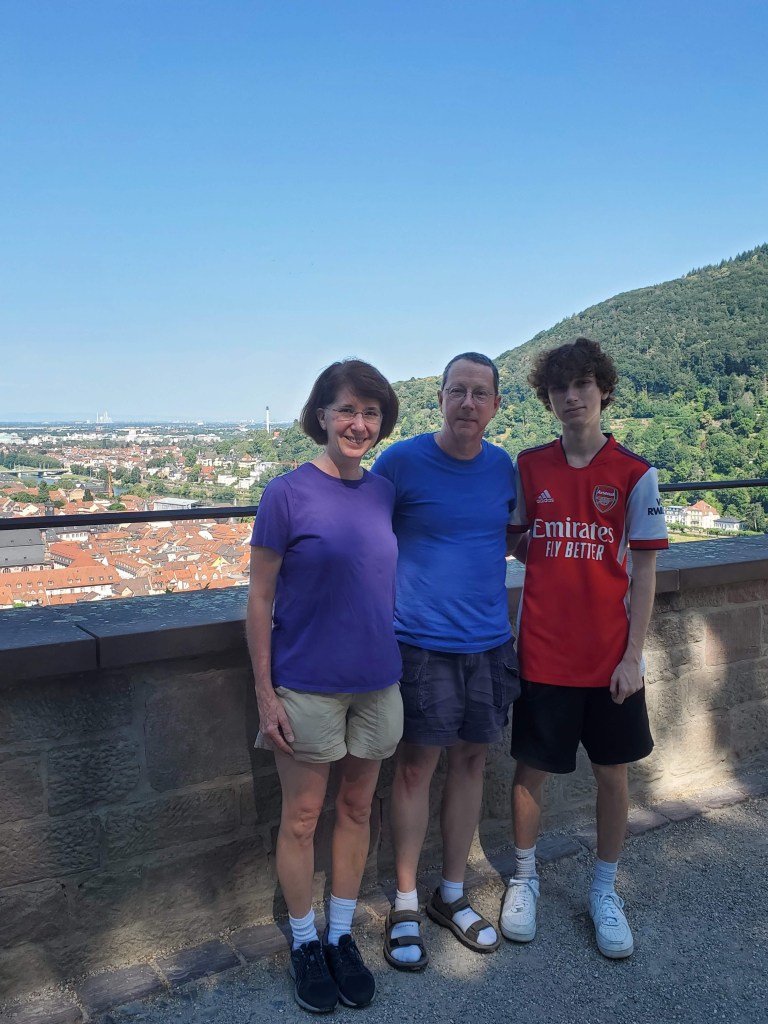
Two days later found us on another funicular, this time to Heidelberg Palace. This one proved more utilitarian, transporting as many tourists as possible to the palace. We could have ridden a second, historic funicular to the top of the mountain, but we decided to concentrate our efforts on the palace.

Heidelberg Palace enjoyed its heyday between the 13th and 16th centuries as one of the grandest palaces of the Renaissance. It sustained heavy damage during the Thirty Years’ War and lightning damage in 1764 before its destruction in the Nine Years’ War.

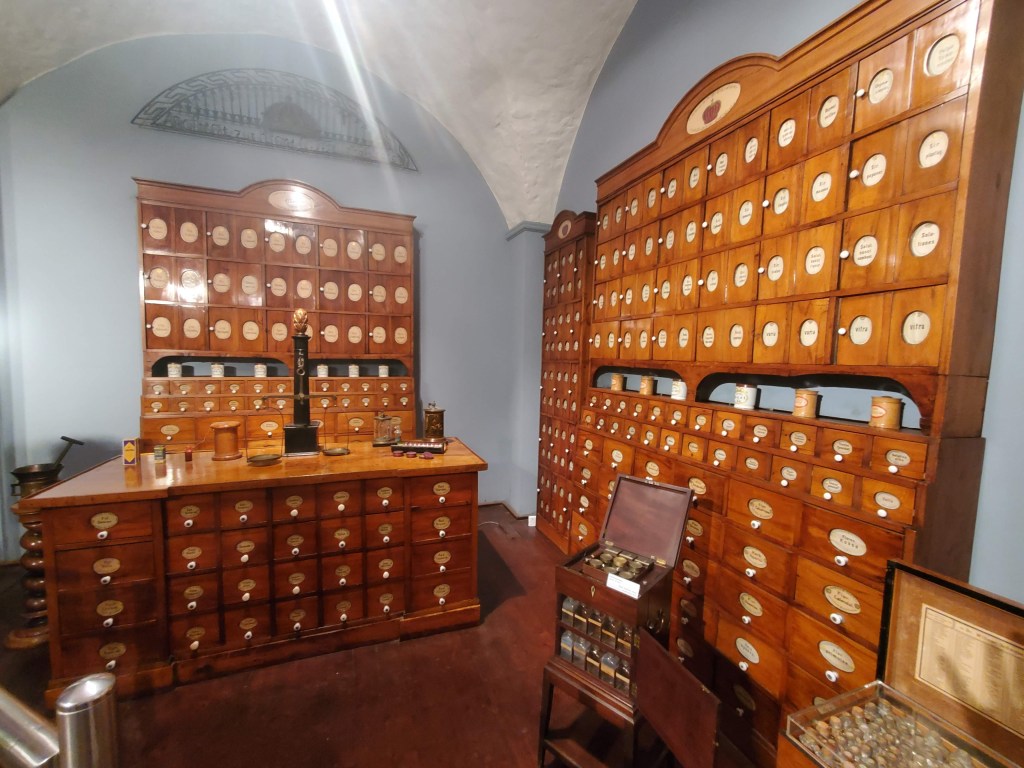
Some parts of the palace have been returned to their former glory, but most of the site remains a ruin. In addition to the grounds and a palace tour, you should also visit the German Apothecary Museum, with several displays of shops with pastilles and potions, quack remedies and lotions in glass jars along the walls and in wooden pullout drawers in front of each expansive display.

Heidelberg also has a history of producing enormous wine vats, including what’s called the Heidelberg Tun, which can store nearly 58,000 gallons of wine—the equivalent of 292,000 bottles of wine. When entering the cellar, you will first notice what is likely the largest vat you’ve ever seen. But walk a little farther and you’ll see the truly impressive Tun.

And all this fun started with a funicular.

Nearly ‘Textile-Free’ Spa Day in Baden-Baden, and What’s Donge-Swingen?

How did we wind up in a spa in Baden-Baden when we were supposed to be in France? And where are my trousers? Traveling sometimes throws you a curveball, and it’s important to go with the flow. And since this diversion finds us in a thermal spa in our bathing suits, I mean that literally.

The plan was to travel from Tübingen to Baden-Baden, have a quick look around, stay the night, then slip into France for a day trip to Strasbourg before moving on to Heidelberg. But after heavy travel three days out of four, I couldn’t take it anymore. In the words of Danny Glover’s character in Lethal Weapon, “I’m getting too old for this shit.”

That’s how we wound up spending a splendid afternoon at Caracalla Spa (Caracalla Therme) in Baden-Baden, which I know from researching U.S. thermal spring spas has already spoiled me. It would be like visiting the Great Wall, then looking at your neighbor’s back fence. Or in a water sense, visiting this palatial bastion of relaxation versus being offered a soak in a water trough with a trolling motor for bubbles.

The expansive spa features huge connected indoor and outdoor pools of various temperatures, with whirlpools, an outdoor lazy river that gently propels one through the pool, waterfalls, a steam room, cold spa, two solariums, and plenty of indoor and outdoor lounging space. There is also an area upstairs that contains I don’t know what, because this American Southerner doesn’t go au natural with his 18-year-old in tow. Prices were quite reasonable, and we spent a glorious three hours trying out the different pools and saunas. The pools truly are huge, so it didn’t feel like an American water park during summer.

Donge-Swingen Definitely Not for Me

Playgrounds for the rich and famous often spring up around thermal water sources, which is the case for Baden-Baden. A block away from Caracalla is Friedrichsbad, which the website describes as “textile-free,” a euphemism for what Southerners call “nekkid.”

The idea of the modern bath started with a County Cork physician, Richard Barter, who built the first such facility in Ireland or Britain in 1856 near Blarney (no kidding!). The Friedrichsbad followed two decades later, preserving the remains of a genuine Roman Bath House. It certainly is beautiful to see from the outside. Bathers partake in a nearly three-hour, 17-stage bathing process of gradual heating and cooling, moving from one bliss-inducing station to the next.

Earlier in Tübingen, Declan and I discovered that the German word for silhouette filmmaking is something like “silhouettefilming.” My sense of humor and pidgin German got the better of me that day, calling a CBD dispensary with a full window display of bongs a “bonge-smoken.”

So amid our glorious day out at Caracalla Spa, relaxing and soaking to our supreme contentment, I couldn’t help but think of the “textile-free” areas of both spas as “donge-swingen.”

Regardless of what one calls it, donge-swingen isn’t for me. Maybe next time … and there definitely will be a next time.