Finally, an Image for the Ages

For many people, Belfast will forever be linked—not with the Troubles—but with Titanic. I count myself as one of those. As a popular T-shirt in the High Street trinket shops proclaims, Titanic was “built by the Irish, sunk by the English.”

The Harland & Wolff shipyards, where Titanic, its sister ship Olympic and hundreds of other ships first hit the water down the historic slipways, are now mostly quiet. Shipbuilding no longer fuels Belfast’s economy, and H&W makes its money from engineering and refurbishment. But two huge yellow gantries, each bearing the H&W logo, dominate the Queenside landscape and bear witness to the city’s nautical ties.

An event to remember

As a youngster, I remember reading Walter Lord’s definitive account of Titanic’s last days, “A Night to Remember.” When the Booneshill School library was boarded up years later with books still inside, let’s say a few of those volumes wound up in my book collection, including a huge volume of “Roget’s Thesaurus” and the aforementioned Walter Lord book.

When I first traveled to Belfast in summer 2000 with my then-fiancée Marilynn, we took the train from Dublin to Belfast. Just before the train reached Central Station, the twin gantries came into view, letting me know without a doubt that I was in Belfast.

As we were touching down in Belfast City Airport on Jan. 2 to start this adventure, during the last minute of the short-haul flight from London I saw lots of water, followed by patchwork fields of at least 20 shades of green, and finally the twin gantries as airplane tires touched tarmac.

Since arriving here in January, I have been trying to take a definitive picture of the gantries to fit into the really tight horizontal photo specs of the blog template and for my own edification. But my quest was mostly quixotic, with blurry photos and near misses, trees in the way or a perfect picture of just one.

No Link to Titanic

To be clear, the gantries, named Samson and Goliath, have absolutely nothing to do with Titanic. They were built in 1969 (Goliath) and 1974 (Samson), but their height, their bold color and the H&W logos soon infused themselves into the city’s collective psyche, becoming symbols of Belfast. Their height (348 feet for Samson, 315 feet for Goliath) means they can be seen from nearly any place in the city.

We could glimpse them in the far distance from Belfast Castle, nestled at the base of Cave Hill. Samson and Goliath tantalize with their proximity while on the winding roads from the City Centre to the motorway toward the airport, but a building or overpass often gets in the way of a clear picture.

I came close with a shot I took from the waiting lounge at City Airport on our way to the Arsenal match in April. A couple of weeks ago, Declan took a picture that might have worked, except for the promo on the back of the bus window we were riding in.

That same weekend, we walked from City Centre to the Titanic Museum in an attempt to find the perfect angle. While you definitely can see them both, one of the gantries is too close to provide the right angle. And there are trees in the way, regardless.

Plotting and planning

I had already figured out the likeliest perfect spot—the layby near the Belfast Ikea, adjacent to City Airport. People park there to watch the planes take off and land, and I’d seen the gantries beyond the airport during out two previous trips to Ikea. But we didn’t have a car—until two weekends ago when we hired a car to visit area gardens.

Mid-Sunday morning, before Ikea opened, we drove out there specifically to take the picture at top. We parked in a surface lot at Ikea but couldn’t see the gantries for the trees. Fortunately, Marilynn ran to the layby, then disappeared through the trees. She reappeared seconds later, waving us over.

The trees definitely blocked the view, but hundreds of feet had smoothed a path through the trees to the airport fence. And there they were, finally, Samson and Goliath in all their glory, aligned nearly perfectly with the view I’d carried in my head all those months. The actual picture-taking was straightforward. Click, click, done. But we’d brought the telephoto lens, so I was able to get even better photos than I would have.

It seems anticlimactic to have actually captured the photo I’d been seeking for so long. So what quixotic quest will I need to come up with for the rest of the journey?
Another Garden While the Sun Shines

In Northern Ireland, not only does one make hay while the sun shines, one also gets the hell out of the flat. Last weekend was the nicest one we’d had in more than four months on the island, so we visited Rowallane Gardens on Saturday and made plans to visit Mount Stewart on Sunday.

Mount Stewart, near Portaferry, is more than an hour’s drive away, partly along a coastal road, the water glittering like diamonds in the mid-morning sunshine. It is considered one of the top gardens in the world, according to those who keep various lists. Overall, I still like Rowallane Gardens better; however, Mount Stewart is considerably bigger (nearly 1,000 acres) and features such amenities as a lake, extensive walking paths and an 18th century historic house.

Home to Irish royalty

We started with a house tour, the home and furnishings reflective of their early 20th century occupants, the 7th Marquess and Marchioness of Londonderry, Charles and Edith. While Charles was off doing what rich white men did in those days, Edith transformed the house and gardens. She apparently was a tour de force, imposing her design style on the property. She brought in exotic plants, using the blooms for potpourri and storing seeds during the winter in a large apothecary cabinet.

While the house definitely featured lots of bling, we were impressed by its livability. While I couldn’t imagine myself in an office large enough to accommodate two desks (Edith, actually), the house was chock-full of playful touches that were less palace and more home.

Edith’s and Charles’s youngest daughter, Mairi, was nearly 20 years younger than the other children, and she lived at Mount Stewart until her death in 2009 at the age of 88. Mairi’s daughter still lives in the house, which was turned over to the National Trust in 1977, following the bequest of the gardens in 1957.

The house was closed for three years while undergoing an 8-million-pound restoration, which brought back the original sandstone floors in the expansive entrance parlour.

Stay for the gardens

But the impressive gardens are the main draw, for tourists as well as the locals who picnic, play football, walk their dogs and generally enjoy the day in the full sun or in the shade of numerous trees. The heady fragrance of blossoms greeted us in the formal garden in front of the house, and splashes of colour could be glimpsed at every turn of the head.

Playful statuary and topiary create whimsical combinations, as do the gardens themselves. Declan particularly liked the Hand of Ulster flower arrangement the color and shape of a red hand. Topiaries of a ship and statuary of a dinosaur were also favorites.

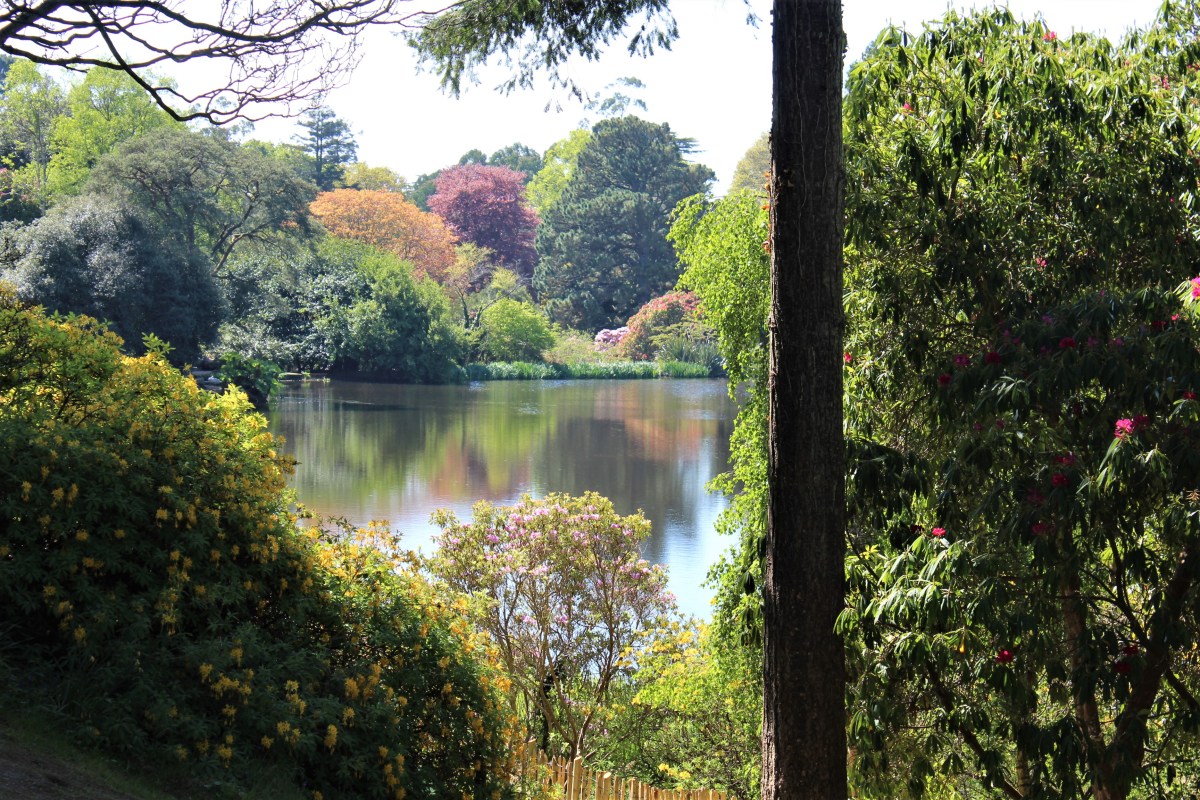
A one-mile walk around the lake provided new views of the house and grounds. On the back side of the lake, the colorful blooms and bushes were reflected on the water, creating shimmering mirror images. Under Edith’s direction, the lake was expanded, and she installed several new gardens, including the shamrock garden, Italian garden and a special garden for Lady Mairi.

We likely would have stayed longer, but Marilynn wanted to look up a friend in Portaferry and we needed to return the rental car. Mount Stewart, like Rowallane Gardens the day before, definitely did not disappoint.

Garden Beauty in Full Bloom

Sun gave way to shadow as the day faded, but the brilliance of the azaleas and rhododendrons in their natural surroundings still shone through. I have been to many gardens, but I think Rowallane Gardens may be my favorite yet.

At the start of the weekend, we had no plans, but the weather was terrific so we had to get out and enjoy the sunshine. And UK Fulbright Scholars are enrolled in the National Trust, which allows free access to sites under its purview.

So free is free, even though it proved easier to hire a car than to figure out how to get a bus for the 15-mile trip to County Down.

The 50-acre property was developed by the Rev. John Moore in the 1860s, then expanded and updated by his nephew Hugh when the property passed into his hands in 1903. Hugh brought in plant species from around the world and cared for the garden until his death, at which time the property became part of the National Trust.

We’re told the crowds were thick earlier in the day, when Rowallane held its annual plant sale. But we mainly had the place to ourselves in the late afternoon/early evening.

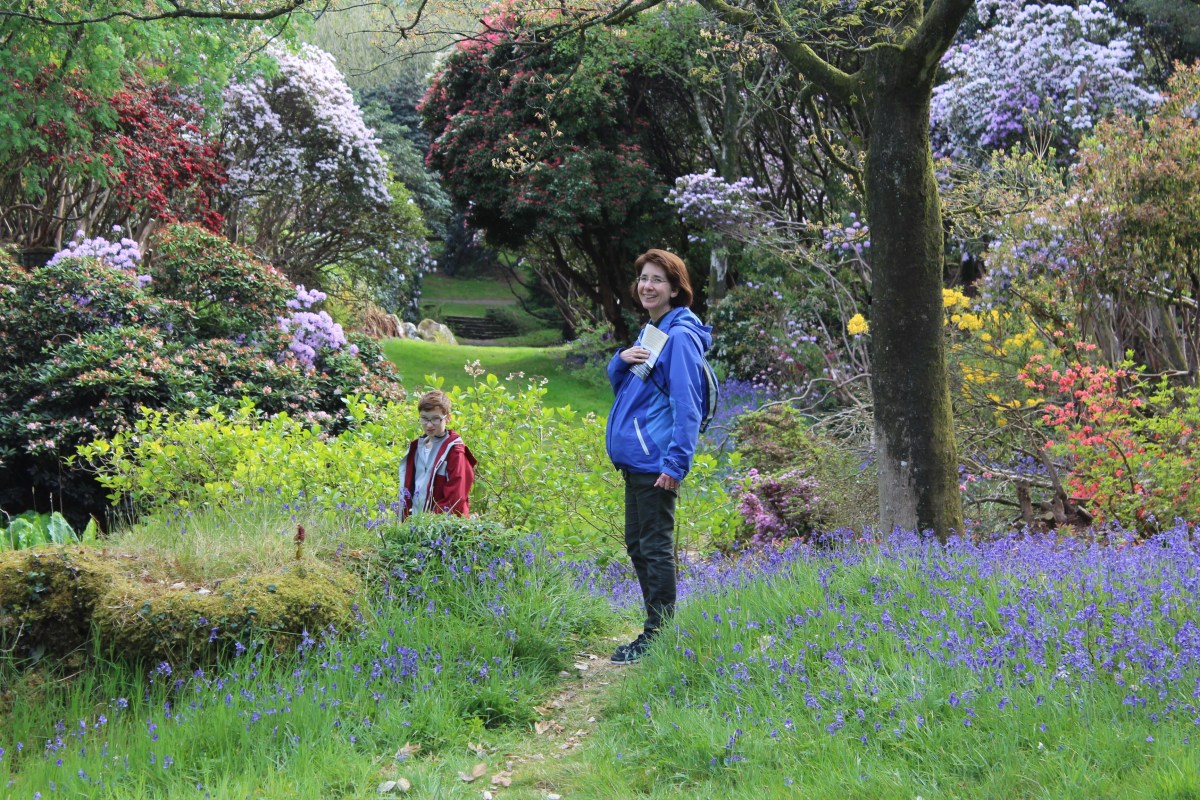
The formal gardens were nice, but I really liked the natural areas. There were wide grassy areas trimmed with trees and bushes, mostly in bloom. We walked past the 100-year-old handkerchief tree, which has just started putting on leaves for the year. The Himalayan blue poppies dotted the landscape, adding bits of color along the pathways.

Bees were working feverishly, drinking deeply from the flowering plants. Light and shadow played in the Pleasure Ground, a treed area that Moore planted. The pictures I took there did little to capture the splendor of the light’s interplay with shadows.

We already had plans to visit another famous garden the next day, but Rowallane Gardens would prove tough to beat.

Trump Not Going Anywhere, Says The Hill Correspondent

“Barring some cataclysm,” there’s little chance of Donald Trump leaving office before his four-year term is up, says Niall Stanage, White House correspondent for The Hill.

The Belfast native addressed a packed crowd of nearly 200 last week at The Senator George J. Mitchell Institute for Global Peace, Security and Justice at Queen’s University Belfast. The public event occurred during the university’s spring break, making the turnout even more impressive. Stanage has been in America for 17 years, covering four presidents.

Numerous missteps from the nascent politician have left Trump with the lowest approval ratings of any modern president. However, nothing so far has risen to the level of impeachment, an unlikely event given the Republican majority in the US House of Representatives, Stanage said. Removal from office is even less likely because it requires a two-thirds vote in the Senate, a body that is evenly split between Republicans and Democrats.

Americans in the audience (maybe just Marilynn and me) wanted more insight into Trump’s first 100 days and his relationship with the media. Unfortunately, that sort of dirt was lacking for the most part, partly because of The Hill’s decidedly non-partisan stance.

However, Stanage did air some cringeworthy clips of Trump, including the famous interview where he describes the circumstances under which he told Chinese President Xi Jinping about the bombing of Syria (which he mistakenly called Iraq in the clip) while the president was enjoying “the most beautiful chocolate cake you’ve ever seen.” (See Stephen Colbert’s take on the clip here.)

He also described tense situations during press conferences with Press Secretary Sean Spicer. “It’s politically useful sometimes to be annoyed, but Sean Spicer gets personally annoyed.”

Reason for the win

Although Hillary Clinton won the popular contest for president by nearly three million votes, the crucial difference boiled down to 77,000 votes in three pivotal states, according to Stanage.

Stanage explained the concept of the so-called Blue Wall—Wisconsin, Michigan and Pennsylvania—and how the Electoral College turned on those three states. “He won by the rules of the Electoral College,” Stanage said. “The whole thing came down to states in the Blue Wall.”

Trump won Wisconsin by 22,000 votes, a state that last went Republican in 1984; Michigan by 11,000 votes and Pennsylvania by 44,000. Between 1993 and 2017, one-third of US manufacturing jobs disappeared, including many in those three states. Trump’s election success can be pinned on “the loss of jobs (in these areas), and they’re being ignored by Washington politicians,” Stanage said.

Stanage cautioned those who hope Trump is removed for some reason that Vice President Mike Pence is a more orthodox conservative on such issues as gay and women’s rights. Trump’s volatility continues to ignite liberals, which should make the 2020 presidential race very interesting, he noted.

My Wife, Breaking the Law

Cue the theme song from “Cops” because Marilynn got picked up on Friday by the Irish po po, the Garda.

Anyone who knows my wife surely must be thinking this is impossible. English professors who are representing their countries internationally as Fulbright Scholars surely don’t merit police scrutiny.

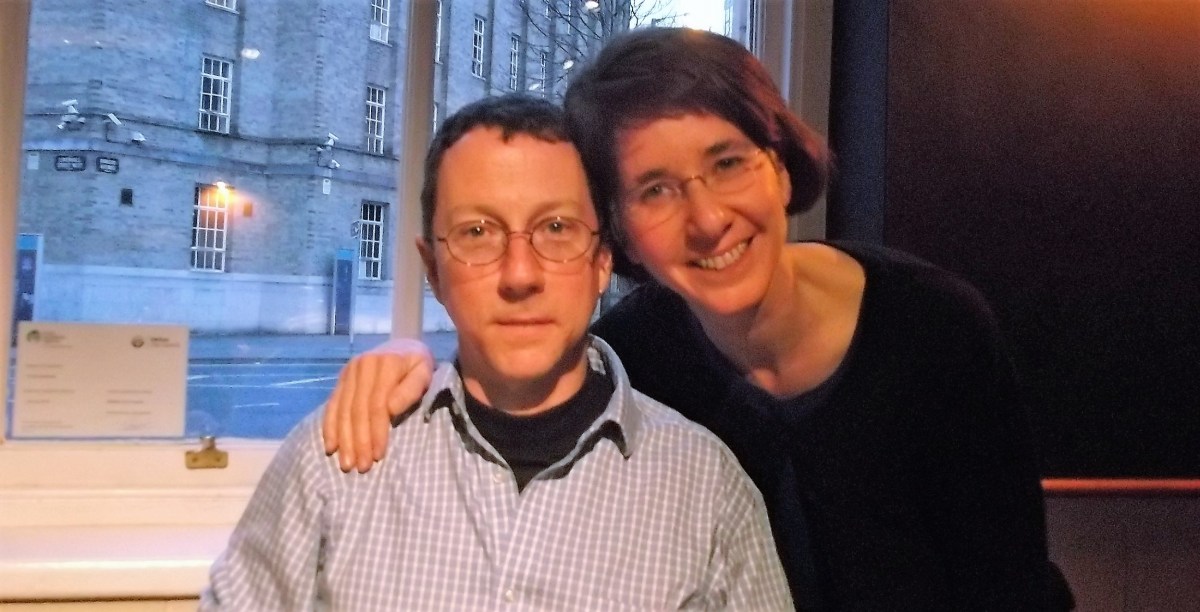
So was Marilynn smuggling contraband crisps to Dublin or perhaps running guns for the Real IRA? No, she was visiting her publisher in Dublin and didn’t bring her passport. She had her BRP (biometric residence permit) from the UK, but that wasn’t enough for the Garda who stopped the Belfast-Dublin bus she was riding in Friday morning just over the border. They also picked up a Chilean national who is married to a UK citizen and speaks fluent English with a strong Belfast accent, who was on his way to the Chilean embassy to apply for a replacement passport.

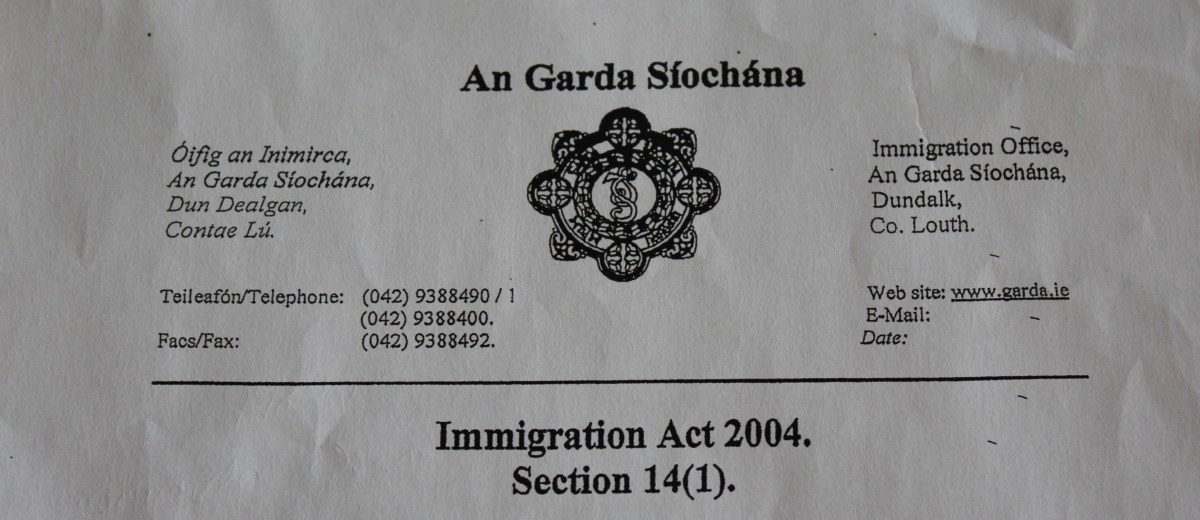
The passport-less scofflaws were taken in a squad car to the police station in Dundalk, photographed, given letters denying them entry to Ireland (and then letters allowing them to come into the country for the day) and taken to the train station, where the Irish government paid for their fare to Dublin.

If you haven’t traveled to Ireland before, you may not realize how significant Friday’s incident actually is. This level of scrutiny has not been seen since the Troubles, which ended in 1998 with the Good Friday Agreement. Marilynn readily recalls security forces boarding a bus or train during the Troubles but not after. I certainly haven’t experienced this in the half-dozen or so times we’ve crossed that border on previous trips.

More fallout from Brexit

We blame UK Prime Minister Teresa May, who last week triggered Article 50 to leave the European Union following last summer’s Brexit vote. The EU supposedly recognizes the unique relationship between the countries on this island (and the 30-year conflict where more than 3,600 people died), as evidenced by the response to May’s Brexit letter late last month.

I’ll let Marilynn pick up the story, from her email to the American consul in Northern Ireland:

“The garda told us that ‘the European Union’ had demanded that they start treating the Northern Irish border as an ‘international border’ and that they had been receiving extra training. Much, apparently, is left to the discretion of individual officers. This one gave each of us a letter saying that we were forbidden permission to enter the Irish state because we did not have a valid passport with us, and then gave each of us another letter saying that, at his discretion as an immigration officer, he was giving us permission to enter just for the day (luckily I was only planning to go for the day, anyway).

“He took our photos and made a record of the incident, and then put us both on the train to Dublin (courtesy of the Irish state). He kept saying, however, that some of his colleagues would have been happy to send us straight back to Belfast, and he expressed relief that his sergeant wasn’t around when we got to the station, since he probably would have taken a harder line.

“I knew, in the back of my mind, that I was supposed to carry my passport in the Republic, but I can’t remember being asked for it since at least 1998. I had gotten a bit blase about it, as (I’m sure) have many foreign nationals living in Northern Ireland. So I thought I’d better let you know about this so you can spread the word to other Americans living here to be sure and bring their passports with them when going to the Republic, even on day trips to Dublin!”

And I can’t stop singing the Beavis & Butthead version of the Judas Priest song “Breaking the Law.”

So Many Crisps…

People in the UK like crisps, lots and lots of crisps. They play a central role in the sandwich meal deal, which you can find in grocery stores, newsagents, department stores and drug stores. For $4-$6 US, you get a packaged sandwich, drink and either crisps or a dessert. It’s great for grab-and-go meals or for packing lunch during a train or bus trip.

But there are so many crisp varieties to choose from. I always try to find the oddest crisp I can, within the limits of our allergies. Between my onion allergy and Marilynn’s prawn allergy, it eliminates a lot of crisps. But, fortunately, there are plenty more. Read on for my take on the oddest dozen I could find.

Brannigans Smoked Ham & Pickle crisps—They taste exactly as billed, with a rich ham flavour and an undercurrent of pickle. One of Declan’s favorites.

Brannigans Roast Beef & Mustard crisps—Another winner, with a hint of mustard you can smell as you bring the crisp to your mouth, then a commingling of the two that is quite satisfying.

Brannigans Roast Lamb & Mint crisps—Upon tasting one of these, Declan shuddered involuntarily—twice. Marilynn said she liked the mint flavour. But that leaves the taste of sheep, very old and very gamey sheep. I will admit that they taste just as advertised, but the premise is so, so wrong. There’s a reason the British Corner Shop carries the other two types but not this one.

Roysters T-Bone Steak bubbled chips—They look like the blighted potatoes with an awful skin disease and taste like beef bouillon cubes. Don’t like the mouth feel and definitely don’t like the taste.

Scampi Flavour Fries—These technically aren’t crisps because they are made from corn and bread crumbs. But I didn’t notice until I read the package carefully. My compliments to the chemist because they taste exactly like scampi.

Bacon Flavour Fries—See just above for the specifics, but I like them, I really like them.

Hula Hoops (various flavours)—You can’t eat a bag of Hula Hoops without putting them on the fingers of at least one hand, like one does with Bugles. They are super fun to eat. In addition to regular flavour, they come in salt and vinegar, cheese and onion, BBQ beef and others. There are also Big Hoops. If you can put Hula Hoops on your fingers, I shudder to think what Big Hoops are affixed to before eating. “Look, lover! No hands!”

Tayto crisps (various flavours)—Tayto crisps are made (where else?) at Tayto Castle, about 30 miles from the flat. The company is proudly Northern Irish. I just wish I liked their crisps. They’re OK, but the crisps aren’t hefty enough for me, and the tastes are bland. They also make puffed corn “chips” that remind one of eating packing peanuts.

Hunky Dorys Buffalo Crisps—You couldn’t make these in the US, because you’d have to call them Buffalo Chips! Big Ruffles-like ridges, great taste. Another winner.

Space Raiders Beef Flavour Cosmic Corn Snacks—There’s an alien right on the package, so you know these are gonna be %^&*-ed up. And they are. Taste like beef bouillon packing peanuts, in the shape of alien heads. But hey, they’re only 20 pence, so get your munchies on for cheap!

Golden Wonder Saucy BBQ Flavour Transform-a-Snack—You can actually build what the package calls “out of this world vehicles.” Declan said these were “really good,” but again, they’re puffed corn (see packing peanut references above).

Hot Lips Nice ‘n’ Spicy Flavour Maize Snacks—Weird logos on weird packaging. I had no idea what they were or what flavour. And it was a big package, so if they tasted like crap, I would have wasted my money. I should have just shut up and bought them because they are delicious. Not hot in the least. Instead, they have a smooth, smoky flavor that makes you want another (and another).

Just like books, you apparently can’t judge a crisp by its package. Unless it contains lamb flavouring, of course.

Living the Life, One Chore at a Time

A friend once told me I’d make somebody a good wife someday. My mother taught all of her children how to cook and clean for themselves, and I happen to like a clean house (book and magazine clutter aside), so I take that as a compliment.

But in Belfast the concept of the house husband is coming to the fore, the result of circumstances. Marilynn is teaching two classes and working on her next book project, so she goes to her office five days a week. In America, she does most of the shopping and probably 60%-70% of the cooking. I cut the coupons, do the dishes, take care of the house and yard and cook/grill as directed.

With a car and grocery store flyers, Marilynn prepares a week’s menu based on what’s on sale that week, going to Publix for most items and filling in with purchases from Kroger and Aldi. Here, with no car and a tiny refrigerator, that paradigm is turned on its head.

Most days, we have no idea what we’re having for dinner. So off I go to Tesco, cloth grocery bags in hand, rain (mostly) or shine, to see either what’s been discounted or what looks good. More complex recipes often require ingredients we’ll not use through during our time here, so we try and keep it simple. But it requires grocery shopping nearly every day.

Good friends from England who recently spent a semester in Georgia complained about the high grocery prices compared with prices at home. And after several months in Belfast, I see where UK prices are better across the board. They don’t really do weekly flyers, but they do discount certain items for certain periods of time. But I already know that one of the kinds of yogurt I like will be on special whenever I shop, so one still can ferret out bargains.

Take the meal pictured at top, the same type of meal I’d prepare in the States, with steak, baked potatoes and broccoli. The price here, under $9 US. I’d pay that easy for just the steaks in America.

Shillings for the heat, lights

I remember watching British period dramas where the young single women or young families living in urban flats put shillings in a meter to heat water for a bath or turn on the lights or stove. We have the modern day equivalent to that—plastic top-up cards for the gas and the electricity. It makes it easy for the university (our landlord) because it doesn’t have to worry about getting left with unpaid bills amid the turnover in staff housing.

When you need to put money on the meter, you take the card to a participating news agent, tell the clerk how much you need to put on the card and pay for it. Then at home, insert the card into the gas meter to transfer your payment or punch in the confirmation number for the electricity.

The top-up option is available to homeowners, too, but according to a couple people I spoke with, topping up a card is more expensive than paying your bill monthly.

That’s what radiators are for

Not many homes have clothes dryers, so we’re left with an oversized drying rack, two retractable lines that run the length of the shower—and six beautiful radiators. When the heat is on, a radiator can dry a towel in 30 minutes. It’s too hot for the radiators at present, and I’m not sure this one big towel I put on the drying rack will ever get dry.

It can be an engineering challenge, however, to figure out what might air dry, what’s better suited to the radiator and what must never go on the radiator. A pair of jeans, for example, needs to be turned on the radiator at least once. So that’s what I do when taking a break from work, turn clothes on the radiator that aren’t dry, fold what is, and transfer items from the drying rack to a radiator to speed the process along.

Yes, it’s all in a day’s work for this house husband.

Mother’s Day, Belfast Style

Technically, it was Mothering Sunday, but for the merchants and restaurants, it definitely was Mother’s Day…in the UK.

Mothering Sunday is the fourth Sunday in Lent, a time to visit one’s “mother” church, but, I guess like Black Friday sales, this is another instance where the UK appropriated a so-so American tradition and made it its own. Flowers, cards, chocolates, special meals for mom and much more were on offer this year.

The Wellington Park Hotel down the street from the flat advertised a three-course carvery meal for 23 pounds, but food with any hint of gravy doesn’t work with my onion allergy. So Marilynn opted for Pizza Express, a UK chain that does sell pizza, but not very expressly. I get the feeling she would have been just as happy with a meal at home, although she was the one who started us going to Pizza Express, which she remembered from her grad-school days in Oxford.

Pizza (not so) Express

Pizza Express has been around for 50 years, and folks still go there in droves, so I guess everyone realizes by this time that Express is a suggestion, like hoping the cable guy shows up on the front end of the four-hour service window. During our sojourn in England earlier this month, there was a Pizza Express in every city we visited except for Lyme Regis, which is tiny. St. Ive’s ain’t much bigger, but there was a PE right along the waterfront. Falmouth, too.

Although there is a Pizza Express on the Lisburn Road that’s closer to our flat, we went to a city centre location after seeing “Beauty and the Beast.” Again, Marilynn likely couldn’t be bothered with the movie, but Declan and I wanted to see it.

We ordered, and the food arrived very quickly, possibly because we each ordered thin-crust pies. “Oh, things have changed since past visits,” I think to myself. And then time stood still. Don’t get me wrong, the food was spot-on like it usually is, and we had a great time overall.

But there is a natural flow to the sit-down restaurant experience that this chain violates every time, every location I visit. Not sure where our server got off to, because we suddenly got another server, who we quickly remembered from a visit four years ago—even recalling where we had been sitting in the same restaurant.

He’s been with the restaurant for 10 years and is a credit to the company and the location. I remembered him making a cool paper airplane, and he made a new one for Declan, much to everyone’s delight.

We did order dessert (it was Mother’s Day, after all), but requested the check at the same time, because we could have been there all night.

Just like the rest of the day, however, our visit hit the spot.

Note: My Thanks to Dann Maurno for the reference to Mothering Sunday, which the holiday was still called when he lived in the UK as a child. And it probably wasn’t quite so festive.

It’s a Beautiful Day …

You don’t know it’s spring in Belfast when the daffodils bloom, nor when the trees start to put on buds. It’s not necessarily the temperature, which was an extremely temperate 57 degrees today.

You know it’s spring in Belfast when the restaurants put out their outside tables. I had always thought that the Lisburn Road was really wide, but not so much once Eddie Rocket’s, the Yellow Door deli and the Indian restaurant put out their tables and chairs.

Belfast’s own henge

It was by far the best day, weather-wise, we’ve had in Belfast in nearly three months, so of course we went outside. Our destination was the Giant’s Ring, a local henge that was built 4,700 years ago.

Google Maps said it was a tad over three miles, so we set off down the Malone Road a little past 3. This was a wish-you-had-remembered-your-hat day, because during the first part of the journey the sun was directly in our eyes. But we soon made it to the Lagan River at Shaw’s Bridge, before cutting through National Trust land and to the site.

After seeing Stonehenge and the Avebury Stone Circle last week, the Giant’s Ring was a bit of a letdown, but it still was impressive. An earthen circle that stretches 210 yards was built up around the henge, the remains of a passage tomb comprised of five upright stones and a capstone. Aerial photos show three rings between the ditch and the center, believed to be where posts were set. Archaeologists have found 10 other burial sites and other settings of posts.

We saw many dogs playing in the water, kids on bikes, daffodils in full bloom and lots of birds. An ice cream vendor was parked in the Shaw’s Bridge car park, so Declan and I had to have a cone apiece.

Glimpse of elusive landmark

On the way back, we even saw the twin Harland & Wolff gantries in the distance. My first trip to Belfast was by train, and I first saw Samson and Goliath just before arriving at Central Station. I knew of Belfast’s shipbuilding history, most notably as the birthplace of Titanic, and I’ve always associated the gantries with that part of Belfast’s history.

I so want to include a picture of the gantries in the blog, but I’ve never been stationary long enough to get a clear shot. The good news is that I have another four months to make that happen.

When we got back to the car park, we’d already walked just shy of six miles, so we called a taxi for the return trip. The sunset, as you can see, was a beautiful end to a glorious day in Belfast.